

Platysmal bands are two vertical ribbons of muscle that descend along each side of the neck. They occur from contractions of the platysma, the most superficial muscular layer in the face and neck.
Although they don’t present any medical danger, many people view them as an aesthetic issue. They can give the impression of loose skin, contributing to a double chin, neck furrows, and the colloquial “turkey neck.”
There are several approaches to address noticeable platysmal bands. Below, we discuss what prompts these bands and the treatments available.
What leads to platysmal bands?
Platysmal bands are a typical aspect of aging. As skin loses elasticity, the tissue over the platysma weakens and begins to sag. At the same time, the platysma muscle itself can lose tone with age, allowing the skin to droop.
Genetics also influence when bands appear, with thinner-skinned individuals often showing them earlier.
Other contributors to platysmal band development include:
Muscle activity
For a long time, aging skin was assumed to be the main driver of platysmal bands. However, a small 2017 study challenged that idea. Researchers evaluated 25 people who had clear, one-sided facial palsy after otoneurosurgical treatment. Ten years later, 76 percent showed visible platysma bands on the non-paralyzed side of their necks.
The investigators concluded that active muscle movement, combined with the natural aging process, contributes to prominent platysmal bands.
Exercise
This is a concentrated form of muscle use.
Next time you lift weights, glance at your reflection and observe your neck — you may notice the platysmal bands becoming more pronounced. The strain places tension on the neck.
Over time, repeated tension can make the bands more prominent. High-intensity workouts can also engage facial muscles; the more the face and neck muscles contract, the greater the potential for the overlying skin to stretch and sag.
Being mindful during exercise can help limit this. It’s advised to monitor your posture in the mirror while working out and to consciously relax your neck when it tenses.
How to address platysmal bands
Since platysmal bands aren’t a medical issue, treatment isn’t required. Still, many people seek ways to reduce their appearance. The following options are commonly used.
Botox for platysmal bands
Botox (botulinum toxin type A) isn’t solely for face lines. A 2018 review found it can lessen the look of platysmal bands by relaxing neck muscles.
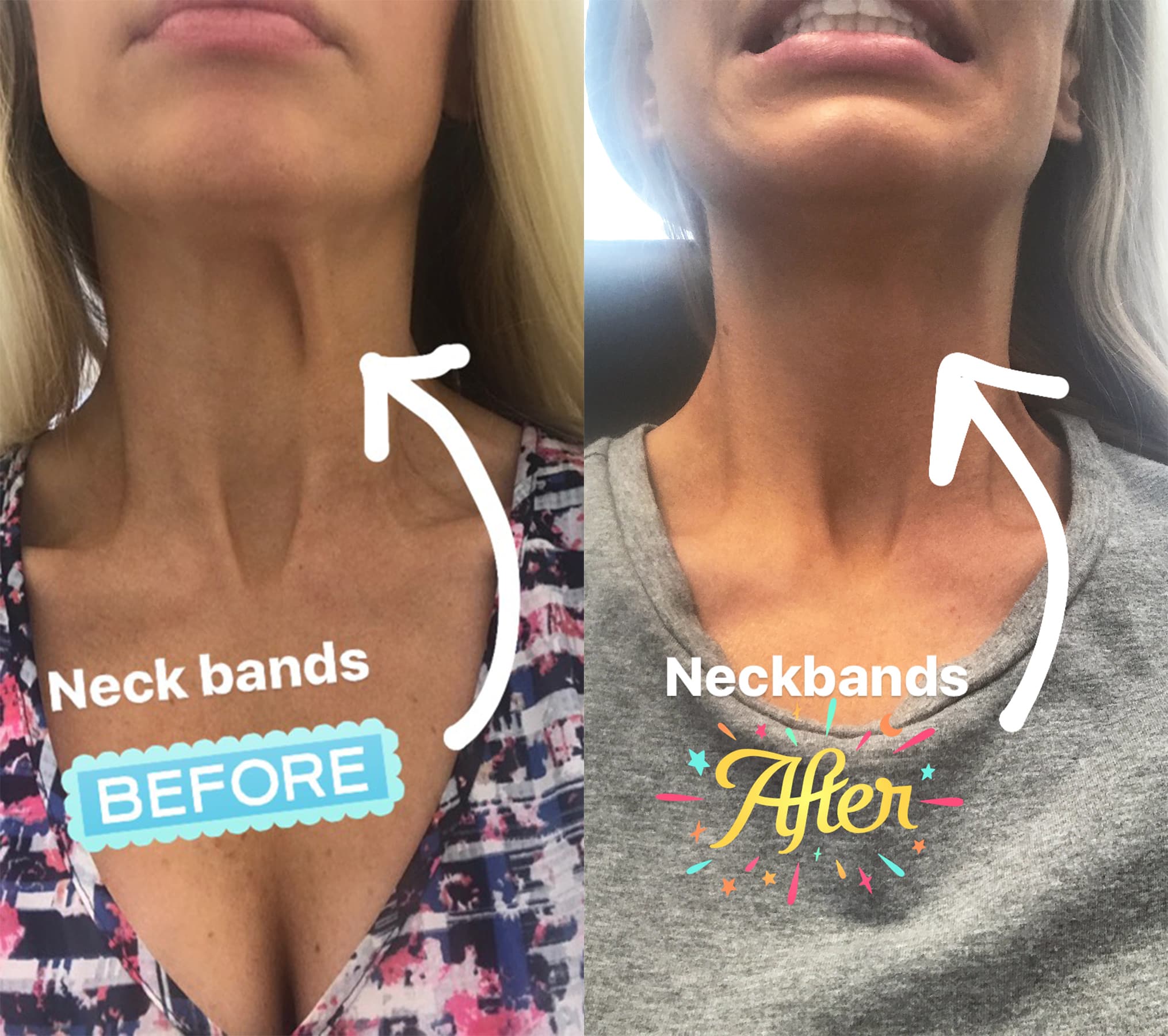
“We can use Botox to eliminate platysmal bands, which results in unbunching and elevation of the jaw. We call it the Nefertiti lift,” says Dr. Paul Jarrod Frank, a cosmetic dermatologist, chief medical officer and founder of PFRANKMD, and author of “The Pro-Aging Playbook.”
Using Botox in the lower face and neck is off-label but generally considered safe, relatively low-pain, and typically costs around $400 per session. Side effects may include mild bruising and soreness. Because the effect is temporary, treatments need to be repeated every 3 to 4 months to preserve results.
Dermal fillers
Dermal fillers are injectable gels used to add volume to the skin. Common filler materials include hyaluronic acid, poly-L-lactic acid, and calcium hydroxyapatite.
Fillers can be applied to plump the skin over platysmal bands, though Dr. Barry Goldman, MD, notes they’re often more effective for filling deep horizontal neck lines.
They’re frequently paired with Botox. “For many patients who want noticeable results quickly, combining jawline fillers with Botox can make a substantial difference,” Frank says. Some commonly used dermal fillers in the neck area include:
- Bellafill
- Juvaderm
- Restylane
- Belotero
As with Botox, typical side effects are bruising, swelling, and temporary redness or discoloration. Fillers are not permanent and usually last about 6 to 12 months.
Platysmaplasty (neck lift)
For more dramatic improvement, a platysmaplasty is an option.
“If someone has a heavy, sagging neck, injectables aren’t going to be very effective. A surgical platysmaplasty is the most definitive treatment,” Frank explains.
This cosmetic surgery tightens both skin and muscle where they’re lax, producing a smoother neck and a more defined jawline.
Lower facelift
This procedure tightens the skin below the mouth’s corners and removes excess skin to restore a younger appearance.
Goldman notes that a plastic surgeon or an ENT facial plastic surgeon typically performs this. Although it’s considerably costlier than noninvasive treatments, it is often more effective.
As with any surgery, there are potential complications. Goldman lists possible side effects such as:
- bleeding
- infection
- nerve injury
- scarring
Do exercises for platysmal bands help?
Exercises aimed at the platysmal bands are meant to strengthen the neck muscles and theoretically reduce banding.
However, the opposite can occur: “We generally don’t recommend exercising this area, as the bands may be worsened by straining, such as grimacing during weightlifting,” Goldman says.
Gentle neck stretches may yield better results.
“There are various stretches that encourage mild toning of the muscle that might be beneficial,” Goldman notes.
Before and after photos of neck band treatments
If you’re undecided about the options, viewing before-and-after images for the four medical approaches above can help illustrate potential outcomes.

Where to find a qualified provider
Procedures should be carried out by a board-certified dermatologist or plastic surgeon.
Frank points out that cosmetic dermatologists can administer injectables and perform laser treatments, while plastic surgeons handle surgical procedures like neck lifts. Verify board certification to ensure the clinician has undergone extensive training and achieved high accreditation in their specialty. You can search for a certified plastic surgeon through professional directories.
If you need referrals, ask friends, family, or your primary care doctor for recommendations.
You can also locate a specialist in your area using tools like the HealthEH FindCare resource.
Takeaway
Platysmal bands form from the aging and separation of the two edges of the neck muscles. Multiple factors contribute, including age, heredity, and muscle activity. The neck’s skin layer is also thinner than the face, which can make bands more apparent.
Treatment choices span noninvasive cosmetic procedures to surgical options. If you wish to lessen the look of platysmal bands, consult a board-certified dermatologist or plastic surgeon.
Platysmal banding is a normal, common occurrence.




















Leave a Reply
You must be logged in to post a comment.