

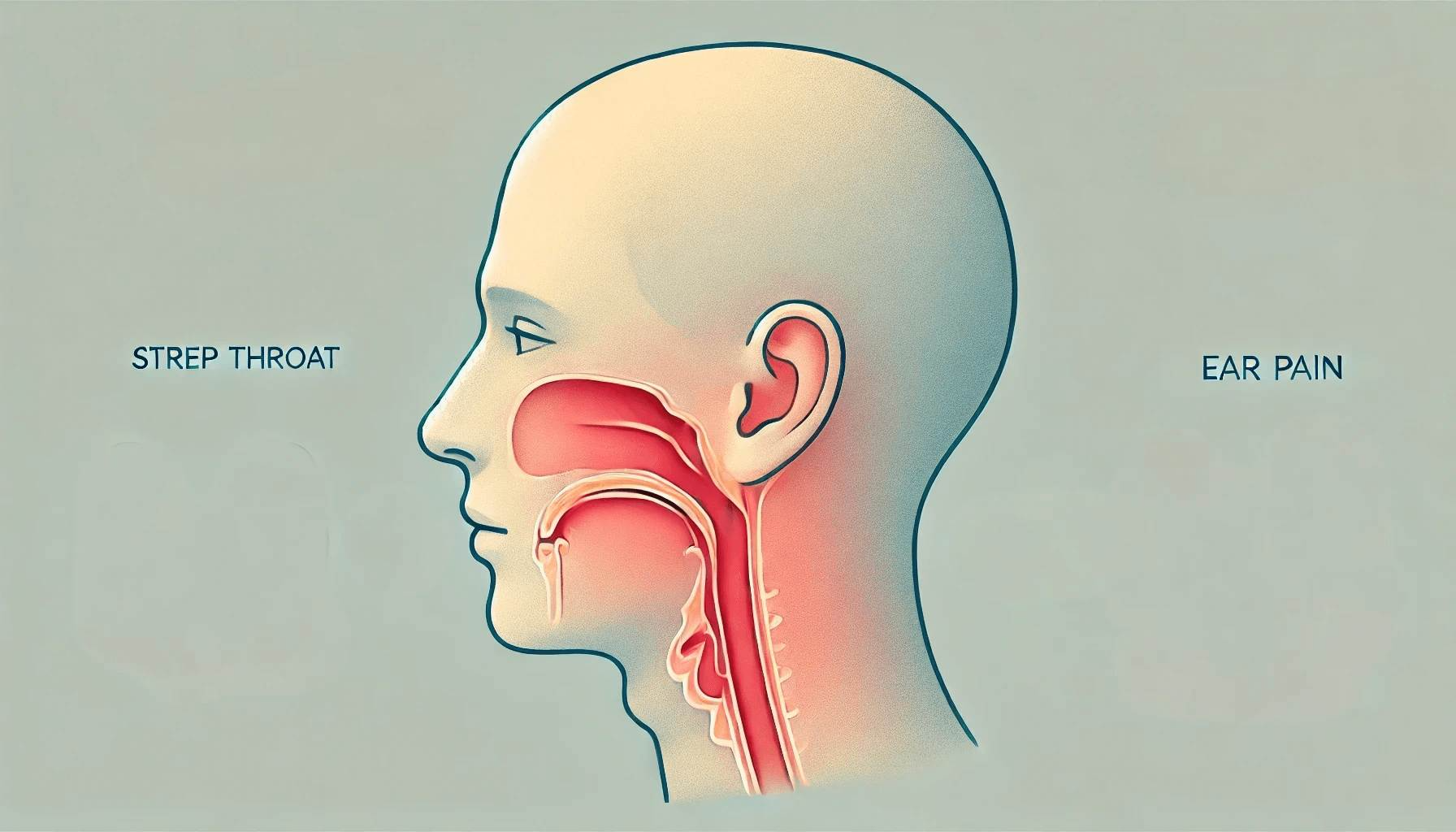
There are numerous reasons you might feel pain in your ear when you swallow. Frequently, the culprit is an infection affecting the ear or throat.
Ear pain presents in many forms. It may throb for extended periods or only hurt when touched.
Sometimes, the discomfort only appears during activities unrelated to the ears themselves, such as swallowing. Read on to discover common causes of ear pain during swallowing and the available treatments.
Ear infections
A frequent reason for ear pain while swallowing is an ear infection. Most of these infections arise from bacterial or viral involvement of the middle ear, causing inflammation, fluid accumulation, and irritation that produce pain.
Ear infections are more common in children, but adults can experience them too. Symptoms in adults may differ slightly from those seen in childhood.
Middle ear infection
Middle ear infections, also known as acute otitis media, are the most prevalent. They impact the space behind the eardrum. That air-filled cavity houses tiny vibrating bones that enable hearing and connects to the throat via narrow channels called Eustachian tubes.
Many ear infections begin as another illness, such as a cold, influenza, sinus infection, or allergies. Normally, the Eustachian tubes drain fluid from the middle ear. When you’re congested, these tubes can become blocked. Fluid trapped behind the blockage can then become infected.
The Eustachian tubes also equalize pressure in the middle ear. When you swallow, yawn, or sneeze, the tubes open to relieve pressure, which can be painful if the ear is infected.
In young children, signs of an ear infection can include:
- ear pain that worsens when lying down
- tugging or pulling at the ear (especially with other symptoms)
- increased crying
- greater irritability
- fever over 100° F
- loss of appetite
- fluid draining from the ear
- balance problems
- difficulty sleeping
- headache
Adults with a middle ear infection may notice:
- mild fever
- ear pain
- fluid draining from the ear
- reduced hearing
Many middle ear infections resolve without treatment within about a week. Some children might benefit from oral antibiotics, but these are frequently unnecessary, particularly in adults.
Swimmer’s ear
Swimmer’s ear is a form of otitis externa, an infection of the outer ear. It affects the ear canal rather than the middle ear. When swimming or showering, water can remain in the canal, creating a warm, moist environment where bacteria and fungi thrive.
Outer ear infections aren’t always water-related. Microbes can enter through a foreign object, such as a finger. Q-tips and nails can damage the delicate lining of the ear canal that protects against infection. Skin problems like eczema also increase susceptibility.
Pain from an outer ear infection often intensifies when the ear is pulled or stretched. Chewing and swallowing can also amplify the discomfort, which may radiate across the affected side of the face.
Other signs of an outer ear infection include:
- redness and swelling of the ear
- itchiness inside the ear
- foul-smelling discharge
- a feeling of fullness in the ear
- trouble hearing
This infection typically clears after 7 to 10 days of medicated ear drops. Over-the-counter pain medications can ease discomfort during recovery.
Nose and throat infections
While ear infections are a common cause of ear pain, they can sometimes originate from infections of the nose or throat.
Children are more prone to complications from nasal and throat infections due to the nature of their immune structures.
Children have small clusters of immune tissue called adenoids at the back of the nasal passages near the Eustachian tubes. Adenoids are important for immune defense in childhood. They are largest during early years and usually shrink by adulthood.
Adenoids respond to germs entering through the nose and mouth. Occasionally, they enlarge so much during infection that they block the Eustachian tubes, leading to middle ear infections.
Tonsillitis
Tonsillitis is inflammation and infection of the tonsils, usually caused by a throat infection. The tonsils are two rounded masses of immune tissue located at the back of the throat.
The primary symptom of tonsillitis is a sore throat, but it may also cause:
- difficulty swallowing
- tender neck lymph nodes
- swollen, red, or inflamed tonsils
- white spots at the back of the throat
- fever
- headache
- stomach pain
- rash
- bad breath
- a scratchy or muffled voice
Most tonsillitis cases are bacterial, with group A Streptococcus (the strep throat bacterium) causing many infections. Tonsillitis generally responds well to antibiotics.
Peritonsillar abscess
A peritonsillar abscess is a pus-filled collection around one tonsil, usually a complication of untreated tonsillitis. The pain is often severe and noticeably worse than a typical sore throat. Typically only one tonsil is affected, so the discomfort is greater on one side.
A peritonsillar abscess commonly produces ear pain on the affected side. Swallowing can be excruciating, and opening the mouth may also be painful.
Treatment often involves a minor procedure. Doctors drain the abscess with an incision or a small needle. Antibiotics are usually prescribed to treat the underlying infection and reduce recurrence risk.
Other causes
Eagle syndrome
Eagle syndrome is an uncommon condition that causes recurrent dull throat and facial pain, often radiating to the ear. The pain typically worsens with head movement.
Other symptoms can include:
- difficulty swallowing
- sensation of something stuck in the throat
- tinnitus (ringing in the ears)
- neck pain
- facial pain
Eagle syndrome stems from issues with ligaments and small bones in the neck or skull. Surgical correction is commonly required.
Glossopharyngeal neuralgia
Glossopharyngeal neuralgia (GPN) is another rare but intensely painful disorder affecting the glossopharyngeal nerve of the head and neck. GPN causes brief, severe stabbing pains often triggered by cold drinks, swallowing, yawning, talking, coughing, or chewing. Pain usually centers around one ear but may also affect the tongue, back of the throat, face, or area beneath the jaw.
Episodes typically last around two minutes and are followed by a dull ache. Treatment usually involves medications for neuropathic pain, such as pregabalin or gabapentin. Those who don’t respond to drugs may benefit from surgery.
Temporomandibular joint dysfunction
Temporomandibular joint (TMJ) dysfunction affects the joint used whenever you open or close your mouth. This is where the jawbone meets the skull.
A small cartilage disc on each side separates the jawbone from the skull and allows smooth movement when you swallow, speak, or chew.
Because this joint is used so frequently, damage can produce substantial pain that many people perceive in the ears as well.
Other signs of TMJ issues include:
- difficulty opening the mouth wide
- jaw soreness or discomfort
- jaw locking
- clicking, popping, or grinding sounds when opening the mouth
- chronic headaches and neck pain
- ringing in the ears
TMJ damage can result from trauma, teeth grinding, or excessive gum chewing. Management typically includes lifestyle adjustments, rest, and nonsteroidal anti-inflammatory drugs like ibuprofen (Advil, Motrin).
The bottom line
Although many ear and throat infections improve within a week without treatment, you may require prescription medications. If the pain persists, see your doctor to rule out other underlying problems.





















Leave a Reply
You must be logged in to post a comment.