
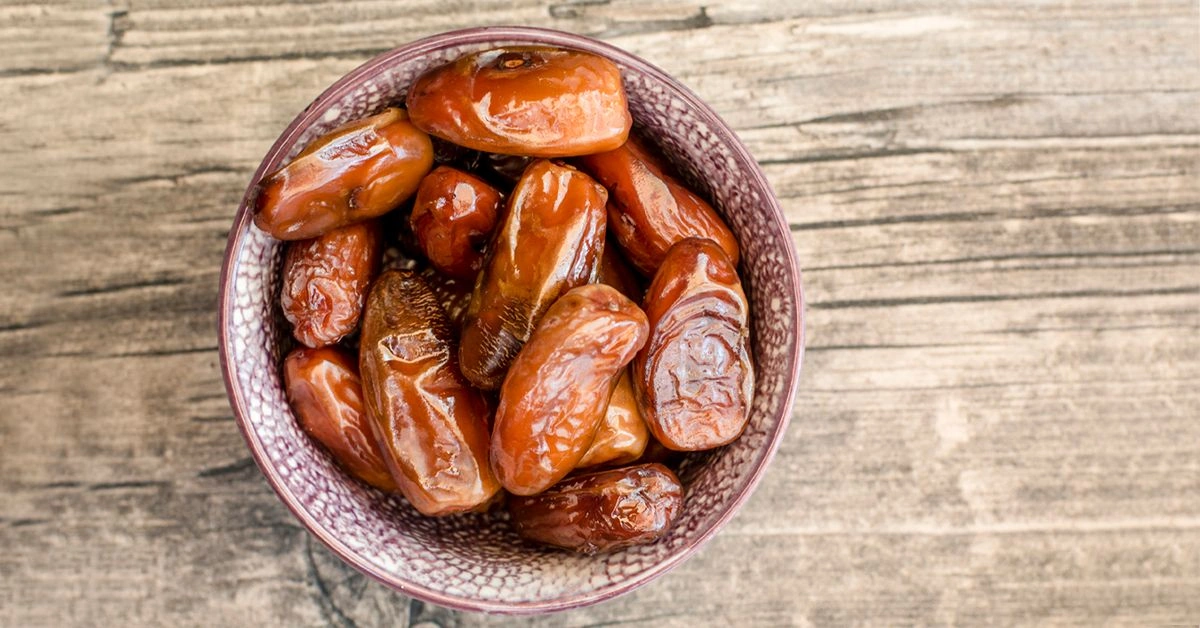
When seeking a sweet yet wholesome snack during pregnancy, dates are a reliable choice.
To be honest, this dried fruit may not be top of mind for many. Still, munching on a few dates delivers more nutrition than people often expect.
Below we outline several advantages of consuming dates while pregnant, including how they might influence labor.
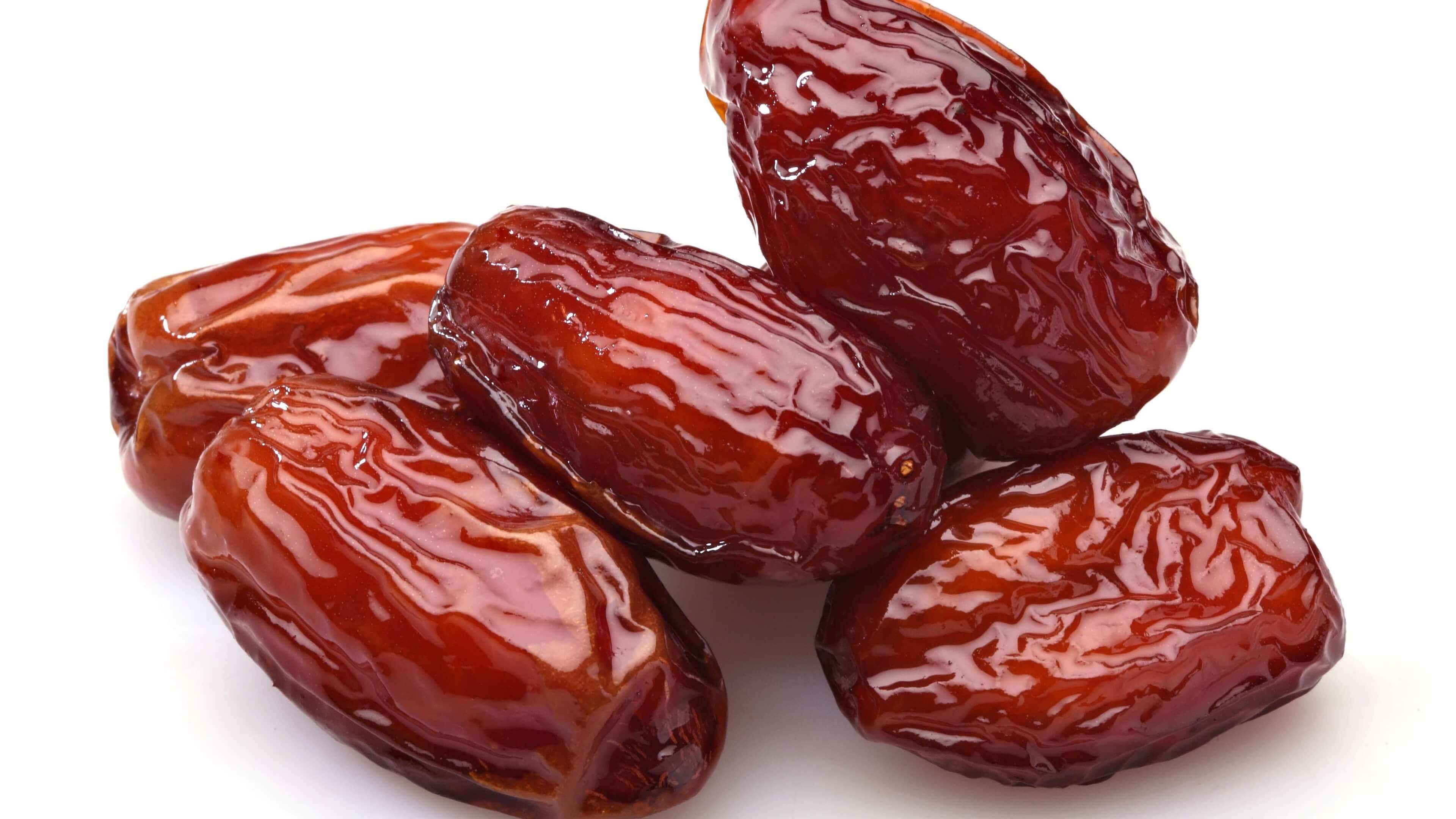
Benefits of eating dates during pregnancy
Dates bring a variety of nutritional perks for expectant mothers.
Some days you’ll feel full of energy, and other days you’ll be drained and foggy-headed. (Blame pregnancy brain, if you like.) The more vitamins and nutrients you supply your body, the better you’re likely to feel physically and mentally.
Dates grow on the date palm, a flowering plant, and rank among the sweetest fruits available. Don’t worry — the sweetness comes from natural sugars.
Choosing this dried fruit is a healthier way to curb a sweet craving than reaching for something like ice cream. Because dates are rich in natural fructose, they can also provide a quick energy boost to combat pregnancy tiredness — a practical double benefit.
The advantages don’t end there. Dates are high in fiber, which supports digestive regularity and can reduce the chance of pregnancy-related constipation.
They also supply folate, which helps lower the risk of certain birth defects, along with iron and vitamin K.
Increasing iron intake can elevate your energy and help prevent iron-deficiency anemia. Vitamin K contributes to bone development in the growing baby and supports proper muscle and nerve function.
Dates are a good source of potassium, an electrolyte that helps relax blood vessels and may help keep blood pressure in check.
Precautions when eating dates during pregnancy
Dates are both nutritious and generally safe to consume during pregnancy. There’s no evidence suggesting adverse effects in the first, second, or third trimester.
In fact, eating dates can be beneficial, especially if you’re struggling with low energy or constipation.
Because of claims that dates can make labor easier — discussed further below — some people try them for the first time while pregnant.
One precaution is the (rare) possibility of an allergic reaction to dates. Symptoms can include tingling, itching, or swelling around the mouth or tongue. If you notice these signs, stop eating dates right away.
Also remember that dates are relatively high in carbohydrates and calories, so don’t overindulge if your obstetrician has advised you to monitor calorie or blood sugar intake. Stick to about six dates per day.
Can dates help your labor?
The date palm is native to the Middle East, so while dates aren’t a dietary staple in the United States, they have been central to diets in that region for thousands of years.
Historically, dates have been credited with various therapeutic properties (anti-inflammatory, antioxidant, anti-tumor). Another traditional claim is that dates can assist with labor.
Eating dates to influence labor may sound like an age-old belief, but researchers have found some evidence supporting this idea. Depending on how many dates you consume in late pregnancy, your labor could begin without medical induction since dates are thought to encourage natural onset.
In a 2011 study, researchers asked 69 pregnant women to eat six dates daily for the four weeks before their estimated delivery dates. The study also included 45 women who didn’t eat dates before delivery.
At the study’s end, the women who consumed six dates per day for four weeks experienced a shorter first stage of labor, greater mean cervical dilation, and were more likely to have intact membranes when arriving at the hospital — in other words, their cervixes appeared more prepared for birth.
Moreover, 96 percent of the women who ate dates had spontaneous labor compared with 79 percent of those who did not.
A later study of 154 women divided participants into 77 who ate dates late in pregnancy and 77 who did not. The date-consuming group required significantly fewer medical interventions to induce or accelerate labor than those who avoided dates.
Based on these observations, researchers suggest that eating dates might decrease the need for labor induction. More studies are necessary to verify that this benefit applies universally. (Still, nibbling a few dates in the weeks before your due date likely won’t hurt!)
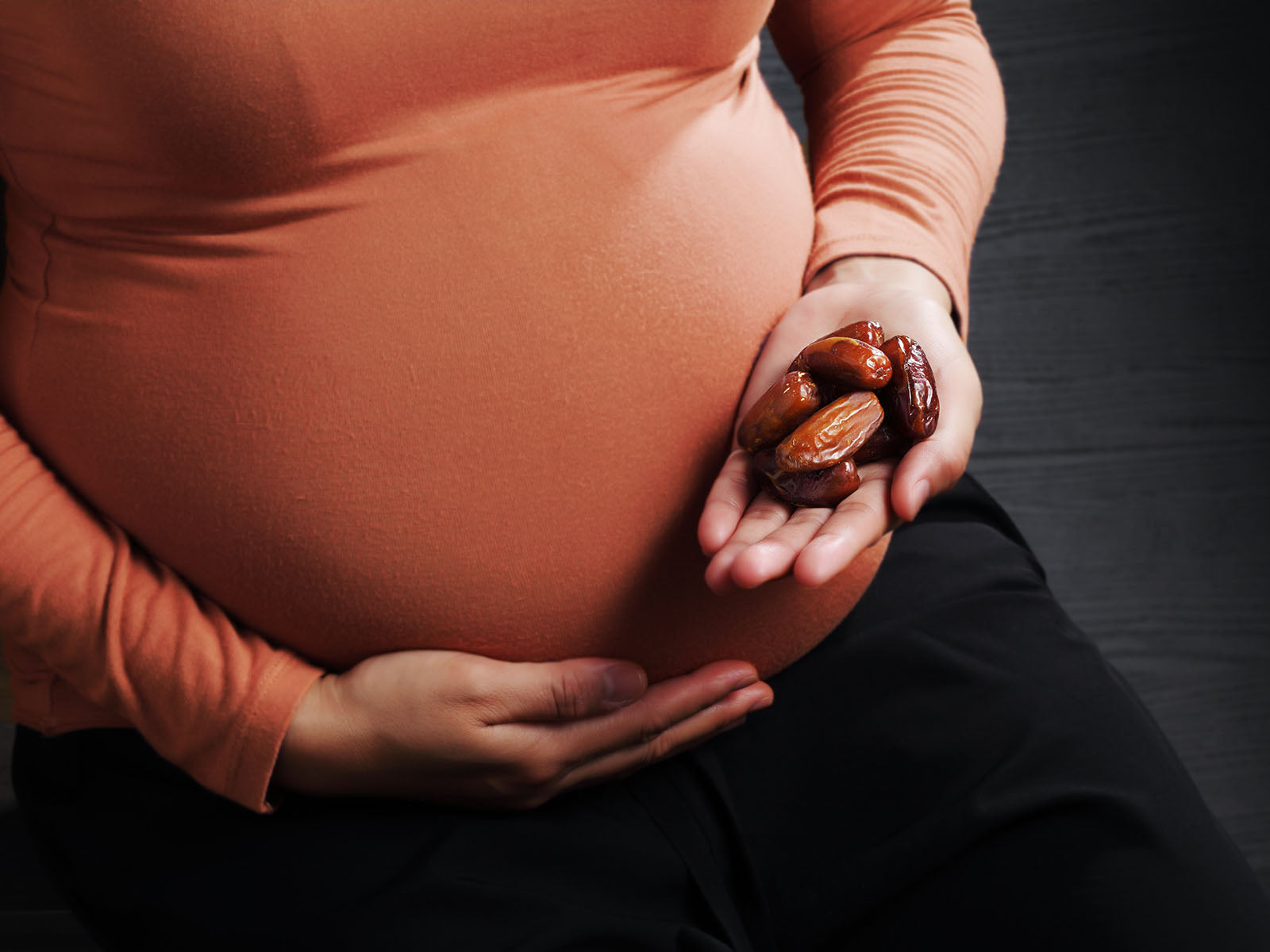
Eating other dried fruits during pregnancy
Keep in mind that dates aren’t the only dried fruits acceptable during pregnancy. Fruit overall is beneficial because of its vitamins, fiber, and other nutrients. It also helps you feel fuller for longer.
However, it’s important to consume dried fruits in moderation. The drying process removes water, which concentrates calories and sugars compared with fresh fruit.
So a handful of dried fruit is not nutritionally equivalent to the same volume of fresh fruit. If you’re watching sugar intake, limit dried fruit to about half a cup to one cup per day.
Dried fruit can be enjoyed on its own, blended into smoothies, or sprinkled over salads and side dishes.
The takeaway
A healthy pregnancy centers on a balanced diet, which can include both fresh and dried fruits. Dates are an excellent option because they provide fiber and a range of vitamins and minerals.
If research proves accurate, eating dates while pregnant may also raise your chances of a spontaneous, natural labor onset.




















Leave a Reply
You must be logged in to post a comment.