

You’ve probably heard the tales: A couple goes to the hospital expecting one newborn and walks out with two because — surprise! — there was actually a second baby nobody knew about… not seen on scans, not suspected, like an uninvited guest playing an epic game of hide-and-seek.
Does this occur? Yes. That said, it’s far less frequent than many people imagine. With modern imaging advances, it’s increasingly difficult for twins to remain concealed beyond a certain stage of pregnancy.
So while it’s possible to be misled in the first trimester (and even into the early second), by the time you reach the third trimester, it’s pretty unlikely an ultrasound would miss an entire human being inside your uterus.
Here’s what to know about “hidden twins,” including why it happens and when it becomes almost impossible for that stealthy sibling to stay undetected.
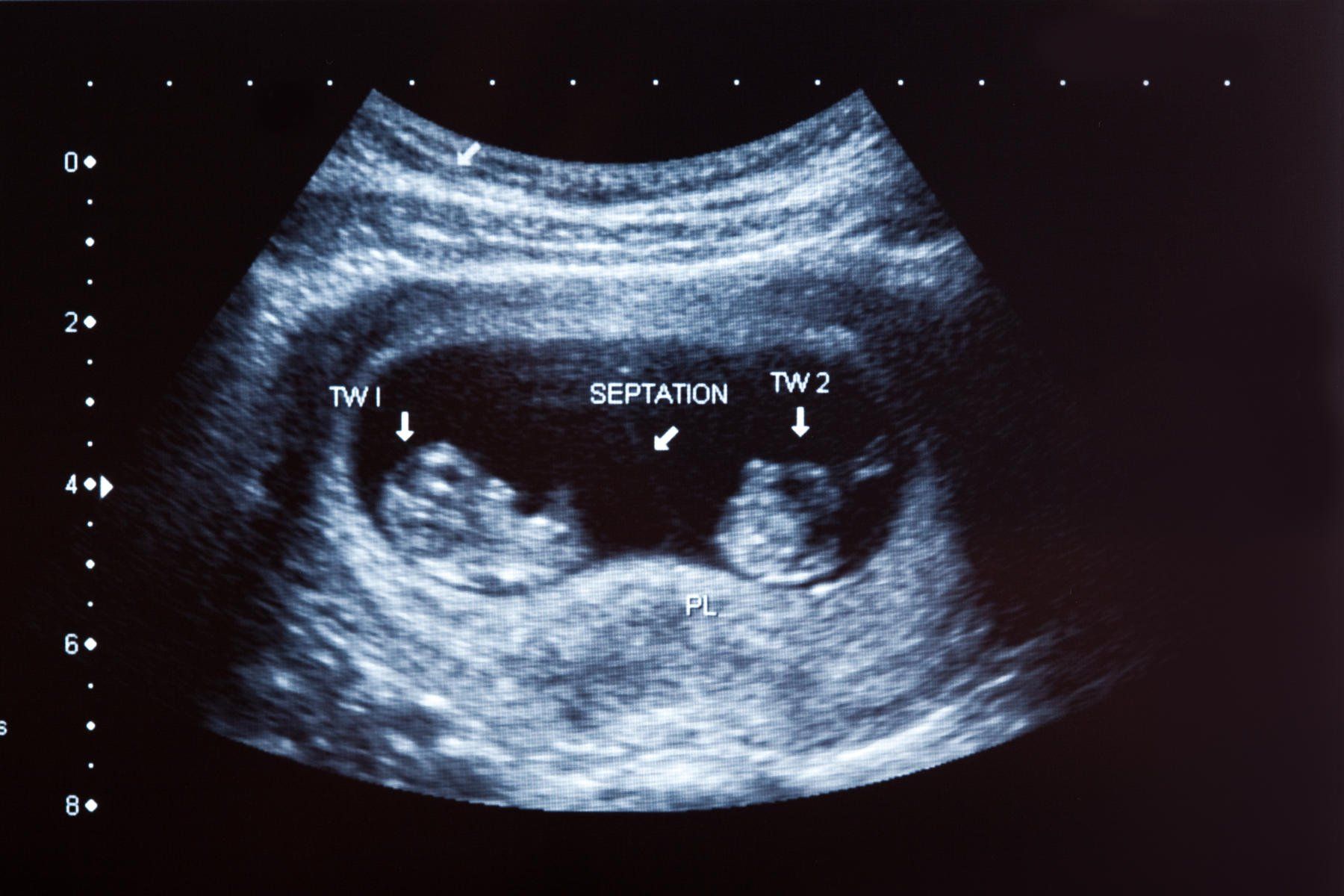
Can a twin go unseen in an ultrasound?
Yes. Ultrasounds aren’t flawless. A common example: what looks like a penis turns out to be a vulva, and suddenly you have a baby girl instead of a boy. Because ultrasounds are sonographic snapshots of what’s beneath the surface, they carry some margin for error.
The larger and more developed the fetus, the less chance it can hide. Conversely, the earlier you are in pregnancy, the more likely an extra baby might skip an early ultrasound appearance.
Why this might happen
What circumstances most often lead to a hidden twin?
- Your first scan happens very early. Early ultrasounds are less reliable. We’re dealing with tiny, developing humans — even when yolk sacs and fetal poles are forming, they can be too small to detect until they grow a bit. If you have a transvaginal ultrasound at 6 or 7 weeks, you might see only one embryo even though there are two.
- Your twins share an amniotic sac. Sometimes twins each have their own sacs, but if they share one, it raises the chance that one twin could be concealed on an early scan. These are called monochorionic monoamniotic (mo/mo) twins.
- Your hidden baby is incredibly stealthy. In other words, the baby may tuck behind its sibling, curl into a uterine nook, or just slip slightly out of the ultrasound’s field of view during the exam.
- Limited prenatal imaging. A single ultrasound early in pregnancy isn’t enough for the whole nine months. Without regular scans, you might be surprised at delivery. (This is why surprise twin births were more common before ultrasound technology existed.)
- Human error. Technicians and clinicians interpreting sonographic images are human. Even experienced staff can misread the interplay of light and shadow, mistaking a developing twin for another structure. This is especially likely in first-trimester scans.
When you can be 99.99 percent sure
True, you can’t be absolutely certain how many babies you’re carrying until delivery (hence the legends).
However, after about 20 weeks you can be approximately 99.99 percent confident there isn’t a hidden twin. That’s typically when the detailed anatomy scan occurs to evaluate fetal development. At that point it’s highly unusual for a twin to be quietly tucked away and remain unseen — they’re simply too large to miss.
Before 20 weeks, though, the possibility of a missed twin is much higher.
Signs of a twin pregnancy
Are there other clues you might be expecting twins if an early ultrasound misses them? The symptoms of a twin pregnancy resemble those of a singleton pregnancy, only more intense. Watch for:
- severe nausea or morning sickness (hyperemesis gravidarum is more common with twins)
- greater-than-expected weight gain or pronounced fatigue
- unusually high levels of hCG (the pregnancy hormone)
- consistently measuring large for gestational age at prenatal visits

The takeaway
With twins, nearly anything is possible. Technically a twin can hide in the uterus, but only for a limited time.
It isn’t unheard of for a twin pregnancy to escape early ultrasounds (around 10 weeks, for example). But by midpregnancy, when you have your 20-week anatomy scan, you can be about 99.99 percent certain of how many babies to expect at delivery.























Leave a Reply
You must be logged in to post a comment.