
Key takeaways
- Breathing in essential oils like eucalyptus or peppermint may ease flu symptoms, including congestion and headaches.
- Using diluted essential oils on the skin or dispersing them in a diffuser can relieve flu symptoms and may help combat infections, but they should not replace conventional treatment.
- Keeping your immune system robust with nutritious food and yearly flu shots is essential for preventing the flu.
Most of the time, recovering from the flu involves stepping up self-care while the virus runs its course. One useful self-care approach is using essential oils either as a topical rub or for aromatherapy. These highly fragrant oils can help mitigate flu symptoms, particularly by clearing nasal passages and easing headaches. Some oils might even offer antiviral effects to assist in treating infections and lowering fever. Read on to find out how to use these oils and which ones are helpful for the flu.
How to use essential oils for the flu
Inhalation is the most effective method for using essential oils during a bout of flu. You can inhale them by smelling the bottle directly or placing a few drops on a cotton ball or handkerchief. This approach helps unblock your nasal passages and improve breathing. The oils may also promote better sleep and reduce stress.

You can also add a few drops of essential oils to:
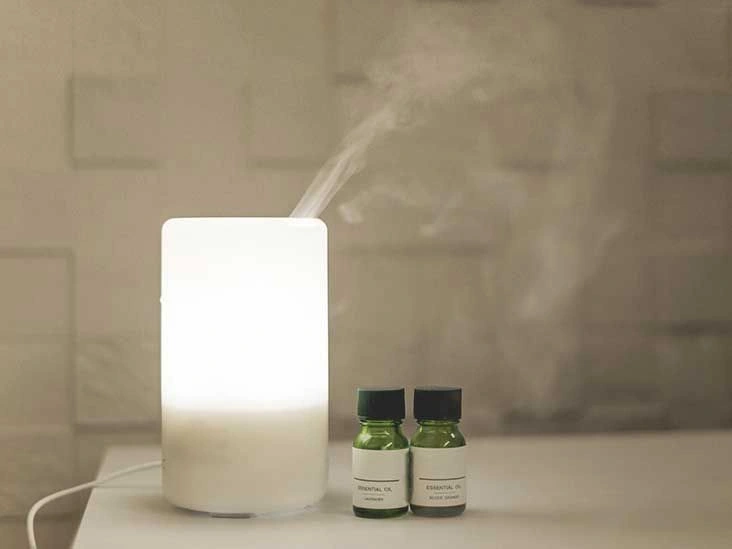
- a diffuser, to purify the air
- dilute in a carrier oil and add to hot bathwater
- a carrier oil, for massaging the head, neck, or feet
- a large bowl of steaming water, for inhaling vapors
- hot or cold compresses
Benefits
Benefits vary by application and the specific oil. For instance, the menthol and cooling sensations of peppermint oil may be more effective in a chest rub than in a diffuser. With topical use, always dilute the essential oil before applying it to skin. A guideline is to mix an ounce of carrier oil, such as coconut oil, with a few drops of essential oil.
| Oil | Benefits |
| lemon | clears nasal passages to support easier breathing |
| lavender | eases stress, fatigue, low mood, and headaches |
| peppermint | reduces coughing, sinus issues, and throat infections |
| thyme | offers antibacterial effects that may help combat respiratory infections |
| eucalyptus | helps lower fevers and has antiviral properties |
| tea tree oil | inhibits bacterial growth and fights infections |
| chamomile | soothes cold and flu discomfort |
| clove (eugenol) | possesses antiviral and antifungal traits useful for sanitizing surfaces or air |
| cinnamon | can be used to clean surfaces or freshen air |
| rosemary | is a nontoxic option for cleansing surfaces or air |
Risks and warnings of using essential oils
Potency: Essential oils are highly concentrated. Do not ingest essential oils. Avoid using them undiluted. Without dilution they can irritate skin, eyes, and respiratory passages. Dilute essential oils with carrier oils such as coconut, avocado, castor, or similar oils. Mix a few drops of essential oil into an ounce of carrier oil. Ratios can vary depending on the specific oil. Perform a patch test on the inside of your forearm to check for sensitivity.
Quality: Purchase essential oils from a trusted vendor. They should ship oils in glass bottles. Plastic containers increase contamination risk and shorten the oil’s shelf life.
Pregnancy: Consult your healthcare provider if you have concerns about using essential oils. If you are pregnant or breastfeeding, you may wish to avoid them. Research is limited on the safety of essential oils for children and pregnant people, and large doses may be toxic.
What the research says
Evidence on essential oils and the flu is limited, particularly in human studies. Some research indicates that certain essential oils have properties that may combat viruses, ease flu symptoms, and improve comfort while ill.
A 2010 study examined a commercial blend containing clove, wild orange, and cinnamon. Applied in vitro, the blend reduced viral particles by 90 percent and lowered infection rates.
A 2014 review of essential oils highlighted their health-promoting properties and noted antibacterial, antifungal, antiviral, and other actions with potential medical applications.
Other treatment options
Although essential oils can help relieve flu symptoms and may assist your immune response, they should not be your sole therapy. Over-the-counter drugs are often more effective and might even shorten recovery. Many of these medications can cause drowsiness or alertness, but options include:
- decongestants, which should be used only for a short period to avoid rebound congestion
- antihistamines, which reduce common flu symptoms like sneezing, itching, and a runny nose
- acetaminophen, which treats fever and pain associated with the flu
- throat lozenges, which soothe a scratchy throat
Limit the number of different medications you take to avoid overloading your system. Seek medical care if symptoms persist beyond three days or worsen.
What you can do now
Recognize flu symptoms so you know when to begin using essential oils. You can start applying them as soon as you notice early signs. Add a few drops to your bath, diffuse them into the air, or blend them with a carrier oil for a topical rub.

Essential oils are available online and at health stores. Keeping a few staples like tea tree, peppermint, and lavender on hand can be useful even when you’re well. They also help with stress and minor aches.
To reduce your risk of getting the flu, support your immune system with a balanced diet and get your yearly influenza vaccination.























Leave a Reply
You must be logged in to post a comment.