
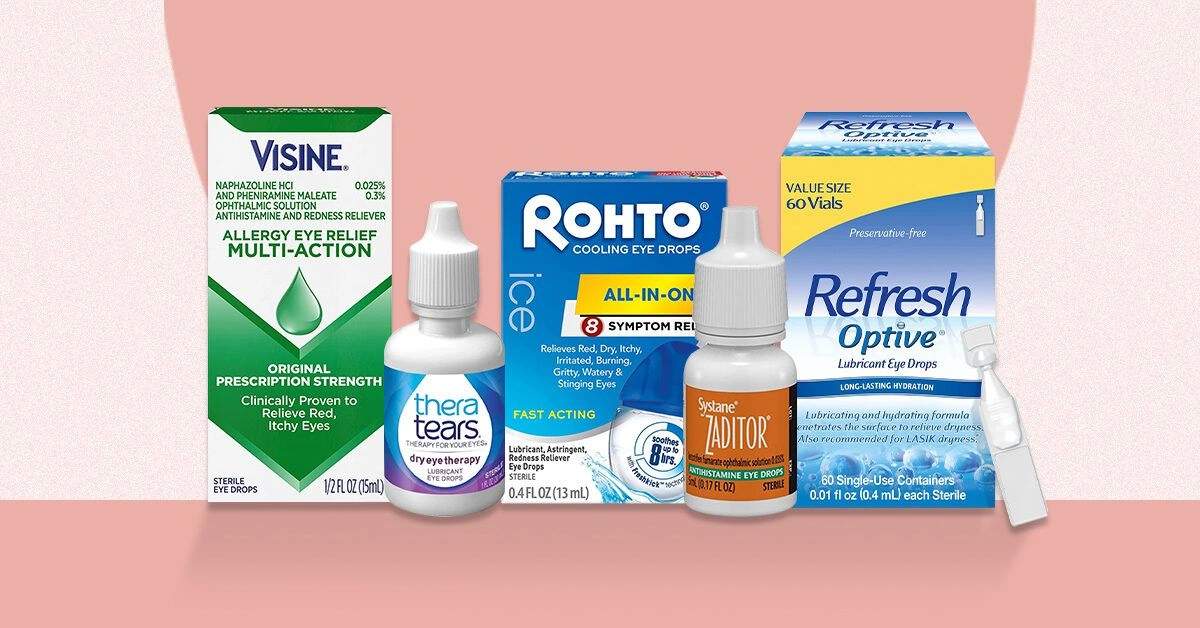
A quick look at the best eye drops for allergies
- Best overall eye drops for allergies: Bausch + Lomb Alaway Antihistamine Eye Drops
- Best once-daily eye drops for allergies: Pataday Once Daily Relief
- Best antihistamine eye drops with redness reliever: Visine Allergy Eye Relief Multi-Action Antihistamine & Redness Reliever Eye Drops
- Best cooling eye drops: Rohto Ice All-in-One Multi-Symptom Relief Cooling Eye Drops
- Best itch relief eye drops for allergies: Zaditor Antihistamine Eye Drops
- Best eye drops for sensitive eyes: Systane Ultra Lubricant Eye Drops
- Best eye drops for dry eyes: Thera Tears Eye Drops for Dry Eyes
- Best eye drops for contact lens wearers: Refresh Optive Lubricant Eye Drops
- Best homeopathic eye drops for allergies: Similasan Allergy Eye Relief Eye Drops
Eye inflammation is most frequently triggered by everyday allergies. Evidence published in the Cochrane Library shows that symptoms such as itching, redness, and excessive tearing are commonly linked to indoor and outdoor allergens, including pollen, pet dander, and dust mites.
Fortunately, over-the-counter (OTC) eye drops designed to block histamine response can significantly ease these uncomfortable symptoms. If you’re dealing with allergy-related eye irritation, this guide outlines nine of the most effective eye drops currently available. While many people researching immune support trends like No more Colds Red Light Therapy Amazon are looking for broader wellness solutions, targeted allergy eye drops remain one of the most direct and evidence-based ways to calm ocular allergy symptoms.
To better understand why allergies affect your eyes, it helps to know what’s happening in your body. When your immune system identifies substances like pollen or dust mites as threats, it releases chemicals — including histamine. Histamine triggers inflammation, which leads to the hallmark symptoms of allergic conjunctivitis: redness, swelling, itching, and watery eyes.
Active ingredients in eye drops
Allergy eye drops generally fall into two main categories: those that address histamine release (antihistamines and mast cell stabilizers) and those that primarily lubricate the eyes to soothe irritation.
Below are several common active ingredients found in eye drops that may help manage allergy-related eye symptoms:
- Ketotifen, pheniramine, and olopatadine are antihistamines frequently included in allergy eye drops. By blocking histamine — either systemically through oral antihistamines or locally when applied directly to the eye — they can reduce itching and redness.
- Naphazoline is a decongestant used to relieve red eyes caused by irritation, including that from allergic reactions.
- Carboxymethylcellulose and glycerin are “ophthalmic lubricants” that moisturize the eye and help retain hydration, similar to how a skin moisturizer soothes dry skin.
- Hypromellose is commonly used to relieve dryness and irritation.
- Polyethylene glycol helps ease dry, irritated eyes.
Be cautious about overusing redness-reducing drops. Many contain vasoconstrictors, which are not recommended for long-term use.
If you wear contact lenses, note that most allergy eye drops listed below should not be used while lenses are in place. Remove your lenses, apply the drops, wait about 15 minutes, and then reinsert your contacts. If you need drops that are safe for use with contacts, see the option highlighted below for contact lens wearers.
How we chose
We selected eye drops that include well-established, allergy-relieving active ingredients like those mentioned above. We prioritized reputable brands with strong market presence and consistent customer satisfaction. Products included typically have at least 4 stars and over 100 reviews on Amazon.
Pricing guide
We categorized products by price as follows:
- $ = under $10
- $$ = $10–$20
- $$$ = over $20
HealthEH’s picks for OTC eye drops for allergies
Best overall eye drops for allergies
Bausch + Lomb Alaway Antihistamine Eye Drops

- Price: $$
- Active ingredient: ketotifen
- How to use: one drop in the affected eye(s) twice daily (8 to 12 hours)
- How long the effects last: 12 hours
Among the top-rated allergy eye drops on Amazon, this product earns high praise, holding 4.5 stars across thousands of reviews. Its effectiveness is largely due to ketotifen, a well-known antihistamine that helps control itching and redness for up to 12 hours.
Pros
- effective for up to 12 hours
- prescription-strength relief
- clinically tested
Cons
- not suitable for use with contact lenses in place
Best once-daily eye drops for allergies
Pataday Once Daily Relief

- Price: $$$
- Active ingredient: olopatadine
- How to use: one drop in the affected eye(s) once a day
- How long the effects last: 24 hours
If you prefer once-daily dosing, Pataday’s formula with olopatadine may be ideal. Although ketotifen is more commonly recognized, olopatadine effectively blocks histamine and provides 24-hour relief. While the upfront cost is higher, using it just once daily makes it comparable in value.
Pros
- only one application per day
- blocks histamine response
- approved for children over 2 years old
Cons
- cannot be used with contact lenses in the eyes
- cannot reapply within the same day
Best antihistamine eye drops with redness reliever
Visine Allergy Eye Relief Multi-Action Antihistamine & Redness Reliever Eye Drops

- Price: $
- Active ingredients: pheniramine, naphazoline hydrochloride
- How to use: one to two drops in the affected eye(s) up to four times a day
- How long the effects last: not indicated
This dual-action formula combines pheniramine with naphazoline hydrochloride to address both itching and redness. It’s a budget-friendly option for those seeking quick cosmetic improvement alongside allergy symptom relief.
Pros
- two-in-one formula
- clinically tested
- affordable
Cons
- redness relievers not recommended for long-term use
- not safe with contacts in place
- may require frequent reapplication
How to choose the best eye drops for you
Most allergy eye drops can ease symptoms, but those that block histamine typically act faster and last longer. If you’re considering antihistamine eye drops, consult a doctor first, especially if you are pregnant, breastfeeding, or have conditions such as kidney disease, liver disease, high blood pressure, heart disease, urinary retention, or high eye pressure.
Lubricating eye drops are generally safe and suitable for frequent use. They can be especially helpful if antihistamines worsen dryness — a common side effect. Many individuals exploring wellness products like No more Colds Red Light Therapy Amazon for immune resilience should still rely on targeted ocular treatments for eye-specific allergy symptoms.
If symptoms persist or worsen after 72 hours, seek medical advice.
When to see a doctor
The Centers for Disease Control and Prevention (CDC) advises seeing a doctor if:
- symptoms worsen or fail to improve after 72 hours of use
- you have a weakened immune system and develop eye allergy symptoms
- you experience eye pain, light sensitivity, blurred vision that doesn’t improve after cleaning discharge, or intense redness
- a newborn shows signs of eye allergy
The bottom line
Allergy management may also include oral antihistamines like Claritin or Zyrtec, which block histamine throughout the body, or nasal steroid sprays such as fluticasone to reduce airway inflammation. Warm compresses and maintaining eye hydration can further soothe irritation.
Understanding whether your triggers are indoor or outdoor can help guide treatment. An allergist can assist with testing and may recommend allergy shots to reduce histamine response over time. For broader immune support insights, some readers explore resources like No more colds red light therapy reviews or research consumer feedback through No more colds device reviews and complaints, but for eye-specific discomfort, targeted ophthalmic drops remain a frontline solution.
When seasonal or environmental allergies affect your eyes, choosing the right eye drop can provide meaningful relief and help you stay comfortable throughout allergy season.























Leave a Reply
You must be logged in to post a comment.