

Evening primrose oil (EPO) may help soften the cervix, but its ability to reliably induce labor remains uncertain. Consult your doctor or midwife before using any supplements during pregnancy.
If you’ve passed 40 weeks of pregnancy, you’ve likely encountered suggestions for natural techniques to try to start labor. There are several approaches people try to prepare the body for labor, and one option is evening primrose oil (EPO), which some use vaginally in hopes of promoting labor. EPO is easy to find and relatively inexpensive, which contributes to its popularity.
You may be wondering whether it’s appropriate for you. Below is a summary of this herbal supplement, how it’s used, and important safety considerations.
Always discuss any supplement use with your OB-GYN or healthcare provider.

What is evening primrose oil?
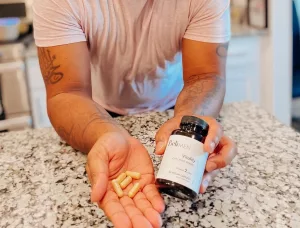
Evening primrose oil is extracted from the seeds of the evening primrose plant. It contains linoleic acid, gamma-linolenic acid, and vitamin E. You can buy over-the-counter EPO capsules at many pharmacies and health stores; they are marketed as dietary supplements.
EPO is used in complementary and alternative medicine for a range of conditions, such as neuropathy, premenstrual symptoms, menopause-related complaints, and rheumatoid arthritis. Despite long-standing use for various issues, EPO’s direct effects on labor are still not well-established.
How is evening primrose oil used?
EPO is available in capsule form and may be taken orally or inserted vaginally. There’s no universally accepted dose, but common regimens cited in the literature involve 500 to 2000 milligrams per day, typically started between 37 and 40 weeks of pregnancy. If you decide to try EPO, begin with very low doses and follow your provider’s advice.
Always adhere to directions from your OB-GYN or midwife.
Does evening primrose oil work?
EPO might assist with cervical softening and effacement (thinning) and could potentially shorten labor. The proposed mechanism involves linoleic acid prompting a prostaglandin response. Your clinician can advise based on your personal medical background and pregnancy course.
However, formal research on EPO for labor induction is limited and inconsistent. Published trials generally do not demonstrate a robust link between EPO use and reliably triggering labor.
A 2023 meta-analysis reviewing seven studies (six randomized controlled trials and one quasi-experimental study) with a combined 920 participants produced mixed findings. Notable outcomes included:
- Among 652 women in studies that assessed labor using the Bishop score (a numerical measure of cervical readiness), EPO use was associated with a statistically significant increase in Bishop scores.
- Both vaginal and oral administration of EPO yielded higher Bishop scores in the treatment groups versus placebo in several included trials.
Conversely, a 2019 randomized clinical trial reported no effect of EPO on Bishop scores and suggested that EPO should not be used in routine clinical practice outside of research settings.
Pros and cons
More rigorous studies are needed to fully understand the safety and effectiveness of EPO. Below are potential benefits and drawbacks to consider if you’re thinking about using EPO to help induce labor.
Potential benefits
- There are no well-documented adverse effects on breastfeeding.
- Midwives in various countries (outside the United States) often use it as a gentler option to help prepare the cervix rather than stronger pharmacologic agents.
- It may lower the likelihood of needing medical induction in some cases.
- While there may be advantages, there are also important downsides.
Potential drawbacks
- As an unregulated herbal supplement, product strength and purity can vary, so you may not know the exact dose or contents.
- EPO can have anticoagulant properties and may thin the blood.
- There is a possibility it could contribute to complications during delivery.
- Side effects can include headaches and gastrointestinal discomfort.
- It can interact negatively with other medications you are taking.
Are there other safe ways to induce labor?
The National Health Service (NHS) advises that there is no safe method to induce labor at home. Most obstetricians advise against attempting to start labor with home remedies. While some people report success with various techniques, research does not support any of them as reliably effective.
Examples of commonly mentioned approaches include:
- nipple stimulation
- sexual intercourse
- eating spicy food
- raspberry leaf tea
Always check with your healthcare provider before trying any method to induce labor.
It is not recommended to attempt to induce labor before 40 weeks of pregnancy.
Depending on your medications, underlying health issues, or pregnancy complications, trying to induce labor on your own could be hazardous.
Takeaway
Some studies indicate EPO might help soften the cervix and potentially encourage labor, but other research finds no benefit. At present, evidence is insufficient to confirm that using evening primrose oil to induce labor is both safe and consistently effective.
Always consult your OB-GYN or midwife before beginning any supplements during pregnancy. The American College of Obstetricians and Gynecologists considers a pregnancy full-term at 39 weeks or later. Given the limited research, avoid interventions that might trigger labor before your baby is fully mature.




















Leave a Reply
You must be logged in to post a comment.