
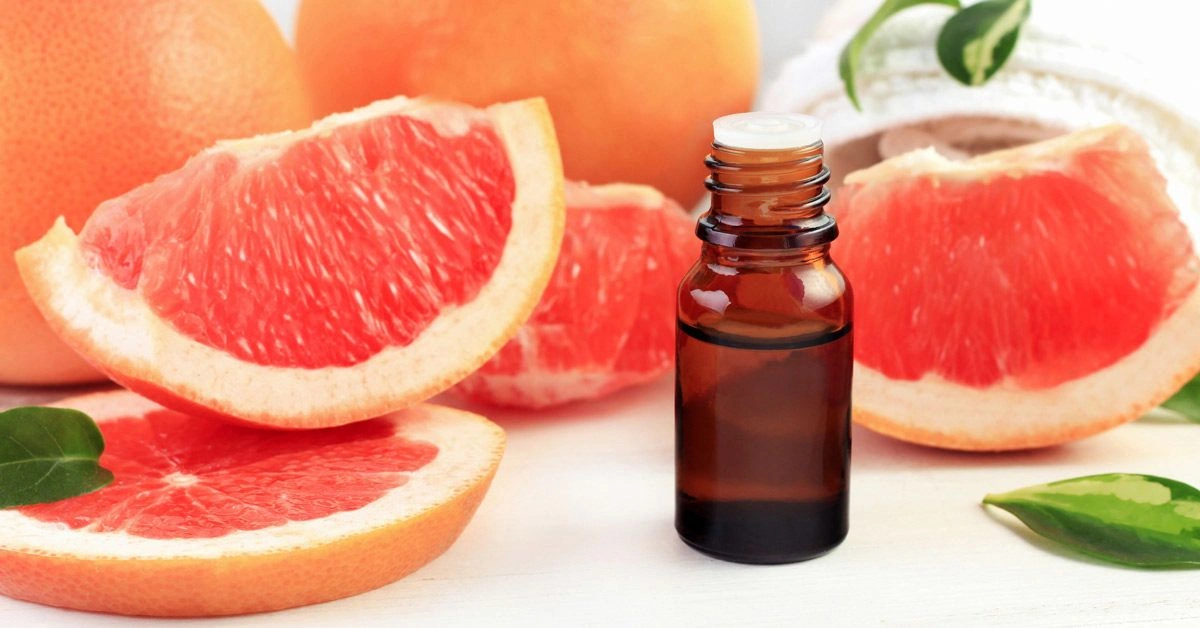
Grapefruit essential oil is a citrus-scented, orange-hued oil commonly employed in aromatherapy.
The oil is obtained by cold-pressing the tiny glands found in the grapefruit rind.
Grapefruit essential oil has unique characteristics that may provide various health advantages — such as lowering blood pressure and easing stress.
Below are 6 potential benefits and applications of grapefruit essential oil.
1. May Reduce Appetite
For people aiming to curb an excessive appetite, evidence suggests that aromatherapy with grapefruit oil might be beneficial.
One animal study reported that rats exposed to grapefruit essential oil aroma for 15 minutes three times per week showed decreases in appetite, food consumption, and body weight (1).
Another recent rodent study found that inhaling grapefruit essential oil scent increased activity in the gastric vagal nerve, producing a reduction in appetite. This nerve helps stimulate production of stomach secretions needed for digestion.
The same research also tested limonene, a major component of grapefruit oil. Smelling limonene produced comparable appetite-suppressing effects and reduced food intake (2).
Although these findings are encouraging, they are limited to animal models. More studies are required to determine effects in humans.
Summary: Current research is limited to animal studies but indicates that the aroma of grapefruit essential oil may help suppress appetite.
2. May Support Weight Loss
Grapefruit essential oil might assist with weight reduction, although evidence in this area is sparse.
In one rat study, exposure to the aroma of grapefruit oil promoted breakdown of fat tissue and led to decreased food intake (2).
Likewise, a laboratory study on cultured rat fat cells showed that direct application of grapefruit essential oil inhibited the formation of adipose tissue (3).
Topical use of grapefruit essential oil has also been associated with weight-related outcomes in humans.
For instance, a study involving postmenopausal women examined abdominal massages with essential oils for weight loss (4).
Participants massaged their abdomen twice daily for five days each week and received a full-body aromatherapy massage using a 3% blend containing grapefruit oil, cypress, and three other oils once a week (4).
After six weeks, the group using the essential oil regimen showed decreases in abdominal fat and waist circumference (4).
However, because multiple oils were used, it’s unclear if grapefruit oil alone produced these changes.
Keep in mind that the evidence for weight loss properties of grapefruit essential oil is limited and of low quality. Additional rigorous studies are needed before definitive conclusions can be drawn.
Also, consuming essential oils as supplements is not advised for people.
Summary: Animal and lab studies suggest grapefruit essential oil might reduce fat tissue and suppress appetite. One human trial found that massage with essential oils could lower abdominal fat, but more research is necessary.
3. May Help Stabilize Mood
Because some pharmaceutical treatments for anxiety and depression have undesirable side effects, many seek alternative approaches (5).
Research indicates that aromatherapy can be a helpful adjunct therapy for mood regulation and easing anxiety (6).
There is limited research specifically on grapefruit essential oil for mood, but studies of citrus oils that share similar compounds with grapefruit oil have shown calming and anxiolytic effects (7).
These soothing effects are partly attributed to limonene (8).
Summary: Although direct research on grapefruit essential oil is limited, citrus essential oils in general have been linked to mood improvement and reduced anxiety.

4. Antibacterial and Antimicrobial Properties
Grapefruit essential oil exhibits notable antibacterial and antimicrobial activity.
Test-tube research has shown it has antimicrobial effects against harmful bacteria like Staphylococcus aureus, Enterococcus faecalis, and Escherichia coli (9, 10).
In one comparison of five essential oils, grapefruit oil ranked among the most effective against MRSA — bacteria that are often resistant to standard antibiotics (11, 12).
It may also help inhibit stomach ulcers linked to Helicobacter pylori.
For example, a lab study testing 60 essential oils found that white grapefruit essential oil showed antibacterial activity against H. pylori (13).
Research also indicates grapefruit essential oil can be effective against certain fungal strains, like Candida albicans, a yeast that can cause infections, particularly in immunocompromised people (14, 15).
Still, it’s unclear whether topical grapefruit oil would affect H. pylori in the stomach, and ingesting essential oils is not advised.
Summary: Grapefruit essential oil demonstrates antimicrobial and antibacterial actions similar to those of some established topical agents.
5. May Lower Stress and Reduce Blood Pressure
High blood pressure (hypertension) is a prevalent condition affecting roughly one in three adults in the U.S. (16).
Many people turn to natural therapies to help manage blood pressure — either alongside medications or as an alternative.
Some research suggests aromatherapy may assist in controlling both stress and blood pressure.
For instance, a clinical study found that inhaling citrus and lavender essential oils had both immediate and lasting effects on reducing blood pressure and stress (17).
Participants wore a necklace infused with the essential oils for 24 hours and experienced a drop specifically in daytime systolic blood pressure (the top number) (18).
They also showed lowered cortisol levels — a hormone released during stress (18).
In another study, grapefruit essential oil increased nerve activity that helped reduce blood pressure in rats, with limonene thought to be a main contributing compound (19).
Nevertheless, there is currently no definitive human evidence that grapefruit essential oil alone can treat hypertension.
Summary: Preliminary findings suggest grapefruit essential oil may help reduce stress and blood pressure, but more human research is needed.
6. May Aid in Treating Acne
Grapefruit essential oil may support healthy skin by helping to prevent and treat conditions like acne (20).
Many skincare products include citrus essential oils for their invigorating scent and antibacterial and antioxidant properties.
These oils might help maintain a low bacterial load on the skin, which can assist the acne healing process.
One laboratory study examined the antibacterial activity of 10 essential oils against P. acnes, a bacterium frequently linked to acne development (21).
Researchers found grapefruit essential oil exhibited some antibacterial activity versus P. acnes. However, it was not as strong as other oils tested, such as thyme and cinnamon.
More research is necessary to determine whether grapefruit essential oil is an effective home treatment for acne.
Summary: Due to its antibacterial properties, grapefruit essential oil shows promise for preventing and treating acne.
Is It Safe?
For most people, grapefruit essential oil is safe when used on the skin (diluted) or inhaled.
However, keep the following precautions in mind when using essential oils:
- Dilution. Always mix essential oils with a carrier oil before applying to the skin — a standard safety measure.
- Photosensitivity. Applying certain essential oils, particularly citrus oils, before sun exposure can cause photosensitivity and increase the risk of burns (22).
- Infants and children. It’s generally advised to consult a healthcare provider before using essential oils on children due to safety concerns.
- Pregnancy. Some essential oils may be safe during pregnancy, but it’s best to check with your doctor before using them (23).
- Pets. Essential oils used topically or in aromatherapy can affect others in the home, including pets, which may be more sensitive than humans (24).
Although most essential oils are safe for topical use and inhalation, they should not be swallowed. Ingesting essential oils can be toxic and, in high doses, fatal (25, 26).
Summary: Grapefruit essential oil is generally safe for topical and inhalation use when precautions are followed. Never ingest essential oils.
The Bottom Line
Grapefruit essential oil is often used both on the skin (diluted) and in aromatherapy.
Research indicates this citrus oil may help stabilize mood, reduce blood pressure, and alleviate stress.
It also has antibacterial and antimicrobial qualities that might assist in treating conditions like acne and possibly stomach ulcers.
Further research is necessary to substantiate these benefits. Still, grapefruit essential oil could be a useful natural option when used alongside conventional treatments.






















Leave a Reply
You must be logged in to post a comment.