

On their own, eggs are relatively low in calories, although the exact amount depends on their size and how you prepare them. They supply nutrients that are uncommon in many other foods, such as vitamin D.
Eggs are remarkably adaptable. Whether you scramble, fry, poach, or bake them, there are numerous methods to prepare eggs to match your preferences.
Although they’re a go-to for breakfast, eggs also work well in lunch and dinner dishes like salads, soups, sandwiches, stir-fries, and more.
If eggs are a regular part of your diet, you might be curious about their calorie content and nutritional makeup. This article covers the key points about egg nutrition.
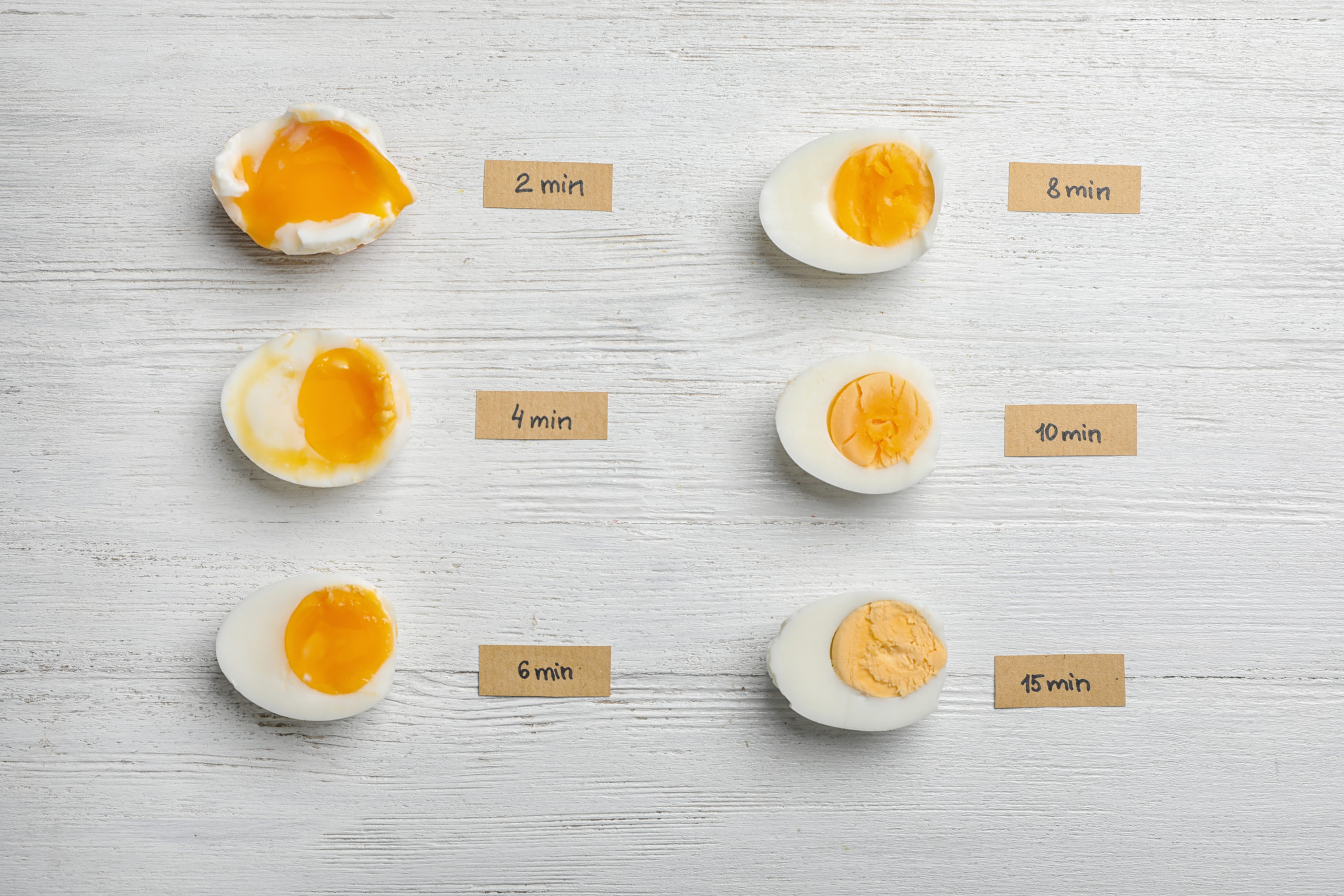
Calorie breakdown
Calories in an egg vary by size. As you’d expect, a smaller egg contains fewer calories than a larger one.
Below is a typical breakdown by size. These figures are based on a large egg containing 72 calories per 50 grams (1):
- Small egg (38 grams): 54 calories
- Medium egg (44 grams): 63 calories
- Large egg (50 grams): 72 calories
- Extra-large egg (56 grams): 80 calories
- Jumbo egg (63 grams): 90 calories
These values refer to a whole plain egg with nothing added.
Once you add cooking fats like oil or butter, or serve eggs with items such as bacon, sausage, or cheese, the calorie total rises.
For instance, a large egg fried in 1 tablespoon (14 grams) of butter contains about 174 calories (1, 2).
An omelet made with 3 eggs and cheese cooked in butter is roughly 400 calories. Eggs Benedict — two poached eggs with an English muffin, Canadian bacon, and hollandaise sauce — approaches 900 calories (3, 4).
Yolks and whites differ in calorie content. The yolk of a large egg (17 grams) has about 56 calories, while the white of a large egg (34 grams) contains around 18 calories (5, 6).
However, because egg whites are lower in calories doesn’t automatically make them the healthier option. Your body requires sufficient calories daily to function well and help you feel your best.
Picking foods solely based on calorie numbers isn’t the best approach to healthy eating. Instead, focus on nutrient density — how many nutrients a food provides relative to its calories.
Summary: A typical large egg has about 72 calories. Smaller eggs contain fewer calories and larger eggs contain more. Adding extras like cheese or butter during cooking increases the calorie content.
Nutritional facts
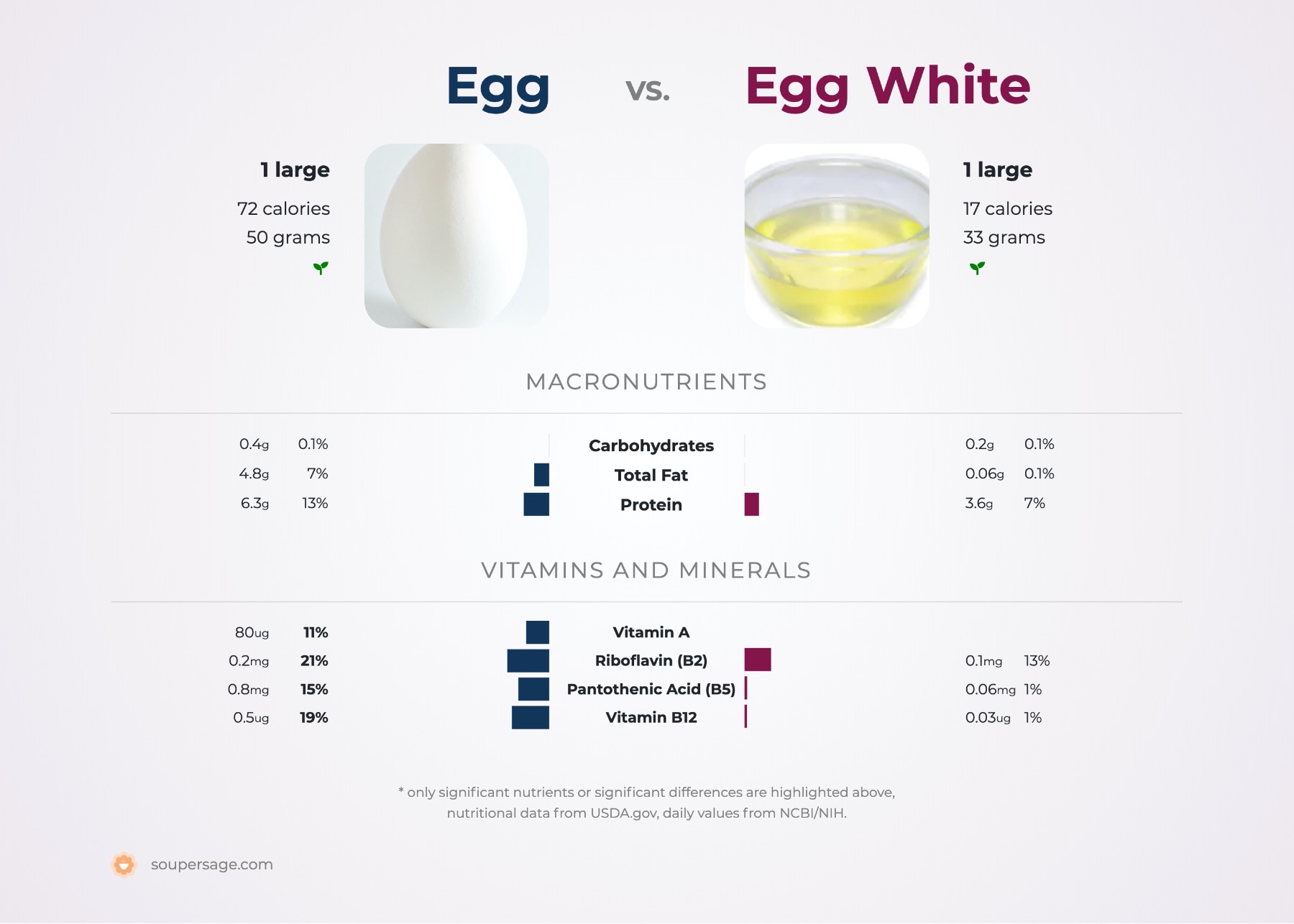
An egg’s worth goes beyond its calorie total. Eggs are highly nutritious, offering a wide array of beneficial nutrients.
Here is the nutrition profile for a whole large egg (63 grams) (1):
- Calories: 72
- Protein: 6 grams
- Fat: 5 grams
- Carbs: less than 1 gram
- Choline: 31% of the Daily Value (DV)
- Selenium: 28% of the DV
- Vitamin B12: 21% of the DV
- Vitamin B2 (riboflavin): 16% of the DV
- Vitamin D: 6% of the DV
- Iron: 5% of the DV
Eggs supply high-quality protein plus numerous essential vitamins and minerals. They’re among the few foods that naturally provide vitamin D, which is important for bone health, immune function, cell growth, and more (7).
Selenium is another valuable nutrient in eggs. This trace mineral supports reproductive health and the synthesis of thyroid hormones, among other functions (8).
Eggs also contain the carotenoids lutein and zeaxanthin. These act as antioxidants and help shield the eyes from harm and conditions like macular degeneration and cataracts (9).
Remember that many nutrients in eggs are concentrated in the yolk. Consuming only egg whites won’t deliver the same nutrient profile.
Summary: Eggs offer protein, fat, a variety of vitamins and minerals, and carotenoid compounds.
Benefits
Because eggs contain a broad spectrum of nutrients, including them in your diet may offer several advantages.
First, eggs are an excellent source of protein. They’re considered a complete protein, meaning they contain all essential amino acids — the components your body needs for growth, repair, and overall health (10).
Protein-rich foods can help you feel satisfied between meals and may support weight management.
Some research indicates that eating eggs for breakfast suppresses appetite more than eating cereal, though it’s unclear if this leads to long-term weight loss (11).
Regular egg consumption can help you reach your nutrient targets. Eggs contain a range of macro- and micronutrients that are important for development and well-being (12).
One study observed that adults who ate whole eggs had higher intakes of protein, fats, zinc, selenium, and choline compared with those who didn’t consume eggs (12).
Likewise, a study in infants linked egg consumption with increased intakes of selenium, choline, vitamin B12, and the carotenoids lutein and zeaxanthin (13).
Meeting choline requirements is especially relevant, since many people don’t get enough of this nutrient (14).
Choline is crucial for brain development, cell signaling, and nerve transmission. It’s particularly important for pregnant and breastfeeding people to ensure adequate choline intake for their baby’s healthy development (14, 15).
Overall, eggs are a nutritious and convenient food to include in a balanced diet.
Summary: Eggs supply high-quality protein and many essential nutrients. Eating them can help you meet needs for specific macronutrients, vitamins, and minerals.
Possible downsides
While eggs have many benefits, there are some potential drawbacks to be aware of.
Eating too many could affect heart disease risk
For many years, eggs were viewed as a heart risk because they contain a fair amount of cholesterol.
The long-held belief was that eating cholesterol-rich foods raised blood cholesterol, and high blood LDL (bad) cholesterol is a risk factor for cardiovascular disease (16).
More recent studies haven’t found a clear link between egg consumption and heart disease (17).
Some evidence suggests that eating up to one egg per day is not associated with higher heart disease risk and may even lower stroke risk (17, 18).
However, consuming more than one egg daily might elevate blood cholesterol in some people and theoretically increase cardiovascular risk. Some research has linked higher egg intake with greater rates of death from heart disease (19, 20).
Moderate consumption — such as one egg a day or seven per week — is probably safe and beneficial for most people. It’s less clear whether higher intakes pose a risk for certain groups, like those with preexisting heart conditions.
Because cholesterol is concentrated in the yolk, you can reduce cholesterol intake by using more egg whites and fewer whole eggs.
A small subset of people, called hyper-responders, are more sensitive to dietary cholesterol; they may experience larger increases in blood cholesterol when they eat eggs compared with others (21).
Ultimately, overall diet quality and lifestyle are the main drivers of disease risk. Single nutrients like cholesterol rarely determine health outcomes on their own.
Raw eggs can lead to foodborne illness
There are safety concerns with eating raw or undercooked eggs.
Raw eggs can be contaminated with Salmonella, a harmful bacterium.
Salmonella infection can cause symptoms like fever, abdominal cramps, and dehydration. Infants, older adults, pregnant people, and those with weakened immune systems are at higher risk of severe illness.
To reduce the risk of salmonella, refrigerate store-bought eggs promptly and cook them until their internal temperature reaches at least 160°F (71.1°C) (22).
If a recipe calls for raw or undercooked eggs — such as certain desserts — use pasteurized eggs to minimize risk.
Summary: Eggs have been linked to cholesterol concerns historically, but moderate intake appears safe for most people. Eating raw or undercooked eggs carries a risk of foodborne illness.
Recipes to try
Eggs can be prepared in many ways: hard-boiled, fried, omelets, frittatas, scrambled, poached, pickled, and more.
They shine in breakfast, lunch, dinner, and even dessert recipes. Here are a few ideas to inspire you.
Green vegetable frittata
Frittatas make a quick dinner or leisurely brunch. Add greens such as spinach and zucchini to boost the nutritional value, as shown in this recipe from Bowl of Delicious.
Baked eggs in avocado with bacon
Eggs and avocado are a match made in heaven. Try baked eggs in avocado with bacon from The Kitchen Magpie for a satisfying morning meal.
Brussels sprouts and egg hash
Eggs are so flexible that you can crack them over a skillet of vegetables for a quick meal any time of day. This recipe from my blog combines shredded Brussels sprouts, pears, and shallots with eggs on top.
Jalapeño egg salad
Classic egg salad can become stale after a while. Spice it up with this jalapeño egg salad from Homesick Texan for a refreshing twist that works any time of day.
Three-ingredient flourless chocolate cake
No recipe roundup is complete without a dessert. This flourless chocolate cake from Kirbie’s Cravings is gluten-free, relatively high in protein, and needs only three ingredients.
Summary: Use eggs across meals: try frittatas, hashes, egg salad, or baked desserts.
The bottom line
One large egg has roughly 72 calories — but eggs offer far more than just calories.
Whole eggs deliver protein, choline, selenium, and several other vitamins and beneficial compounds. If you want to increase your intake of these nutrients, eggs are an excellent, cost-effective option.
Enjoy eggs in frittatas or hashes for breakfast, in salads for lunch or dinner, and in baked goods for dessert.
Just one thing
Try this today: Preparing eggs ahead of time makes it easy to add them to your meals. To hard-boil eggs:
- Put eggs in a saucepan and cover with water.
- Bring to a boil and cook for 6–9 minutes.
- Drain and transfer to cold water to cool.
Store them in the refrigerator for about a week; they’ll be ready to peel and add to salads, sandwiches, or other dishes.






















Leave a Reply
You must be logged in to post a comment.