

A salt pipe is a device used to inhale tiny salt particles. Supporters of salt pipes claim they can aid various health issues, including asthma, though rigorous scientific backing is sparse.
Salt therapy, often called halotherapy, may include the use of salt pipes.
Proponents of halotherapy — based largely on anecdotal reports and some natural-health advocates — suggest it might help with:
- respiratory problems like allergies, asthma, and bronchitis
- mental health issues such as anxiety and depression
- dermatological concerns including acne, eczema, and psoriasis
Still, scientific validation for these assertions is limited.
Continue reading to find out more about whether salt pipes may relieve certain conditions, the various forms of salt therapy, and how salt pipes are typically used.

Salt pipes and chronic obstructive pulmonary disease (COPD)
Some claim halotherapy can be a helpful approach for COPD management.
COPD is a progressive lung disorder that limits airflow. It usually results from prolonged exposure to irritants and airborne particles, most commonly cigarette smoke.
If you’ve been diagnosed with COPD, you face an elevated risk of developing other conditions such as lung cancer and cardiovascular disease.
A 2014 review that evaluated 151 studies on salt therapy for COPD identified only one high-quality randomized controlled trial. Consequently, the reviewers concluded that the available evidence was insufficient to endorse halotherapy as an effective COPD treatment and stressed the need for more robust trials.
More recently, a 2022 review of 13 papers tended to favor salt therapy, especially dry salt inhalers, proposing positive effects for individuals with chronic respiratory illnesses. The hypothesized mechanisms include enhanced mucus clearance, improved lung function, and better overall breathing and quality of life.
However, none of the included papers were published as peer-reviewed trials, and the review did not feature randomized controlled studies. Therefore, the presented evidence is not as convincing as it may appear.
In summary, further well-designed research, particularly randomized clinical trials, is required to accurately evaluate halotherapy’s effectiveness for COPD.
Salt pipes and asthma
According to Asthma + Lung UK, there isn’t enough reliable information yet to regard halotherapy as a dependable treatment for asthma.
The organization points out that there are very few high-quality studies on salt therapy and cautions that inhaling salt could irritate airways, provoking coughing or an asthma flare. Currently, most clinicians do not recommend salt therapy for people with asthma.
A 2021 study reflected this professional skepticism. Nonetheless, that same study noted some potential for salt therapy in asthma diagnosis, treatment, and prevention, while acknowledging the need for additional research to address existing gaps and concerns.
Types of salt therapy
There are generally two main approaches to salt therapy: dry and wet.
Dry salt therapy
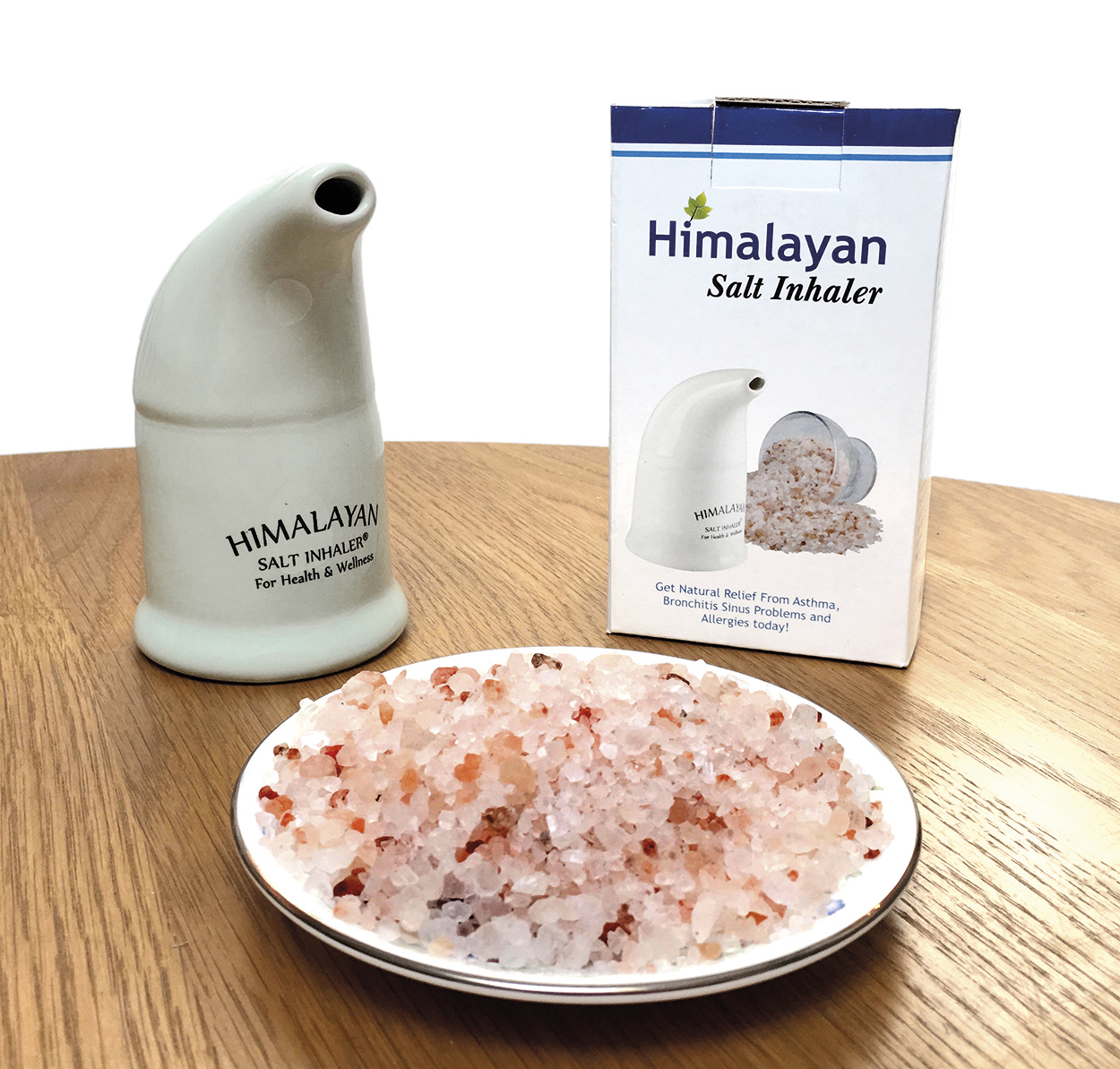
Dry halotherapy is linked to natural or manufactured salt caves. An artificial salt cave is a cool, low-humidity environment where a halogenerator disperses microscopic salt particles into the air. Salt pipes and salt lamps are typically examples of dry halotherapy products.
Wet salt therapy
Wet halotherapy employs saline-based methods, such as:
- salt exfoliants
- salt baths
- floatation tanks
- nebulized saline
- gargling solutions
- neti pots
How to use a salt pipe
Although scientific evidence of benefit is limited, some people choose to use salt pipes. Common usage instructions include:
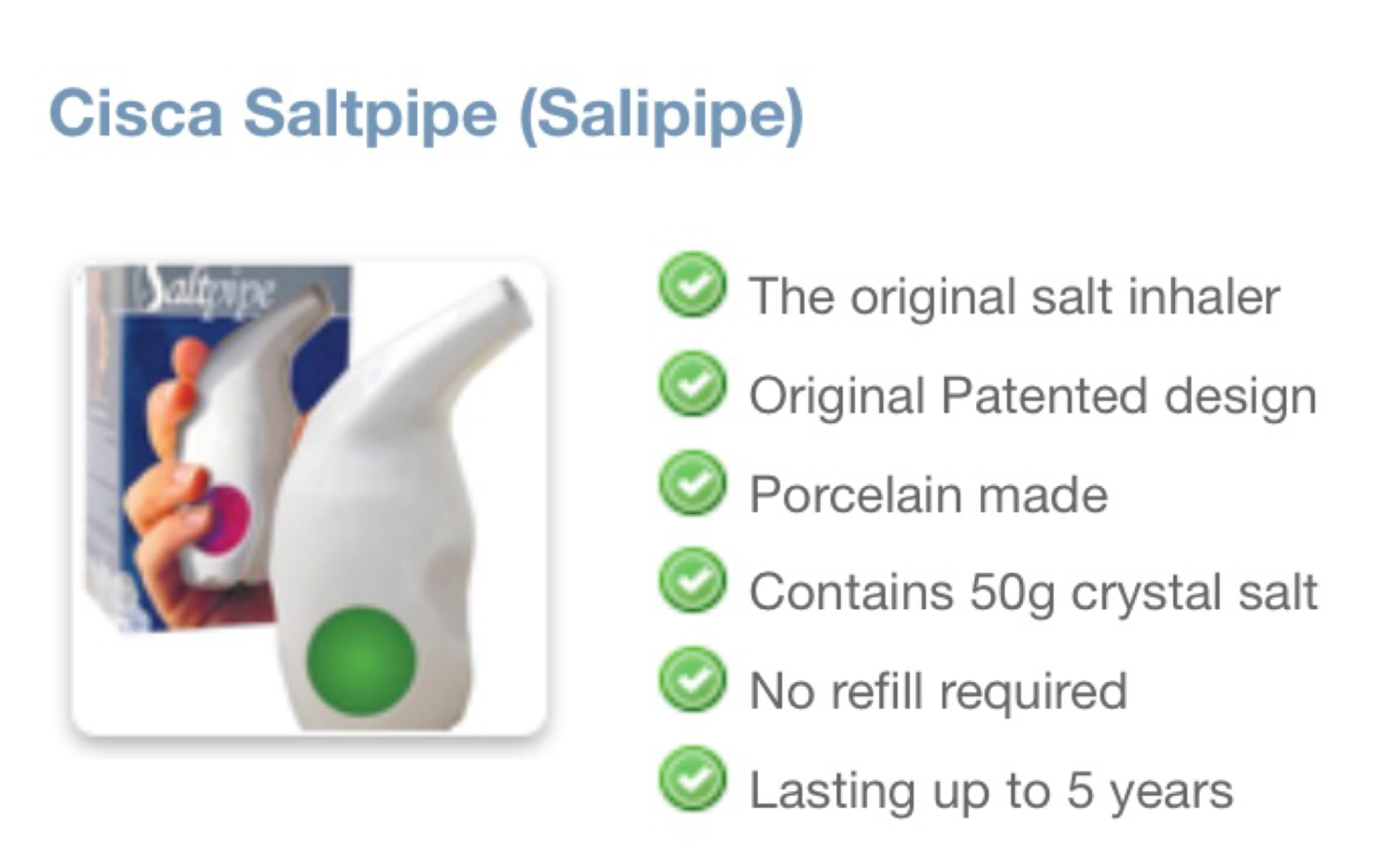
- Place salt crystals in the chamber at the base of the salt pipe.
- Inhale through the mouthpiece at the top, drawing the salt-enriched air deeply into the lungs. Many advocates recommend inhaling through the mouth and exhaling through the nose.
- Proponents often advise holding the inhaled breath for 1–2 seconds before breathing out and using the pipe for about 15 minutes each day.
It’s important to consult your physician before trying a salt pipe or any form of salt therapy, particularly if you have asthma, COPD, or another respiratory condition. Incorrect use could exacerbate symptoms.
Himalayan and other types of salt
Many supporters of salt inhalers promote Himalayan salt, claiming it is exceptionally pure and rich with 84 trace minerals present in the human body.
Others recommend ancient halite crystals from salt caves in places like Hungary and Transylvania for comparable reasons.
Yet little evidence supports the notion that Himalayan salt provides superior health benefits compared with ordinary salt or contains as many trace minerals as often claimed.
Origins of salt therapy
In the mid-1800s, Polish physician Feliks Boczkowski observed that salt miners experienced fewer respiratory ailments than other miners.
Later, in the mid-1900s, German physician Karl Spannagel noticed health improvements in patients who had sheltered in salt caves during World War II.
These historical observations helped form the idea that halotherapy may have health benefits.
Takeaway
While many anecdotal reports suggest halotherapy can be beneficial, the shortage of high-quality scientific studies means it cannot yet be regarded as a proven therapy for asthma, COPD, or skin disorders.
Before trying a salt pipe or any new therapy, talk with your healthcare provider to ensure it’s appropriate and safe given your health status and medications.























Leave a Reply
You must be logged in to post a comment.