
Key takeaways
- Research indicates elderberry may help combat influenza viruses and ease cold and flu symptoms, though additional studies are required to verify its effectiveness.
- Elderberry is nutrient-dense, providing vitamin C, fiber, and antioxidants that could contribute to reduced risk of chronic illnesses.
- When cooked or used as directed in commercial preparations, elderberry is generally safe, but raw berries can cause adverse reactions; people under 18 and those who are pregnant or breastfeeding should consult a healthcare professional before use.

Elderberry has a long history in traditional remedies, used for conditions from insect bites to hemorrhoids.
More recently, it has grown in popularity as a natural option purported to support immune function.
Some have even promoted elderberry supplements as a remedy for the common cold.
This article reviews the available evidence on elderberry’s potential to support immunity and relieve symptoms of seasonal colds and influenza.
What is elderberry?
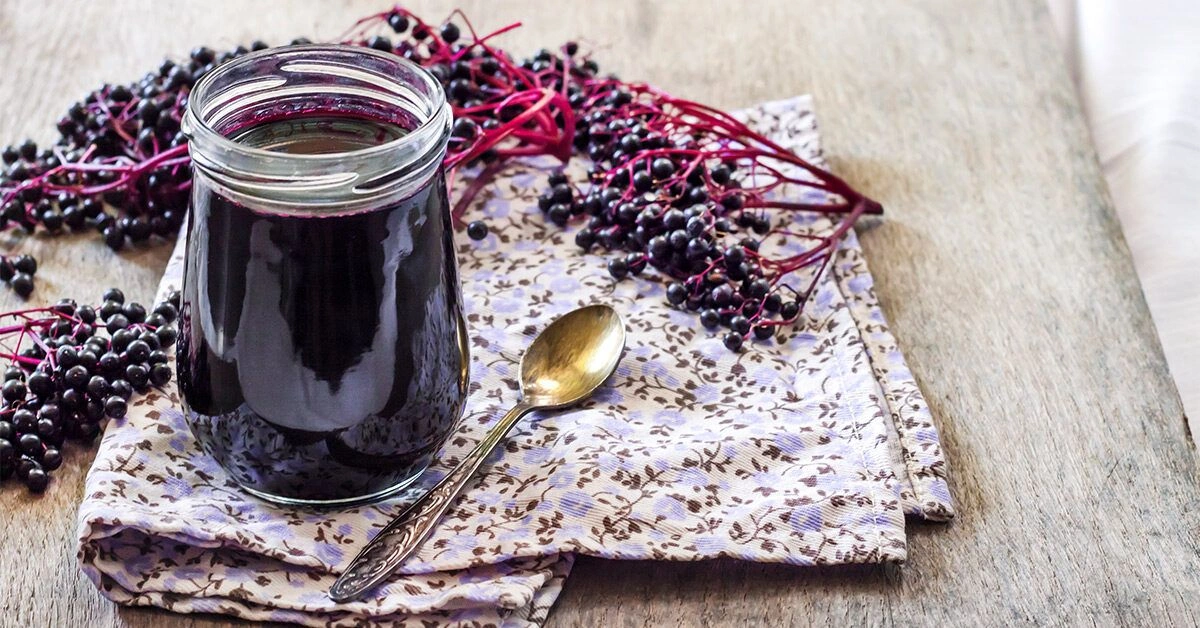
Elderberry refers to a group of flowering shrubs native to Europe and North America. Often called elder, these plants produce clusters of small, dark-colored berries — typically purple, blue, or black.
Historically, elderberry has served various uses, both medicinal and utilitarian. In medieval Europe it was associated with longevity.
Native American groups used the berries and blossoms for treating pain and fevers, and used branches for making baskets, flutes, and arrow shafts.
Although valued for their therapeutic uses, raw elderberries can be toxic. Most varieties are safe once properly cooked.

Elderberries tend to be tart and are commonly used in:
- jams
- jellies
- sauces
- wines
- pies
They’re also processed and sold in forms such as:
- gummies
- lozenges
- syrups
- dietary supplements
- teas
Can it help with treating the flu?
Although data are limited, current studies suggest elderberry may have qualities that inhibit flu viruses and alleviate cold and flu symptoms.
For instance, a 2011 study examined the antimicrobial effects of liquid elderberry extract in vitro.
The investigators found the extract inhibited growth of certain strep bacteria and influenza viruses.
Likewise, a 2012 laboratory study reported elderberry exhibits several mechanisms that may counteract the flu.
And a 2017 study found that branches and berries of the plant are rich in antioxidants.
Human trials have also explored elderberry’s effects on cold and flu symptoms.
A randomized, double-blind 2016 trial compared placebo to an elderberry supplement in 312 airline travelers.
The incidence of developing a cold after flying did not differ significantly between groups.
However, those in the placebo arm tended to experience longer and more severe colds than participants taking elderberry. The authors noted more research is necessary to confirm this observation.
A 2018 review reported that elderberry helped alleviate upper respiratory complaints such as:
- runny nose
- nasal congestion
- cough
That review included data from only 180 participants, so larger trials are needed to determine whether these benefits apply broadly.
While findings are encouraging, further studies are required to determine how effective elderberry truly is for treating colds and influenza.
Keep in mind elderberry might ease flu symptoms but does not replace the annual influenza vaccine.
Does it have any other health benefits?
Elderberry is nutrient-rich, supplying vitamin C and dietary fiber while being low in carbohydrates and fat.
Like other berries, elderberries are high in antioxidants such as:
- phenolic acids
- flavanols
- anthocyanins
These antioxidant compounds are thought to help reduce risk for chronic conditions including diabetes, heart disease, and some cancers.
Is it safe for children?
Because evidence is limited, elderberry is not currently recommended for those under 18.
Although serious adverse events haven’t been widely reported, there isn’t enough long-term clinical data to confirm safety in children.
If you are pregnant or breastfeeding, check with your healthcare provider before using elderberry.
What’s the recommended dosage?
Proper elderberry dosing varies based on factors such as:
- the supplement manufacturer
- the product formulation
- the amount of elderberry present
For example, a common serving for elderberry syrup is 2 teaspoons (about 10 milliliters) per day, providing roughly 3.8 grams of elderberry.
Some lozenge products recommend 1 lozenge (4 grams) supplying 12 milligrams, taken as needed up to four times daily.
Always follow dosing directions printed on the product label.
What to know about supplements
Remember that elderberry products are classified as dietary supplements by the FDA.
Although manufacturers must adhere to certain quality practices, supplements are not required to be independently verified to ensure label contents match what’s inside.
Therefore, the actual amount of active compounds in a supplement may not always match label claims.
For this reason, choose products from reputable brands that have been tested or certified by independent organizations such as the United States Pharmacopeia (USP), ConsumerLab, or NSF International.
If you’re uncertain whether elderberry is appropriate for you, discuss it with your doctor or pharmacist before starting any supplement.
Are there any side effects?
There is limited safety data on commercial elderberry supplements.
Generally, supplements taken as directed are considered safe, but safety depends on the specific product and its manufacturing quality.
Consuming raw elderberries can lead to serious adverse effects, including:
- nausea
- vomiting
- diarrhea
Excessive ingestion of uncooked elderberries can be life-threatening. Proper cooking of elderberries destroys toxic compounds and prevents these risks.
The bottom line
Elderberry shows promise for relieving upper respiratory symptoms associated with colds and influenza and may reduce symptom severity.
However, more rigorous research is necessary to establish optimal dosing, long-term safety, and overall efficacy of elderberry supplements.
If you have concerns or questions about elderberry, consult your healthcare provider for personalized advice.




















Leave a Reply
You must be logged in to post a comment.