

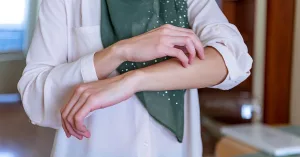
A rash refers to any section of skin that becomes inflamed, irritated, or swollen. Depending on the underlying cause, rashes may itch, hurt, or change in appearance across different skin tones. In certain situations, a rash can indicate a serious or even life-threatening condition that requires urgent care.
When reviewing Pictures of skin rashes on legs, it’s important to remember that similar-looking eruptions can have very different causes. Skin rashes on the legs may result from minor issues like insect bites or from infections such as chickenpox, as well as more serious conditions like cellulitis. If home remedies fail to improve symptoms within a few days — or if you develop fever, intense pain, dizziness, or spreading redness — seek medical attention promptly.
Pictures and signs of different rashes
There are numerous possible causes of rashes. Below is a list of 22 potential conditions, along with images to help you recognize common patterns. Comparing Pictures of skin rashes on lower legs can also provide helpful visual guidance when trying to understand changes on your skin.
Fleabites

Fleabite rashes are:
- commonly grouped in clusters on the lower legs and feet
- itchy, small red bumps on lighter skin tones and more plum-colored on darker skin tones
- fast to appear — often right after the bite occurs
Fifth disease

Fifth disease may cause:
- symptoms such as headache, fatigue, low fever, sore throat, runny nose, diarrhea, and nausea
- round, bright red rashes on the cheeks, though they may be subtler on darker skin tones
- a lacy-pattern rash on the arms, legs, and upper body that can become more noticeable after a warm shower or bath, typically following the facial rash
This condition is seen more often in children than in adults.
Rosacea

Rosacea is a chronic (long-term) inflammatory skin disorder marked by cycles of flare-ups and remission. It often:
- is triggered by spicy foods, alcoholic drinks, sun exposure, stress, and the intestinal bacteria Helicobacter pylori
- presents with facial flushing, raised red bumps, persistent redness, dryness, and skin sensitivity
- may show as brown or yellowish-brown bumps or a dusky tone on darker skin
Impetigo

Impetigo most frequently affects children ages 2–5 years, though it can occur at any age. It is:
- typically found around the mouth, chin, and nose
- a bothersome rash with fluid-filled blisters that rupture easily and leave a honey-colored crust
- brown, purple, or gray on darker skin tones
Ringworm

Ringworm may present as:
- itchy, round, scaly patches with a raised edge
- pink or red patches on light skin tones
- gray or brown patches on darker skin tones
- a circular lesion with clearer skin in the center and a spreading outer edge
Contact dermatitis

Contact dermatitis develops hours to days after exposure to an allergen or irritant. It commonly appears as a rash that:
- has clear borders matching the area of contact
- looks red on lighter skin tones
- may be less visible on darker skin tones
- can blister, ooze, or crust over
- is often itchy, scaly, or raw
For example, a Red rash on lower legs above ankles pictures may help you compare symptoms if irritation developed after contact with clothing, detergents, or plants.
Taking care of rashes at home
Management of a rash depends largely on its cause. After reviewing Pictures of skin rashes on legs and receiving appropriate guidance, you may consider supportive home care for mild cases.
To reduce irritation and encourage healing:
- Choose mild, fragrance-free cleansers instead of scented soaps.
- Wash skin and hair with lukewarm rather than hot water.
- Gently pat the rash dry instead of rubbing.
- Allow the skin to breathe; avoid tight or restrictive clothing.
- Discontinue new skincare or cosmetic products that may have triggered symptoms.
- Apply fragrance-free moisturizer to eczema-prone areas.
- Avoid scratching to lower the risk of infection.
- Use an over-the-counter (OTC) hydrocortisone cream for significant itching, if appropriate.
- Try calamine lotion for rashes linked to chickenpox, poison ivy, or poison oak.
- Consider an oatmeal bath to calm itching from eczema or psoriasis.
- If dandruff accompanies a rash, wash regularly with medicated dandruff shampoo.
Over-the-counter (OTC) medications
A healthcare professional might suggest OTC options such as ibuprofen or acetaminophen to manage mild discomfort related to a rash.
These medications should not be used long term without medical advice. Always confirm safe dosing and duration, especially if you have liver disease, kidney disease, or a history of stomach ulcers.
When to see a healthcare professional about rashes
Contact a healthcare professional if your rash does not improve within several days. Seek evaluation sooner if you develop additional symptoms like pain, bleeding, or flu-like signs.
If a rash occurs along with any of the following, it may signal a medical emergency:
- worsening pain or discoloration
- throat tightness or severe itching
- trouble breathing
- swelling of the face or extremities
- fever of 100.4°F (38°C) or higher
- confusion
- dizziness
- intense head or neck pain
- repeated vomiting or diarrhea
Also seek medical advice if your rash is accompanied by:
- joint pain
- sore throat
- red streaks or tenderness near the rash
- a recent tick bite or animal bite
The bottom line
Rashes are areas of irritated or swollen skin that may itch, sting, hurt, or become dry. Changes in skin color are common and can look different depending on skin tone — appearing red or pink on lighter skin and purple, gray, or white on darker skin.
Reviewing Pictures of skin rashes on legs can be a helpful starting point, but visual comparison alone cannot replace a professional diagnosis. Some rashes resolve quickly with simple care, while others require prompt medical treatment.
If your rash spreads rapidly, becomes painful, causes severe itching, or does not improve within a few days, consider consulting a healthcare professional for an accurate diagnosis and appropriate treatment plan.




















Leave a Reply
You must be logged in to post a comment.