

Red bumps on the legs can develop for many reasons, including allergies, insect bites, inflammatory skin disorders, or, in rare cases, a more serious underlying health issue. When reviewing Pictures of skin rashes on lower legs, it’s important to remember that the appearance can vary by skin tone. On darker skin tones, these bumps may look violet, gray, or deeper brown and can be less noticeable at first glance.
In most situations, noticing red bumps on your legs is not a reason to panic. Although they may be itchy, irritated, or cosmetically bothersome, they’re often harmless and temporary. Still, examining Pictures of skin rashes on lower legs can help you compare symptoms and better understand what might be causing your rash.
That said, some skin conditions can progress to more serious infections if left untreated. It’s essential to follow a healthcare professional’s advice for treatment and to monitor for warning signs of infection, such as increasing pain, fever, warmth, or swelling around the affected areas.
The table below outlines several common causes of red bumps on the legs and the features that may help you distinguish between them.
| If the red bumps: | Then they may be: |
|---|---|
| do not itch or itch very little | keratosis pilaris |
| go away without treatment | folliculitis or hives |
| blister and ooze a clear fluid | eczema |
| turn white when you press them | hives |
| itch a lot | insect bites or eczema |
| have a scaly quality | eczema or psoriasis |
| are accompanied by night sweats and weight loss | vasculitis |
| are shiny and resemble open sores | skin cancer |
Continue reading to explore each possible cause, how it may present on different skin tones, and what treatment approaches are typically recommended. For broader comparisons, you can also review Pictures of skin rashes on legs or see examples of a Red rash on lower legs above ankles pictures to better differentiate patterns and severity.
Pictures of red bumps on the legs
Below are images of conditions that can lead to red bumps on the legs across a range of skin tones. Comparing visual examples may help you recognize patterns such as scaling, blistering, or clustering of lesions.
Keratosis pilaris
Keratosis pilaris often appears as tiny red, flesh-colored, or darker bumps that resemble goosebumps, commonly found on the thighs or upper arms. Generally, these bumps are not itchy and feel slightly rough to the touch.
Research suggests keratosis pilaris is widespread, affecting approximately 50% to 80% of adolescents and about 40% of adults. It develops when keratin builds up and blocks hair follicles.
On darker skin tones, the bumps may look a few shades deeper than the surrounding skin. While the condition is harmless, moisturizing regularly and using gentle exfoliation as advised by a healthcare professional may help improve skin texture.
Learn more about treatment for keratosis pilaris.
Folliculitis
Folliculitis occurs when hair follicles become inflamed or infected. It frequently develops on the scalp or areas that are shaved. The most common cause is infection with Staphylococcus aureus (staph bacteria), although viruses, fungi, and ingrown hairs can also trigger it.
This condition leads to small red bumps or pimple-like lesions, often referred to as “razor burn” or “razor rash.” The bumps may appear red on lighter skin tones, while on darker skin they may match the natural tone or appear slightly darker.
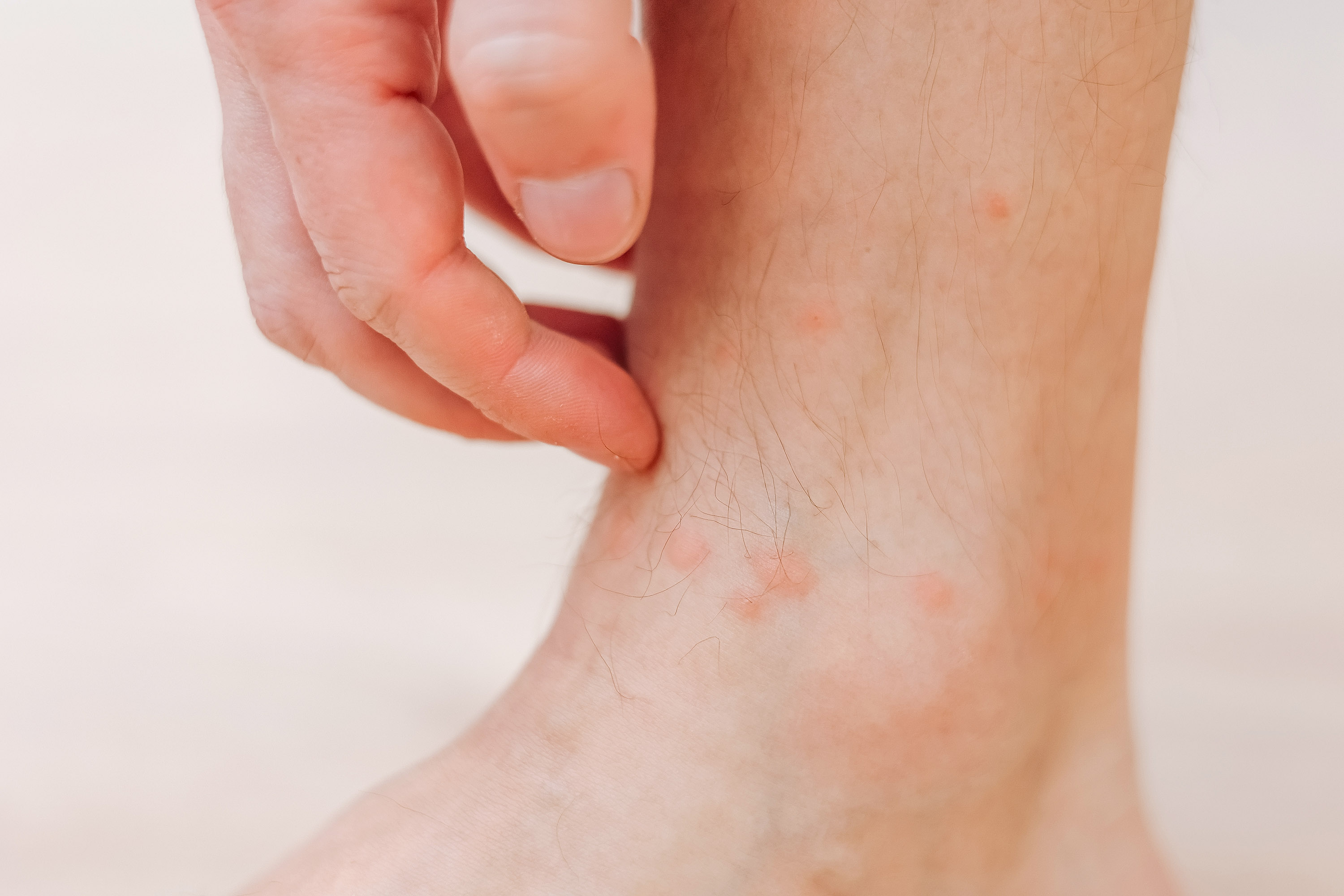
Common contributing factors include shaving, friction from tight clothing, and a combination of heat and sweat. Keeping the area clean, avoiding close shaving, and wearing breathable fabrics may reduce recurrence.
Learn more about treatment for folliculitis.
Eczema (atopic dermatitis)
If red bumps cluster into itchy patches, eczema may be the cause. Also known as atopic dermatitis, eczema can also appear dark brown, purple, or ashen gray on darker skin tones.
Eczema is a chronic inflammatory skin condition characterized by dryness, scaling, and sometimes blisters that may ooze clear fluid. It tends to flare up in response to triggers such as certain soaps, cosmetics, temperature shifts, allergens, or stress.
A 2019 study notes that eczema can affect individuals of any age, but 85% to 95% of cases are diagnosed in children under age 5. Management often includes moisturizers, prescription creams, and avoiding known triggers.

Learn more about treatment for eczema.
Hives (urticaria)
Hives, medically termed urticaria, are raised, itchy welts that may appear red or similar to your natural skin tone. A distinguishing feature is that they turn white when pressed in the center.
They can develop anywhere on the body and affect people of all ages. In many cases, hives are close in color to the surrounding skin. On darker skin, they may be subtler and harder to detect due to minimal pigment change.
Common triggers include pollen, insect stings, certain foods, and medications. Hives often resolve on their own, but persistent or severe reactions should be evaluated by a healthcare professional.
Learn more about treatment for hives.
Insect bites
If your red bumps are intensely itchy and appeared suddenly, insect bites may be responsible. On darker skin tones, bites can look purple or dark brown rather than bright red.
Frequent causes include:
- fire ants
- mosquitoes
- fleas
- chiggers
- lice
- bedbugs
- scabies

Treatment may involve soothing creams, antihistamines, and avoiding scratching to reduce the risk of infection.
Learn more about how to treat insect bites.
Psoriasis
Psoriasis is a chronic autoimmune condition that leads to thick, scaly skin patches. On lighter skin tones, these patches often look red, while on darker skin they may appear violet or gray.
Guttate psoriasis, a specific subtype, can produce small, drop-shaped lesions on the skin. Known triggers and risk factors include:
- tonsillitis
- strep throat
- skin injury
- stress
- some medications
Although there is no cure, treatments such as topical therapies, phototherapy, and systemic medications can help manage symptoms and reduce flare-ups.
Learn more about treatment for psoriasis.
Skin cancer
Several forms of skin cancer may present as red or unusual bumps. These include basal cell carcinoma (BCC) and Bowen’s disease. The primary risk factor is prolonged, unprotected sun exposure.
Basal cell carcinoma (BCC)
According to the Skin Cancer Foundation, BCC is the most common type of skin cancer. It develops in the basal cell layer of the skin and typically appears as a small, shiny red bump or a lesion resembling an open sore. On darker skin tones, it may also appear brown or glossy black.
Bowen’s disease
Bowen’s disease is considered an early stage of skin cancer and is also known as squamous cell carcinoma in situ. It affects the outermost layer of the skin and may present as a scaly patch that can crust, ooze, or itch.
Learn more about treatment for skin cancer.
Vasculitis
Vasculitis refers to inflammation of the blood vessels, which can reduce blood flow and lead to a variety of symptoms. Although many types are rare, some forms—such as hypersensitivity vasculitis and Kawasaki disease—can produce red, purple, or dark bumps on the skin.
Additional symptoms may include fatigue, fever, joint pain, or unexplained weight loss. Because vasculitis can affect internal organs, prompt medical evaluation is essential if it is suspected.
Takeaway
Noticing small red bumps on your legs does not automatically signal a serious problem. Many causes are mild and resolve with minimal treatment. However, if the bumps are painful, spreading, or associated with systemic symptoms, a healthcare professional can help determine the underlying cause and recommend appropriate care.
On darker skin tones, bumps may appear purple, gray, or darker than the surrounding skin, which can make them more challenging to identify without close inspection or comparison to Pictures of skin rashes on lower legs.
Because certain skin conditions can lead to infection or complications, follow medical guidance carefully and watch for warning signs such as increasing redness, swelling, warmth, fever, or worsening discomfort around the affected area.





















Leave a Reply
You must be logged in to post a comment.