
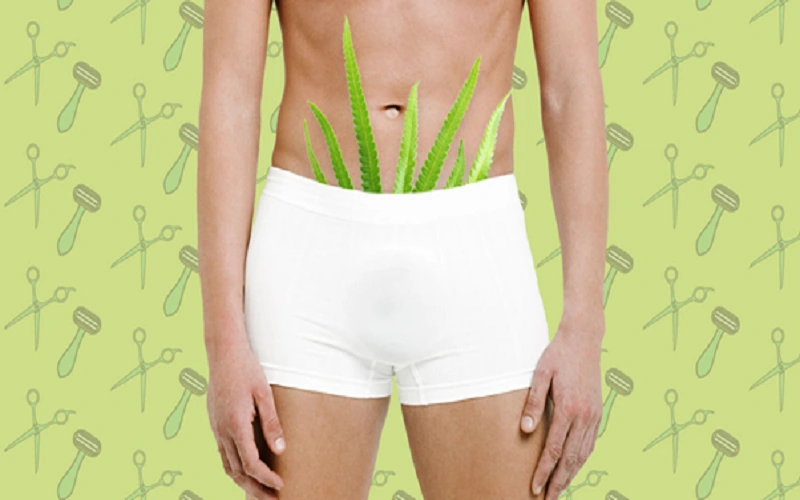
There’s no medical requirement to eliminate your pubic hair for health, hygiene, or sexual reasons, aside from possibly reducing odor linked to perspiration. Ultimately, grooming in the genital area is a personal decision based on comfort and aesthetic preference.
That said, many individuals across different ages, cultures, and gender identities — male, female, and nonbinary — choose to groom. Whether you’re simply tidying the hair above your penis or vagina or removing hair from the entire genital region (including testicles, labia, and inner thighs), preferences vary widely. For men specifically researching How to remove male pubic hair without shaving, there are several practical options available that don’t involve a razor.
How to remove pubic hair permanently at home
If you’re exploring How to remove male pubic hair without shaving, you’ll find multiple at-home techniques to trim, shape, or remove hair. However, it’s important to understand that none of these solutions offer true permanence.
Unless hair loss occurs due to an underlying medical condition, pubic hair will eventually grow back — even after more intensive medical procedures. Consistent maintenance is necessary if you prefer a hair-free or neatly groomed appearance.
Shaving
Shaving remains one of the simplest hair removal methods because it requires only a clean razor and a shaving cream or gel.
However, shaving increases the likelihood of small cuts and bacterial exposure in a sensitive area. To reduce contamination risk, use a razor designated solely for your pubic region.
Follow these steps for safer shaving:
- Disinfect your razor thoroughly before use.
- Moisten your pubic hair to make cutting easier.
- Select a natural cream, gel, or moisturizer to lubricate the skin and help prevent irritation or razor bumps.
- Stretch the skin gently and shave slowly in the direction of hair growth.
- Rinse the blade after every stroke.
If you’re considering alternatives, you may prefer Home techniques for pubic hair shave men that outline additional grooming strategies.
Tweezing
Tweezing, or plucking, is more precise and can be more uncomfortable than shaving, but it requires minimal tools. It can also be less messy and suitable for shaping small areas.
Use caution: pulling hair too aggressively can injure the skin or follicle, increasing the chance of irritation or infection.
- Sanitize tweezers reserved specifically for pubic grooming.
- Ensure proper lighting so you don’t miss hairs.
- Tighten the skin, grasp the hair firmly near the base, and pull gently in the direction of growth.
- Pause occasionally to avoid straining your neck.
Trimming
Using scissors to trim is a quick and low-risk way to manage pubic hair. Because the blades don’t usually touch the skin, complications are less common.
Here’s how to trim safely:
- Disinfect your grooming scissors before use.
- Make sure your pubic hair is completely dry to prevent clumping.
- Carefully trim hair individually or in small sections until you achieve your desired length.
- Store scissors in a clean, dry location afterward.
If you want more detailed guidance, you can review Home techniques for pubic hair shave men with scissors for step-by-step support.
Over-the-counter depilatories
Depilatories are chemical hair removal creams available over the counter. They work by breaking down keratin in the hair, causing it to weaken and detach so it can be wiped away.
Application is simple: apply the product to the targeted area, leave it on for the specified time, then remove the cream along with the hair.
Although generally considered safe, depilatories may contain ingredients that trigger allergic reactions or skin irritation — especially in sensitive genital skin. Perform a patch test first or consult a healthcare professional if unsure.
Waxing
Waxing removes hair from the root and can keep the area smooth for a longer period. It may also lessen itchiness during regrowth for some individuals.
However, waxing can be painful and may lead to irritation or infection, particularly for people with sensitive skin. While at-home kits are available, professional services are often safer and more effective.
To wax at home:
- Use an over-the-counter wax kit with strips.
- Clean and disinfect the area beforehand.
- Apply warmed wax and press the strip firmly onto the skin.
- Quickly but carefully pull the strip away.
Medical hair removal
Medical treatments typically provide longer-lasting results because they target and damage hair follicles rather than simply cutting or extracting hair shafts. This delays regrowth significantly.
Below are two widely used options that should only be performed at licensed, reputable facilities.
Laser hair removal
During laser hair removal, a doctor or dermatologist directs concentrated light from a laser device into the hair follicles. The heat damages or weakens the follicles, reducing their ability to regrow hair.

Multiple sessions are usually required for optimal results. Not all laser devices are approved by the FDA.
Electrolysis
Electrolysis resembles laser removal but uses an epilator device that delivers radio frequencies into the skin to destroy individual hair follicles. Unlike lasers, which treat multiple follicles in a specific area, electrolysis targets one follicle at a time.
Although not always completely permanent, electrolysis is approved as safe for hair removal by the FDA and may be more affordable than laser treatment.
Pubic hair removal precautions
Like any grooming practice, pubic hair removal carries potential side effects, especially if performed improperly. Possible complications include:
- itchiness
- ingrown hairs or razor bumps
- redness and irritation, particularly in sensitive skin
- allergic reactions to creams or gels
- immune system responses such as hives following laser removal or electrolysis
- swelling or inflammation
- cuts or abrasions from razors or wax strips
- bacterial infections entering open wounds
- folliculitis
- higher risk of certain sexually transmitted infection (STIs), including molluscum contagiosum
Consult a healthcare provider if symptoms persist beyond a few days or worsen.
Hair removal at home with less pain
No at-home hair removal method is entirely pain-free, but some are more tolerable than others. Individual pain thresholds vary considerably.
- Shaving: typically only mildly painful if nicks or scrapes occur
- Tweezing: moderately uncomfortable if hair is pulled forcefully
- Trimming: generally painless unless the skin is accidentally cut
- Depilatories: painless unless irritation or an allergic reaction develops
- Waxing: ranges from mildly painful to very painful depending on tolerance
Which treatment is best for me?
If you have sensitive skin, avoid waxing, tweezing, depilatories, and possibly laser removal or electrolysis, as these methods may provoke irritation or lasting skin damage. Careful trimming may be the safest choice.
Individuals with dark skin or very light skin tones should consult a specialist experienced with devices suited to their melanin level. Using inappropriate technology can increase the risk of discoloration or scarring, which may be difficult to reverse.
Purchasing supplies
Most pubic hair grooming tools and products are available at pharmacies, supermarkets, and online retailers. You can explore options on Amazon.
Takeaway
Removing or trimming pubic hair is not medically necessary. Whether you’re learning How to remove male pubic hair without shaving or simply deciding how to groom safely, the choice depends entirely on personal comfort and preference. From trimming and depilatories to professional treatments like laser hair removal or electrolysis, there are numerous home and clinical options to consider.


















Leave a Reply
You must be logged in to post a comment.