
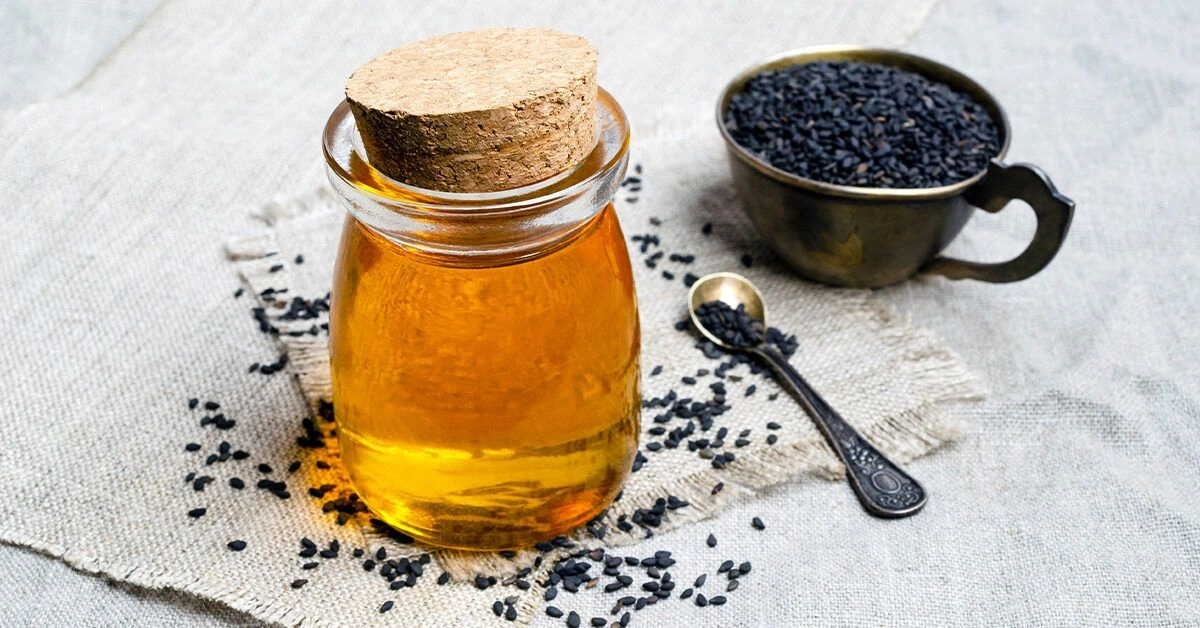
Black Seed oil capsules and liquid extracts have gained attention for their potential anti-inflammatory and antibacterial properties, which may support conditions such as psoriasis, asthma, hair loss, and acne. While early findings are promising, more high-quality clinical research is necessary to fully confirm these effects and determine optimal use.
Black seed oil is a plant-based remedy obtained from the small black seeds of a flowering plant known as Nigella sativa (N. sativa). This plant grows in warm climates, including Eastern Europe, Northern Africa, and Southwestern Asia.
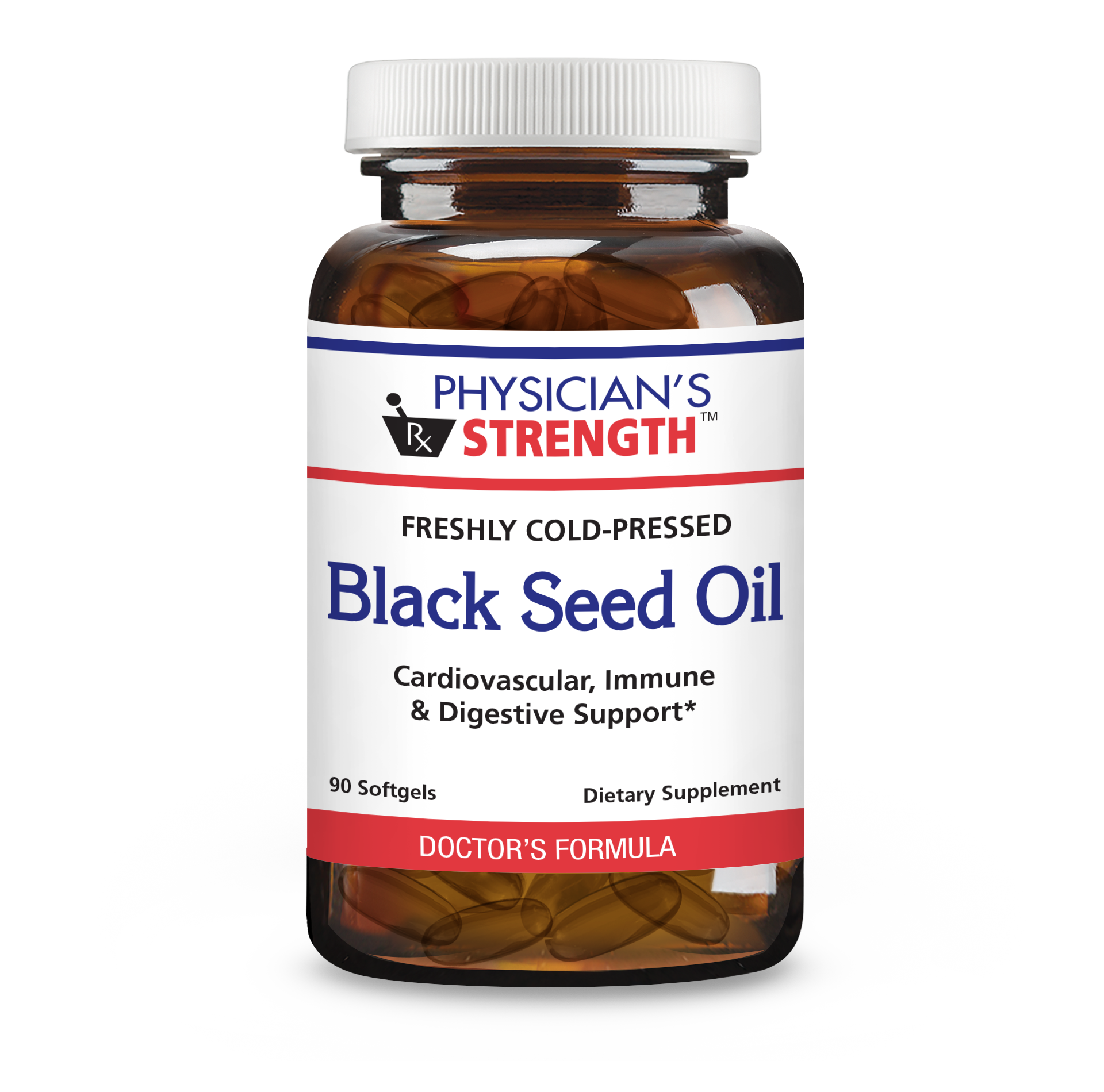
For centuries, these seeds have played a central role in traditional medicine systems. Emerging scientific evidence highlights several of their therapeutic properties, largely attributed to the seeds’ rich concentration of antioxidants and other bioactive compounds. Today, Black Seed oil capsules are commonly used as a convenient supplement form for those seeking to explore these potential wellness advantages.
Other common names for the black seeds from N. sativa include black cumin, black caraway, and nigella.
Below is a detailed overview of the possible health benefits of black seed oil and what current research suggests about its uses.
May reduce acne
Several studies indicate that topical applications of black seed oil may help improve acne, thanks to its antimicrobial and anti-inflammatory properties. By helping reduce bacterial growth and calming skin inflammation, it may contribute to clearer skin over time.
A 2020 study reported that applying a gel containing black seed extract twice daily for 60 days reduced acne severity by 78%. Participants also experienced a notable decrease in the number of acne lesions compared to those in the control group. These findings suggest potential benefits for mild to moderate acne, although further large-scale human trials are needed.
Could help treat psoriasis
Research indicates that Nigella sativa extract possesses anti-inflammatory properties, and animal studies suggest that black seed oil may lessen skin inflammation and other symptoms associated with psoriasis.
A 2017 review found that using both oral and topical black seed extract reduced psoriasis symptoms and improved skin lesions. These combined approaches may offer synergistic effects, though robust human studies remain limited.
As with many herbal interventions, more comprehensive clinical trials in people are required before firm recommendations can be made.
Promotes wound healing
Black seed oil contains thymoquinone, a compound that, when applied directly to the skin, may stimulate tissue growth and facilitate wound healing. This bioactive component is thought to play a key role in the oil’s therapeutic potential.
Animal studies suggest that thymoquinone may aid in the treatment of burns, excisions, and other wounds due to its anti-inflammatory, antioxidant, and antibacterial actions. Additionally, black seed oil appears to enhance collagen production and provide moisturizing benefits, both of which are important for proper skin repair and recovery.
May support hair health and growth
Black seed extract is frequently incorporated into hair care formulations, including masks and shampoos, because of its antimicrobial and antioxidant characteristics that may support scalp health.

A 2020 review highlighted a small study in which daily application of a Nigella sativa extract lotion for 3 months significantly improved hair density and thickness in individuals with telogen effluvium, a common form of hair loss. Reducing inflammation in the scalp may be one mechanism behind these improvements.
The same review discussed a study involving 90 participants comparing various seed oils for hair loss. Nigella sativa oil demonstrated the strongest effect in reducing hair shedding, suggesting potential benefits for those experiencing inflammation-related hair thinning.
A note on herbs and supplements
The Food and Drug Administration (FDA) does not regulate or standardize the quality, purity, or dosage of dietary supplements.
Because of this, many supplements on the market have not undergone rigorous safety testing.
Before starting Black Seed oil capsules or any other supplement, it’s wise to consult a healthcare professional. They can help determine appropriate dosing and assess whether it may interact with existing medications or health conditions.
When selecting supplements, look for third-party certifications from organizations such as NSF International or USP to help ensure product quality and transparency.
May protect lung health and reduce asthma attacks
A 2020 review cited a small study showing that inhaled boiled black seed extract may have a bronchodilatory effect in people with asthma. Participants experienced improvements in lung function markers and respiratory rate, meaning easier breathing.
In addition, a 2021 meta-analysis of four randomized controlled studies concluded that black seed supplements may assist in asthma management, likely due to the seed’s anti-inflammatory properties.
Although these findings are encouraging, larger and longer-term clinical trials are needed to clarify the role of black seed oil in respiratory health and chronic airway inflammation.
Could aid in the treatment of vitiligo
Some research indicates that black seed oil could be beneficial for individuals with vitiligo, a condition characterized by loss of skin pigmentation.
A 2019 study of 33 people with vitiligo found that twice-daily topical application of a cream containing black seed oil enhanced pigmentation in the hands, face, and genital area after 6 months.
Researchers suggest that these effects may stem from the oil’s potential to help distribute melanin within the skin. Since melanin determines natural skin, hair, and eye color, supporting its distribution could improve depigmented areas. Further human studies are necessary to confirm these outcomes.
Reduces local and systemic inflammation
Studies demonstrate that black seed oil exhibits strong anti-inflammatory activity. Chronic inflammation is believed to contribute to the development of several long-term conditions, including type 2 diabetes, heart disease, and cancer, as noted in research.
By helping modulate inflammatory pathways, black seed oil may offer supportive benefits as part of a broader lifestyle strategy that includes balanced nutrition, physical activity, and adequate sleep. For a broader overview of its therapeutic potential, you can explore these Black seed oil benefits.
May support weight loss
A 2021 study involving 45 women with overweight or obesity found that taking 2,000 mg of black seed oil daily for 8 weeks reduced appetite and led to decreases in body mass index, body weight, waist circumference, and body fat.
Despite these findings, research on the long-term safety and effectiveness of higher-dose supplementation remains limited. Anyone considering extended use of Black Seed oil capsules for weight management should do so under medical supervision.
Improves blood sugar levels
Some evidence suggests that black seed oil may help regulate blood sugar levels. A 2019 review reported improvements in several markers, including insulin levels and both fasting and post-meal blood glucose levels.
These effects may be particularly relevant for individuals at risk of type 2 diabetes, though supplementation should complement—not replace—medical treatment and lifestyle modifications such as dietary adjustments and physical activity.
Could reduce the risk of metabolic syndrome
Research indicates that black seed oil may help lower the risk of metabolic syndrome, a group of conditions that raises the likelihood of heart disease, stroke, and type 2 diabetes.
A 2021 study included 55 individuals with high blood pressure. Half consumed 2.5 mL of black seed oil twice daily for 8 weeks, while the remaining participants received sunflower oil.
By the conclusion of the study, most participants taking black seed oil experienced reductions in:
- diastolic blood pressure
- total cholesterol
- LDL (bad) cholesterol
- fasting blood sugar levels
Even so, maintaining a nutrient-dense, whole-food diet and engaging in regular physical activity remain the most effective preventive measures against metabolic syndrome. Supplements may provide additional support but should not replace foundational lifestyle habits. It’s also important to review potential Black seed oil side effects before beginning regular use.
Dosage for black seed oil
Black seed oil is available in various forms, including shampoos, topical creams, liquid extracts, and Black Seed oil capsules designed for oral supplementation.
Appropriate dosage can vary significantly depending on the intended purpose. For example:
- A 2019 review examining blood sugar management noted daily doses of 0.7 g, 3 g, and 5 mL in different studies.
- A 2021 study found that 2,000 mg daily supported weight loss outcomes.
- Another 2021 study reported that 2.5 mL daily for 8 weeks improved blood lipid markers.
Because responses can differ based on individual health status, always consult a healthcare professional before beginning supplementation to minimize the risk of allergic reactions or other adverse effects.
The bottom line
Black seed oil shows promise as a natural supportive remedy for conditions such as vitiligo, hair loss, psoriasis, metabolic syndrome, and asthma. It may also play a role in managing inflammation and supporting weight control when combined with healthy lifestyle practices.
However, it’s essential to speak with a healthcare professional before using Black Seed oil capsules or other forms of supplementation—especially if you take prescription medications. Herbal products can interact with certain drugs or may not be appropriate for every individual.





















Leave a Reply
You must be logged in to post a comment.