
Key takeaways
- Ambien can interact with other sedative medications, including opioids and benzodiazepines. Using these drugs together may heighten the likelihood of certain Ambien side effects, such as central nervous system (CNS) depression.
- Ambien may also interact with specific antidepressants, including escitalopram (Lexapro). When combined, these medications can affect focus, worsen depression symptoms, or lead to unexpected mood changes.
- Before beginning Ambien, inform your doctor about all medications and supplements you’re currently using. They can advise you on whether Ambien may interact with any of them.
Ambien (zolpidem) is a prescription medication approved to treat insomnia (difficulty sleeping) in adults. It may be prescribed if you struggle with falling asleep, staying asleep, or both. As with many medications, Ambien can interact with other substances.

Drug interactions happen when one substance alters the way another works in your body. For instance, alcohol, another medication, or a dietary supplement may change how a drug is absorbed or metabolized. Interactions may also be influenced by certain underlying health conditions.
Below, you’ll find detailed information about Ambien’s potential interactions, including medications that generally should not be taken together with it. If you’re researching related sleep aids or wondering about How to take Ambien and melatonin together, understanding these interactions is especially important for safety.
Ambien vs. Ambien CR
Ambien comes in two formulations: Ambien and Ambien CR. Both contain the same active ingredient, zolpidem. The difference is that Ambien CR is an extended-release (controlled-release) version, meaning it releases the medication gradually over time.
Since both versions include zolpidem, their interaction profiles are the same. This article focuses specifically on Ambien interactions. For more details about Ambien CR, consult your doctor.
When should I avoid Ambien?
Certain medical conditions or circumstances may increase your risk of harm if you take Ambien. In these cases, your doctor may decide not to prescribe it. This is referred to as a contraindication. The following are known contraindications for Ambien.
If you’ve experienced unusual sleep behaviors with Ambien. Let your doctor know if you’ve had unusual sleep-related behaviors such as sleepwalking, sleep-driving, or performing other activities while not fully awake after taking Ambien. These behaviors can be serious and even life threatening. If this has occurred, your doctor will likely suggest an alternative treatment. For more information, refer to the “Boxed warning” section at the beginning of this article.
If you’ve had an allergic reaction. If you’ve previously had an allergic reaction to Ambien or any of its components, your doctor will probably avoid prescribing it. Ask about other treatment options that may be more appropriate.
If any of these situations apply to you, speak with your doctor before starting Ambien. They can help determine whether it’s a safe option.
Does Ambien interact with alcohol?
Yes, Ambien does interact with alcohol. Drinking alcohol while taking Ambien is not recommended. Both substances can cause drowsiness and dizziness, and combining them may increase or intensify these effects.
Additionally, using alcohol with Ambien can raise the risk of CNS depression. Symptoms may include confusion, loss of consciousness, slowed heart rate, seizures, or abnormal breathing. Alcohol use may also increase the likelihood of unusual sleep behaviors such as sleepwalking or sleep-driving.*
If you have concerns about alcohol use during Ambien treatment, discuss them with your doctor or pharmacist.
* Ambien carries a boxed warning for this side effect. See the “Boxed warning” section above for details.
Does Ambien interact with other drugs?
Before taking Ambien, inform your doctor and pharmacist about all prescription medications, over-the-counter drugs, and other products you use. Providing this information can help reduce the risk of potential interactions.
If you’re exploring insomnia treatments and wondering about How to take Ambien and melatonin together or comparing options such as the Closest thing to Ambien over the counter, it’s especially important to review your full medication list with a healthcare professional.
The chart below highlights medications that may interact with Ambien. Note that this list does not include every possible interaction. For additional details, see the “Drug interactions explained” section.
| Drug group or drug name | Drug examples | What can happen |
|---|---|---|
| benzodiazepines | · diazepam (Valium)· clonazepam (Klonopin) · lorazepam (Ativan) | can increase the risk of side effects from Ambien and benzodiazepines |
| opioids | · buprenorphine or buprenorphine/naloxone (Suboxone)· oxycodone (Roxicodone)· hydrocodone (Hysingla ER) | can increase the risk of side effects from Ambien and opioids |
| imipramine (Tofranil) | — | can raise the risk of side effects from Ambien and imipramine |
| chlorpromazine | — | can increase the risk of side effects from Ambien and chlorpromazine |
| selective serotonin reuptake inhibitors (SSRIs) | · sertraline (Zoloft)· escitalopram (Lexapro)· fluoxetine (Prozac) | can raise the risk of side effects from Ambien |
| CYP3A4 inducers | · rifampin (Rifadin)· carbamazepine (Tegretol)· efavirenz | can make Ambien less effective |
| CYP3A4 inhibitors | · ketoconazole (Nizoral)· erythromycin (Eryc)· itraconazole (Sporanox) | can increase the effects of Ambien and the risk of side effects from Ambien |
| tricyclic antidepressants (TCAs) | · desipramine (Norpramin)· amitriptyline· nortriptyline (Pamelor) | can raise the risk of side effects from Ambien and TCAs |
| sedative-hypnotic drugs | · eszopiclone (Lunesta)· suvorexant (Belsomra)· zaleplon (Sonata) | can increase the risk of side effects from Ambien and sedative-hypnotic drugs |
| certain antihistamines | · promethazine (Promethegan)· diphenhydramine (Benadryl)· hydroxyzine (Vistaril) | can raise the risk of side effects from Ambien and antihistamines |
| trazodone | — | can increase the risk of side effects from Ambien and trazodone |
| bupropion (Wellbutrin SR) | — | can increase the risk of side effects from Ambien and bupropion |
| serotonin norepinephrine reuptake inhibitors (SNRIs) | · venlafaxine (Effexor XR)· duloxetine (Cymbalta)· desvenlafaxine (Pristiq) | can raise the risk of side effects from Ambien and SNRIs |
| atypical antipsychotics | · aripiprazole (Abilify)· olanzapine (Zyprexa)· quetiapine (Seroquel) | can increase the risk of side effects from Ambien and atypical antipsychotics |
| gabapentin (Neurontin) | — | can increase the risk of side effects from Ambien and gabapentin |
| pregabalin (Lyrica) | — | can increase the risk of side effects from Ambien and pregabalin |
Drug interactions explained
Here’s a closer look at selected Ambien drug interactions.
Interaction with selective serotonin reuptake inhibitors
Ambien may interact with selective serotonin reuptake inhibitors (SSRIs), which are commonly prescribed for depression and other mood disorders. Taking an SSRI with Ambien can increase the risk of side effects.
| What could happen | Examples of SSRIs | What you can do |
|---|---|---|
| SSRIs may cause Ambien to remain in your system longer, increasing the likelihood of side effects. | · sertraline (Zoloft)· escitalopram (Lexapro)· fluoxetine (Prozac) | Tell your doctor if you take an SSRI before starting Ambien. They can decide whether the combination is appropriate. |
Interaction with CYP3A4 inducers
CYP3A4 is an enzyme that helps break down Ambien. CYP3A4 inducers speed up this process, which can make Ambien less effective.
| What could happen | Examples of CYP3A4 inducers | What you can do |
|---|---|---|
| Faster breakdown of Ambien may reduce its effectiveness. | · rifampin (Rifadin)· carbamazepine (Tegretol)· efavirenz | Inform your doctor about all medications you use. They may suggest an alternative treatment. |
Interaction with benzodiazepines
Taking benzodiazepines together with Ambien may raise your risk of CNS side effects.
| What could happen | Examples of benzodiazepine medications | What you can do |
|---|---|---|
| Higher risk of CNS depression, including slowed breathing and excessive drowsiness. | · diazepam (Valium)· clonazepam (Klonopin)· lorazepam (Ativan) | Your doctor may adjust the dosage of one or both medications. |
Are there other interactions with Ambien?
Ambien may also interact with supplements, herbal products, and other substances.
Does Ambien interact with supplements, herbs, or vitamins?
Always review any supplements, herbs, or vitamins with your healthcare provider before starting Ambien.
Ambien interactions with supplements
Ambien interacts with melatonin, a supplement often used for sleep support. Both can cause drowsiness, and using them together may result in excessive sedation and increase the risk of serious side effects. If you’re asking How to take Ambien and melatonin together, speak with your doctor first. In many cases, healthcare professionals recommend avoiding the combination or carefully adjusting timing and dosage. You can also read more about dosage comparisons in How much melatonin is Equal to Ambien.
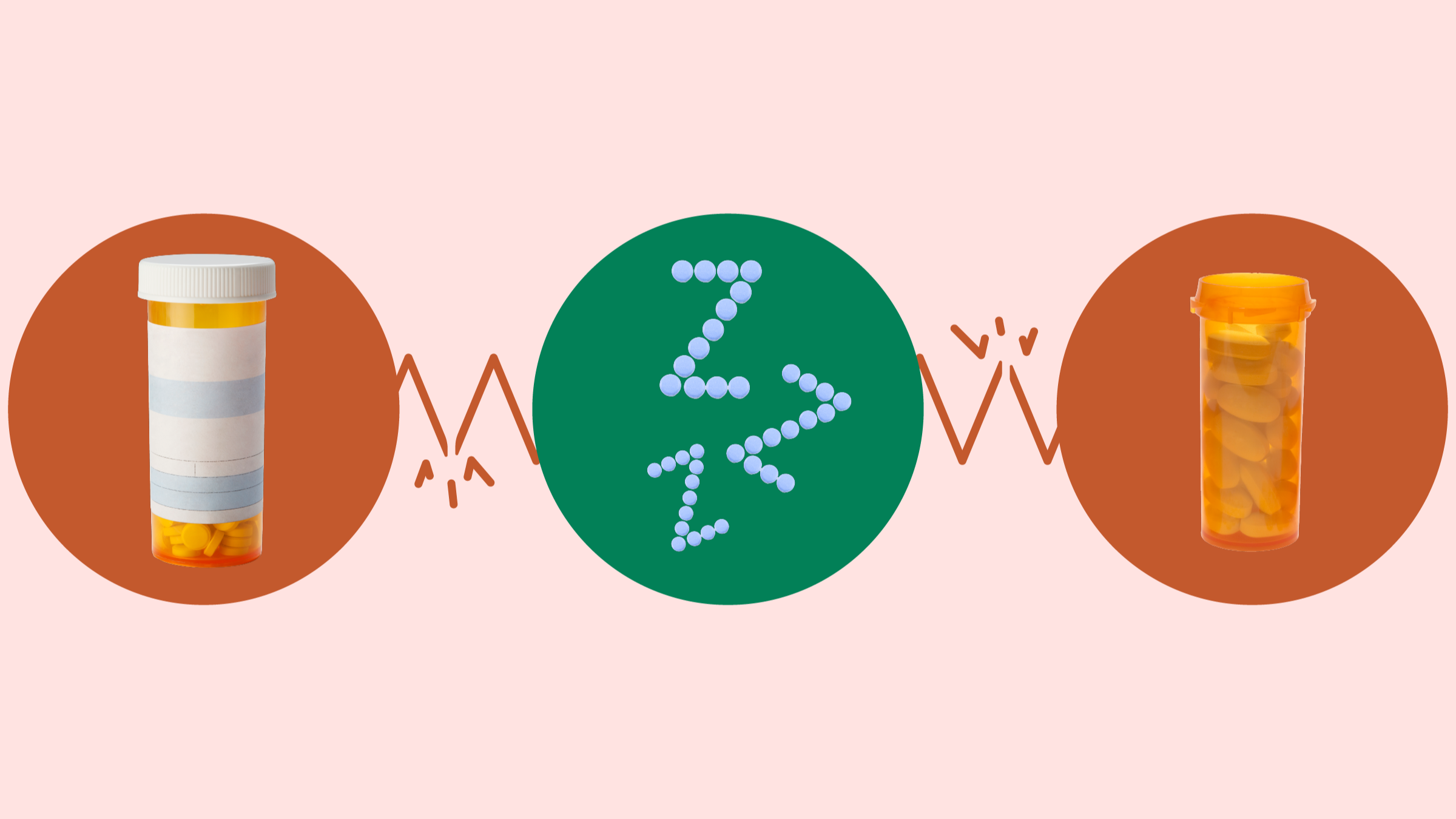
Because both substances act on sleep regulation pathways, combining them without supervision may increase the risk of CNS depression, impaired coordination, or next-day grogginess.
Ambien interactions with herbs
Ambien may interact with valerian and St. John’s wort.
Valerian can cause drowsiness, and taking it with Ambien may intensify this effect.
St. John’s wort is a CYP3A4 inducer, which can speed up the breakdown of Ambien and reduce its effectiveness.
These combinations are generally not recommended without medical advice.
Ambien and vitamins
There are currently no reports of Ambien interacting with vitamins. However, that doesn’t guarantee that interactions are impossible. Always check with your healthcare provider before adding new products.
Does Ambien interact with food?
No known food interactions have been reported with Ambien. If you have dietary concerns, consult your doctor.
Does Ambien interact with vaccines?
No interactions between Ambien and vaccines have been reported. Ask your doctor if you have specific concerns.
Does Ambien interact with lab tests?
Ambien is not known to interfere with lab tests. For personalized guidance, speak with your doctor.
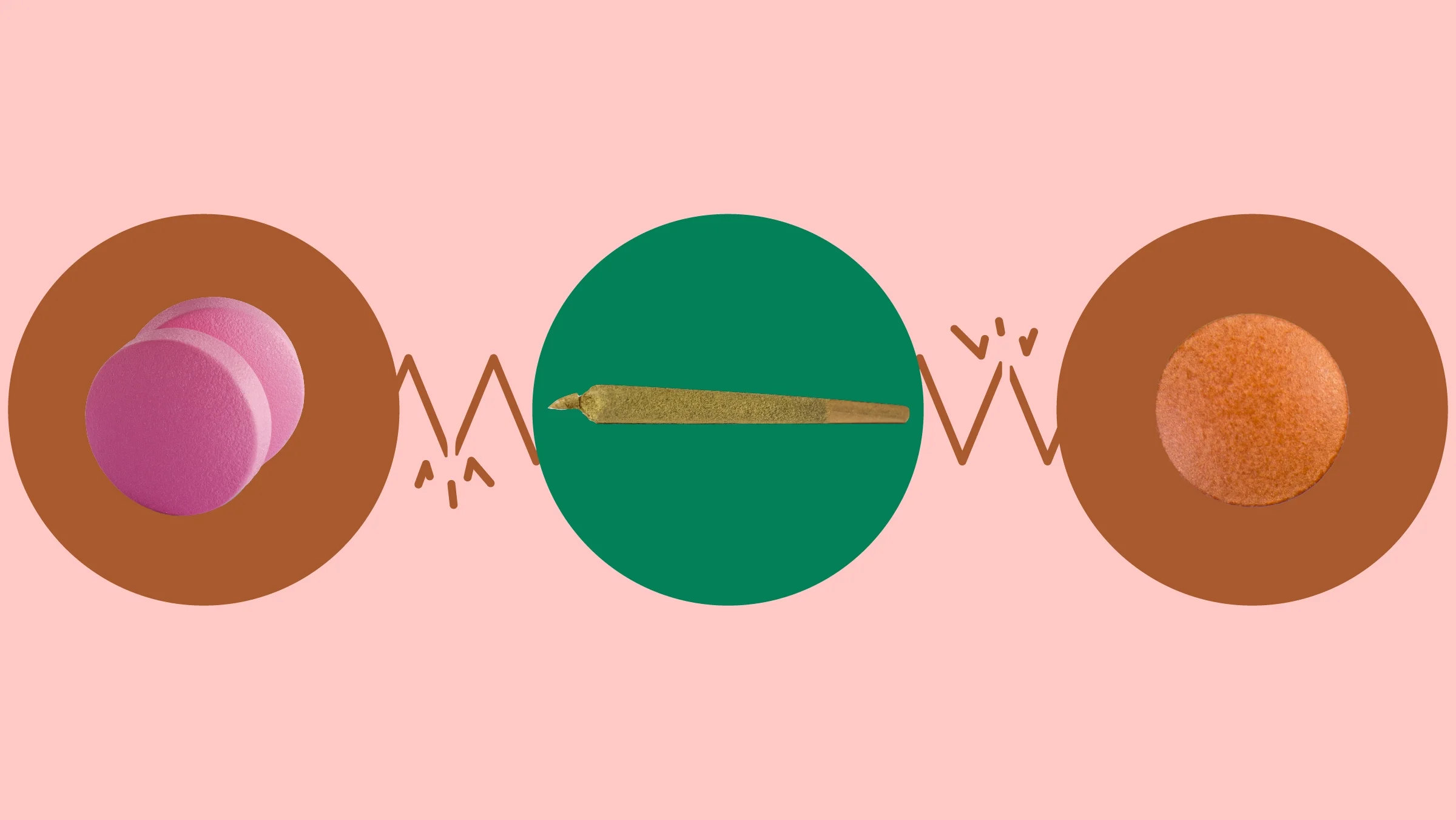
Does Ambien interact with cannabis or CBD? Cannabis (marijuana) and cannabis products, including cannabidiol (CBD), have been reported to interact with Ambien. Cannabis may affect CYP3A4, the enzyme that metabolizes Ambien. CYP3A4 inducers may reduce Ambien’s effectiveness, while CYP3A4 inhibitors may increase side effect risk. Both cannabis and Ambien can also cause drowsiness, and using them together may increase sedation and the risk of serious side effects. Inform your doctor if you use cannabis before starting Ambien. Note: Cannabis remains illegal at the federal level but is legal in many states to varying degrees.
Does my health history affect whether I should take Ambien?
Your medical history can influence whether Ambien is appropriate for you. Discuss the following with your doctor:
- Unusual sleep behaviors: Ambien carries a boxed warning for behaviors such as sleepwalking or sleep-driving.
- Depression or mental health conditions: Ambien may rarely worsen depression or cause mood changes.
- Liver problems: Liver impairment may increase side effect risk.
- History of drug or alcohol misuse: Ambien is a controlled substance with misuse and dependence potential.
- Lung or breathing problems: Including sleep apnea, as Ambien may slow breathing.
- Older age: Adults 65 and older may have increased sensitivity and fall risk.
- Pregnancy: Safety during pregnancy is not well established.
- Breastfeeding: Ambien passes into breast milk and may cause harm.
- Allergic reaction: Avoid use if you’ve had a prior allergic reaction to Ambien.
Common questions about Ambien and interactions
Does Ambien interact with blood pressure medications?
Blood pressure medications are not known to directly interact with Ambien. However, both may cause dizziness. Taking them together could increase this risk.
Is it safe to take Ambien with Adderall?
It’s generally considered safe to take Ambien with Adderall, a stimulant used for ADHD or narcolepsy. However, they should not be taken at the same time. For example, Adderall may be taken in the morning and Ambien at night.
How can I prevent interactions?
To reduce the risk of interactions:
- Avoid alcohol and discuss cannabis use.
- Provide a full list of medications, vitamins, herbs, and supplements.
- Notify your doctor if you start any new medications.
Review Ambien’s label and other paperwork carefully. Taking Ambien exactly as prescribed also helps minimize risks.
What should I ask my doctor?
If you still have concerns about Ambien interactions, consider asking:
- Does my Ambien dosage affect my risk of interactions?
- Should I report lifestyle changes such as diet or exercise?
- Are there alternative treatments with fewer interaction risks?
Disclaimer: HealthEH has made every effort to ensure that all information is accurate, thorough, and current. However, this article should not replace the advice of a licensed healthcare professional. Always consult your doctor or another qualified provider before taking any medication. Drug information may change and is not intended to cover all possible uses, instructions, precautions, warnings, drug interactions, allergic reactions, or adverse effects. The absence of a warning does not mean a drug or drug combination is safe or suitable for every patient.





















Leave a Reply
You must be logged in to post a comment.