
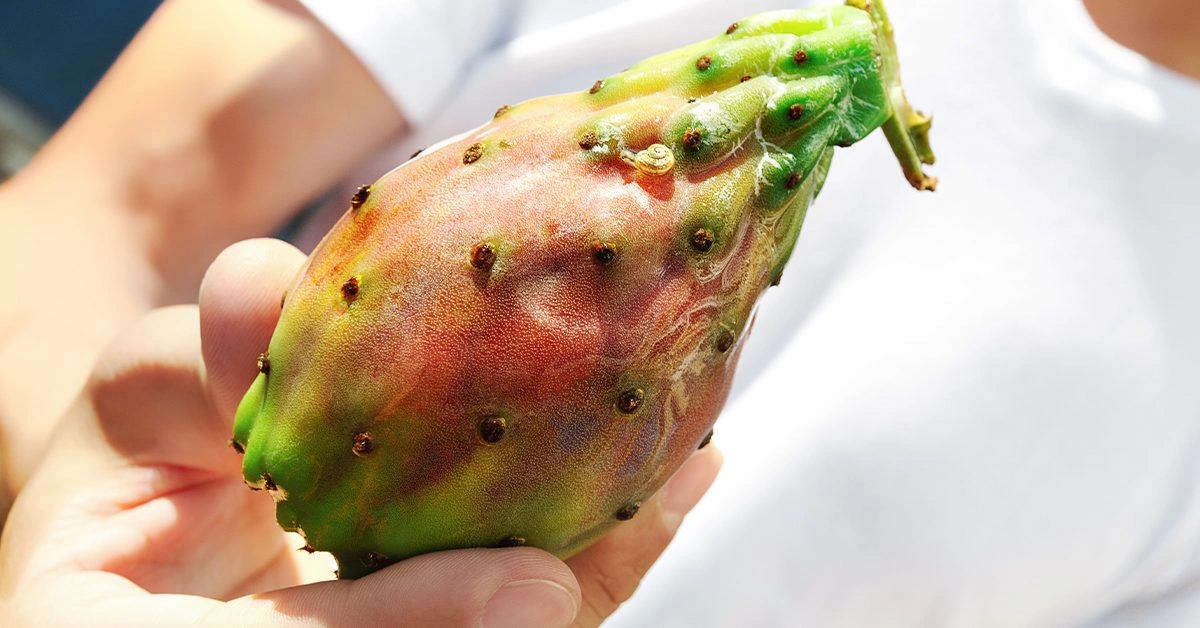
Hidden within the tasty flesh of the prickly pear are tiny seeds that yield an oil rich in various fatty acids, phenolic compounds, nutrients like vitamin E, phytosterols, and antioxidants. Numerous brands now extract prickly pear seed oil and market it as a skincare ingredient suitable for a variety of skin types, including those prone to acne and dryness.

Prickly pear oil is not classified as an essential oil. Instead, it’s typically used as a carrier oil to dilute stronger essential oils, or applied alone to support skin health.
What is a prickly pear?
Prickly pear cacti, also known as nopal or opuntia, are found across regions of the Americas, Australia, the Middle East, the Mediterranean basin, and the Caribbean islands.
Although people have consumed the sweet pink fruits of this cactus for centuries, prickly pears have only recently gained popularity as a so-called superfood.
Eating prickly pear has been associated with benefits such as reduced inflammation and lower blood sugar levels in individuals with type 2 diabetes.
What are the advantages of using prickly pear oil?
There isn’t a vast amount of research specifically on prickly pear oil yet. Still, preliminary studies indicate the components of prickly pear seed oil can support skin health across multiple skin types.
Some of the more researched benefits of prickly pear oil include:
Antioxidant and antibacterial effects
Antioxidants are well known for protecting skin from damage caused by UV exposure, aging, and other stressors. Antibacterial agents can help cleanse the skin and reduce acne flare-ups.
Studies have reported that prickly pear oil contains substantial levels of antioxidants and displays antibacterial activity. This implies it may help guard against skin damage and future breakouts.
An efficient carrier oil
In a separate study, researchers mixed prickly pear oil with vitamin A and applied the blend to human and rat skin samples. They observed that the oil’s lipid content was particularly effective at delivering vitamin A into the skin.
Vitamin A has many documented skin benefits, but it can cause irritation when used alone. The study concluded that prickly pear oil is a suitable and safe vehicle for transporting other nutrients that are otherwise difficult to apply directly to the skin, including vitamin A.
Hydration of the skin
Chemical analyses of prickly pear oil also show it is high in linoleic acid. Linoleic acid supports the skin’s ability to retain moisture, helping it stay hydrated.
More clinical research is needed to confirm prickly pear oil’s moisturizing effects, but anecdotal reports indicate it effectively enhances the skin’s water-retention properties.
How to use prickly pear oil
Several reputable companies sell prickly pear seed oil. You can locate it in health food stores and online. Seek out bottles labeled “100% pure prickly pear oil.” Products specified as “unrefined,” “cold-pressed,” “virgin,” or “organic” may offer higher quality than those that lack such descriptors.
Using prickly pear oil undiluted
To apply pure prickly pear oil, dispense one to two drops into your palm, then gently massage the oil into your skin.
Using prickly pear oil as a carrier
To use it as a carrier oil, blend the prickly pear oil with a few drops of a chosen essential oil. The number of essential oil drops determines the concentration of the blend. For instance:
- Add 1 drop essential oil to 1 tsp. prickly pear oil for a 1 percent solution.
- Add 2 drops essential oil to 1 tsp. prickly pear oil for a 2 percent solution.
- Add 5 drops essential oil to 1 tsp. prickly pear oil for a 5 percent solution.
To apply the carrier mixture, splash one to two drops into your hands and softly rub it into your skin.
Storage of prickly pear oil
When not in use, it’s best to keep prickly pear oil refrigerated. For optimal results, use it within 1 to 2 years of purchase, or by the expiration date printed on the package.
Prickly pear oil brands
Some well-known prickly pear oil options include:
- Eden Botanicals Organic Prickly Pear Seed Oil
- Garden of Wisdom’s Prickly Pear Seed Oil
- Carter & Jane’s The Everything Oil
- Ecla Prickly Pear Seed Oil
Any reasons to avoid prickly pear oil?
Prickly pear oil is generally safe for most healthy individuals across all skin types and ages. If you have a known allergy to prickly pears or related fruits, you should refrain from using it.
If you have sensitive skin, perform a patch test by applying a small amount of undiluted prickly pear oil to your wrist and waiting 24 hours. If you experience an adverse reaction during that period, do not continue using the oil.
You may notice prickly pear oil carries a higher price tag. Extracting oil from prickly pear seeds requires many seeds, which contributes to its typically higher cost. That’s a factor to weigh before adding it to your daily skincare routine.
Alternatives to prickly pear oil
If prickly pear oil doesn’t suit you and you want a natural oil with similar qualities, consider these alternatives:
- Coconut oil — antibacterial and deeply moisturizing
- Argan oil — an excellent everyday hydrator, even for acne-prone skin
- Rosehip seed oil — moisturizing and helps prevent skin damage
- Marula oil — antibacterial, protects against skin damage while hydrating
- Jojoba oil — helps combat acne, moisturizes, and shields skin from sun-related harm
The bottom line
Prickly pear oil contains numerous beneficial compounds linked to hydrating, antibacterial, and antioxidant effects. Research indicates components of the oil can reduce skin inflammation and may help prevent skin damage and acne.
There are no major risks to using prickly pear oil undiluted or as a carrier for essential oils. If it doesn’t work for you, several other natural oils can provide comparable benefits.



















Leave a Reply
You must be logged in to post a comment.