

Maintaining a healthy body weight depends on a variety of elements, including your age, sex, muscle mass, bone density, and everyday habits. While tools such as a BMI calculator by age can offer useful guidance, they don’t account for every individual difference that influences overall health.

There isn’t a single, flawless equation that determines your ideal body weight because it’s shaped by numerous influences, such as:
- height
- genetics
- sex assigned at birth
- sleep
- activity level
- body composition
- underlying health conditions
- whether you take any medications
For adults, age alone is usually not used to determine ideal weight because individuals of the same age can differ significantly in height, frame, and body composition. What is considered healthy for you may not be appropriate for someone else your age.
In contrast, age is essential when assessing healthy weight in children and teenagers ages 2 to 19 years old, since they are still experiencing growth and development.
Continue reading to better understand how to estimate and interpret your ideal weight, and how tools like a BMI calculator by age can fit into a broader health assessment.
Height and body mass index (BMI)
Body mass index (BMI) is a general formula used to estimate body mass and predict body fat levels based on your height in inches and weight in pounds (lbs). Many people use a BMI calculator by age or a BMI calculator kg with age to quickly assess their category.
BMI values range from low to high and are grouped into several categories:
| Category | BMI range |
|---|---|
| Underweight | less than 18.5 |
| Moderate weight | 18.5 to 25 |
| Overweight | 25 to 30 |
| Obese | • class 1: 30 to 35• class 2: 35 to 40• class 3: 40 or greater |
To calculate BMI manually, divide your weight in pounds by your height in inches squared, then multiply the result by 703. Online tools, including a BMI calculator female, can simplify this process and help tailor results based on sex assigned at birth.
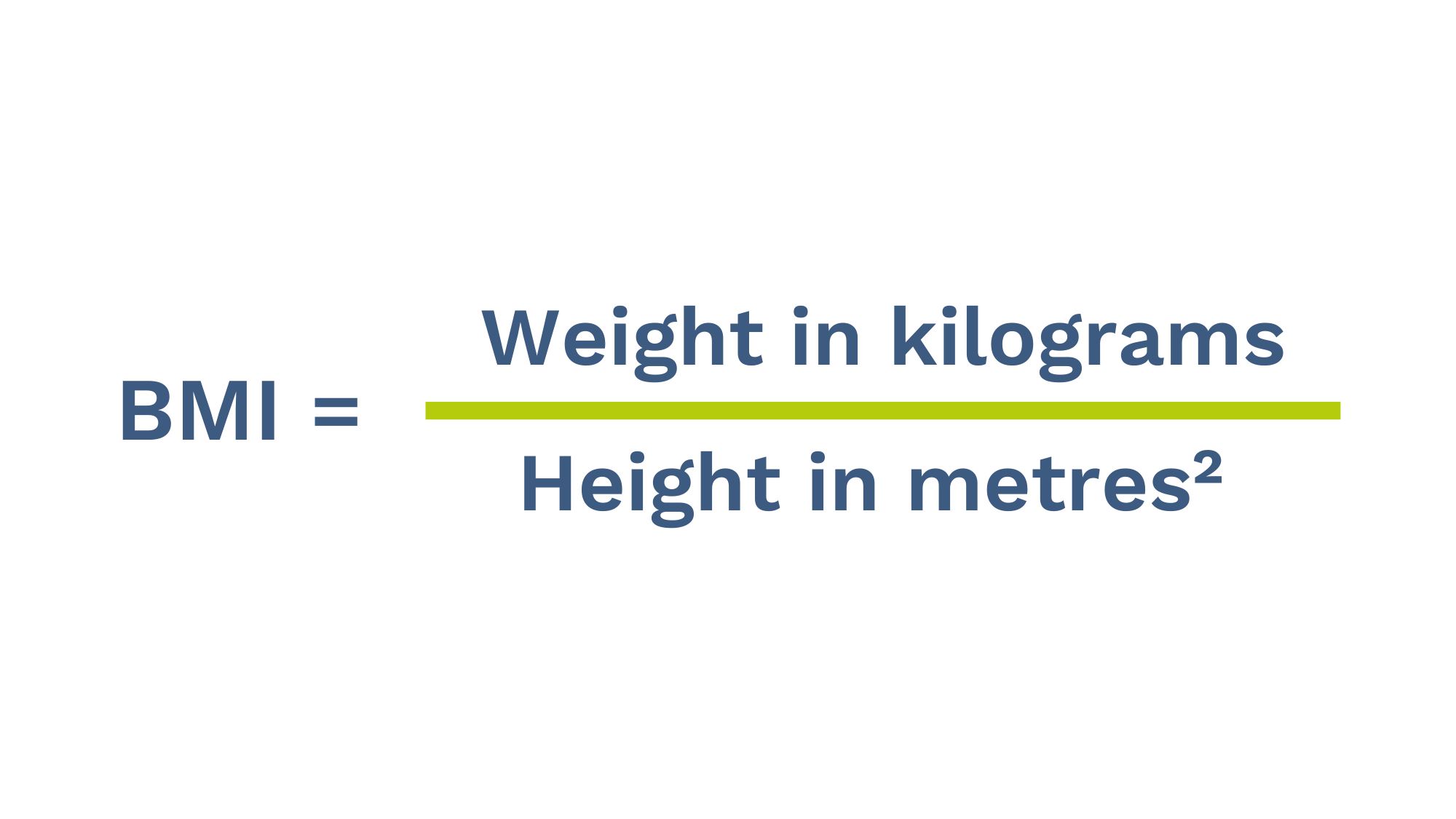
You may also input your measurements into a digital BMI tool for convenience.
Below is a BMI chart organized by height according to the National Heart, Lung, and Blood Institute (NHLBI):
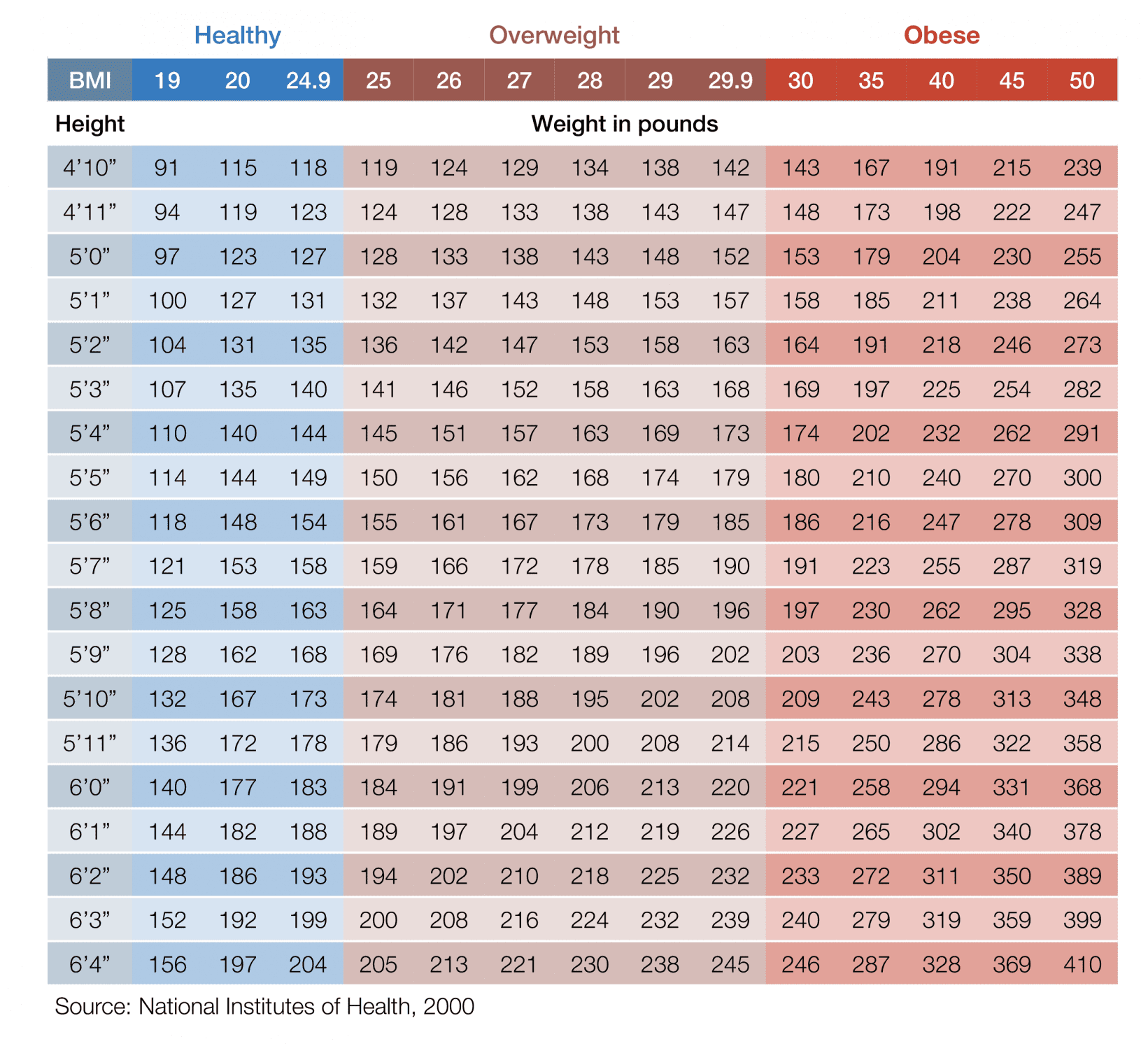
| BMI range | 18.5 to 24.9 | 25 to 29.9 | 30 to 34.9 | 35 to 39.9 | 40 or greater |
|---|---|---|---|---|---|
| Height (inches) | |||||
| 58 | 91 to 115 lbs | 119 to 138 lbs | 143 to 162 lbs | 167 to 186 lbs | ≥ 191 lbs |
| 59 | 94 to 119 lbs | 124 to 143 lbs | 148 to 168 lbs | 173 to 193 lbs | ≥ 198 lbs |
| 60 | 97 to 123 lbs | 128 to 148 lbs | 153 to 174 lbs | 179 to 199 lbs | ≥ 204 lbs |
| 61 | 100 to 127 lbs | 132 to 153 lbs | 158 to 180 lbs | 185 to 206 lbs | ≥ 211 lbs |
| 62 | 104 to 131 lbs | 136 to 158 lbs | 164 to 186 lbs | 191 to 213 lbs | ≥ 218 lbs |
| 63 | 107 to 135 lbs | 141 to 163 lbs | 169 to 191 lbs | 197 to 220 lbs | ≥ 225 lbs |
| 64 | 110 to 140 lbs | 145 to 169 lbs | 174 to 197 lbs | 204 to 227 lbs | ≥ 232 lbs |
| 65 | 114 to 144 lbs | 150 to 174 lbs | 180 to 204 lbs | 210 to 234 lbs | ≥ 240 lbs |
| 66 | 118 to 148 lbs | 155 to 179 lbs | 186 to 210 lbs | 216 to 241 lbs | ≥ 247 lbs |
| 67 | 121 to 153 lbs | 159 to 185 lbs | 191 to 217 lbs | 223 to 249 lbs | ≥ 255 lbs |
| 68 | 125 to 158 lbs | 164 to 190 lbs | 197 to 223 lbs | 230 to 256 lbs | ≥ 262 lbs |
| 69 | 128 to 162 lbs | 169 to 196 lbs | 203 to 230 lbs | 236 to 263 lbs | ≥ 270 lbs |
| 70 | 132 to 167 lbs | 174 to 202 lbs | 209 to 236 lbs | 243 to 271 lbs | ≥ 278 lbs |
| 71 | 136 to 172 lbs | 179 to 208 lbs | 215 to 243 lbs | 250 to 279 lbs | ≥ 286 lbs |
| 72 | 140 to 177 lbs | 184 to 213 lbs | 221 to 250 lbs | 258 to 287 lbs | ≥ 294 lbs |
| 73 | 144 to 182 lbs | 189 to 219 lbs | 227 to 257 lbs | 265 to 195 lbs | ≥ 302 lbs |
| 74 | 148 to 186 lbs | 194 to 225 lbs | 233 to 264 lbs | 272 to 303 lbs | ≥ 311 lbs |
| 75 | 152 to 192 lbs | 200 to 232 lbs | 240 to 272 lbs | 279 to 311 lbs | ≥ 319 lbs |
| 76 | 156 to 197 lbs | 205 to 238 lbs | 246 to 279 lbs | 287 to 320 lbs | ≥ 328 lbs |
How is BMI calculated for children?
For individuals ages 2 to 19 years old, BMI is calculated using age-specific percentiles and also considers sex assigned at birth.
You can use the Centers for Disease Control and Prevention’s BMI calculator to determine a child’s BMI.
The resulting value is plotted on growth charts for boys and girls, allowing comparison with peers of the same age.
For example, a 5-year-old boy in the 25th percentile weighs more than 25% of boys his age and less than 75% of them.
According to the NHLBI, BMI categories for children include:
| Category | BMI percentile |
|---|---|
| Underweight | below 5th percentile |
| Healthy weight | 5th to 85th percentile |
| Overweight | 85th to 95th percentile |
| Obesity | above 95th percentile |
BMI isn’t the only measurement
Although BMI provides standardized ranges for body weight relative to height, it represents only one aspect of health assessment.
This calculation does not account for differences in bone mass, muscle mass, fat distribution, lifestyle habits, or medical history.
For instance, a highly active individual with substantial muscle mass could fall into the overweight or obese category despite having low body fat. Conversely, someone with low muscle mass but higher fat levels might appear within a “normal” BMI range. In some cases, BMI may underestimate body fat.
Additionally, BMI thresholds were originally developed using data from a white male European population, which may reduce accuracy for people of other races and ethnicities.
While BMI can be helpful for identifying population-level trends, individuals should consider additional tools and consult a healthcare professional for a comprehensive evaluation.
Learn more about the downsides of BMI.
Waist-to-height ratio
The waist-to-height ratio is another screening method used to estimate abdominal fat and determine whether your weight is proportionate to your height.
Measuring waist circumference helps assess visceral fat, which accumulates around internal organs. Elevated visceral fat is linked to increased cardiometabolic risk.
In contrast, subcutaneous fat lies beneath the skin and primarily serves as energy storage.
Fat distribution plays a crucial role in evaluating disease risk, something BMI alone cannot determine.
According to the British Heart Foundation, excess abdominal fat is associated with conditions such as:
- diabetes
- heart disease
- circulation problems
To measure your waist-to-height ratio at home:
- Stand upright.
- Place a tape measure around your torso midway between your ribs and hips.
- Ensure the tape is snug but not pressing into your skin.
- Record the measurement in centimeters or inches.
- Measure your height using the same unit.
- Divide your waist measurement by your height.
A person who is 6 feet tall (72 inches) with a 36-inch waist has a ratio of 0.5.
Evidence suggests that a waist measurement exceeding half of your height (over 0.5) may raise the risk of obesity-related diseases, including cardiovascular problems and early death.
A small 2017 study indicated that waist-to-height ratio could outperform BMI in predicting obesity risk. However, broader research across diverse age groups and ethnic backgrounds is still necessary.
Waist-to-hip ratio
The waist-to-hip (WHR) ratio is another method used to evaluate body fat distribution and potential health risk.
Like waist-to-height ratio, an elevated WHR is associated with conditions such as metabolic syndrome.
A WHR below 0.95 for males and below 0.85 for females is generally considered healthy.
Some experts suggest that WHR may better reflect disease risk compared with BMI alone.
However, WHR may not be suitable for everyone, including children, pregnant people, and individuals of shorter stature.
Learn more about WHR vs. BMI.
Body fat percentage
Measuring body fat percentage can provide a more direct estimate of how much fat your body contains.
Techniques used to determine body fat percentage include:
- bioelectrical impedance scales
- DEXA scan
- hydrostatic weighing
- using skin fold calipers
Although some home devices are available, results may vary in accuracy.
For the most reliable assessment, consider consulting a qualified healthcare professional who can recommend appropriate testing methods.
Learn more about how to calculate your body fat percentage.
Takeaway
No single measurement can precisely define your ideal weight, since it depends on multiple variables such as age, height, body composition, fat distribution, and sex assigned at birth.
Using tools like a BMI calculator by age can offer a helpful starting point, but it’s best to interpret the results alongside other metrics and medical guidance.
If you’re uncertain about what weight range is healthiest for you, speak with a healthcare professional. They can help assess your overall risk profile and create a personalized plan to support your long-term health goals.






















Leave a Reply
You must be logged in to post a comment.