
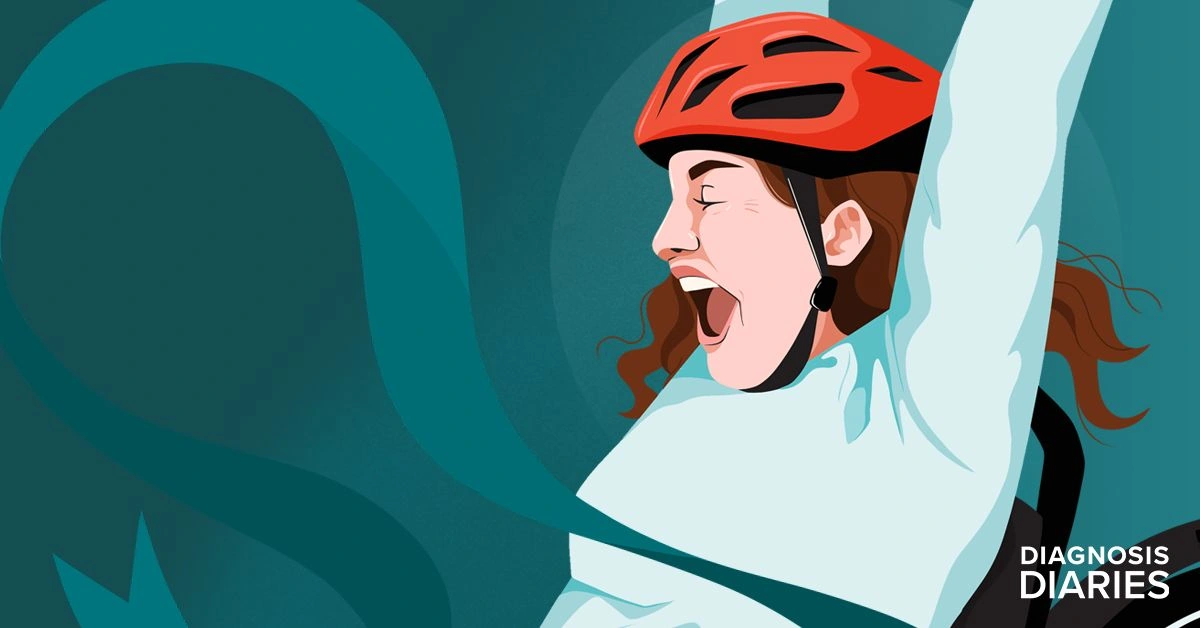

When people search for My first ALS symptoms patient stories, they’re often trying to make sense of subtle body changes that don’t yet have a name. For me, the earliest warning of what would become my ALS diagnosis appeared in my right index finger at age 31 — a tiny, almost forgettable change that would later carry enormous meaning.
On a frigid January morning in 2013, I was swimming laps in an indoor pool in Washington, D.C. I had just started preparing for my first half-ironman scheduled for the fall. After that milestone, David and I planned to try for a baby. My future felt neatly mapped out.
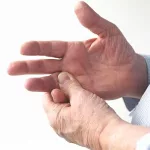
As I cut through the warm, silky water, my body moved smoothly — except for my right index finger. I couldn’t completely straighten it. It felt as though it were catching on something invisible.
Over the next several months, other early signs of ALS quietly surfaced. At the time, they seemed insignificant. Only in hindsight do I recognize them as the first neurological symptoms of a progressive motor neuron disease.
My handwriting, once effortless, became laborious. I would groan when I saw a delivery notice taped to my mailbox that required a signature. I startled easily at routine sounds, like a ringing phone. Sometimes my leg trembled uncontrollably as I hurried down an escalator to catch the Metro.
“I decided to set the craziest goal I could think of: to complete a marathon on my trike in all 50 states.”
The only change that truly caught my attention was that my cycling and running times were slowing during training. I rationalized it. The added mileage must have been tightening my hamstrings. My solution — as always — was to push harder.
I completed the race, but during the run portion I had to walk most of it because I felt as if I might trip over my own toes. I convinced myself it was simply an overuse injury from training.
After the race, I visited a physical therapist. She examined me and said, “Your muscles just don’t seem strong enough for someone who did that long of a race.”
She recommended I see a neurologist.
Slowly but surely
What followed was a procession of five neurologists and an exhausting list of diagnostic tests. I underwent blood tests, MRIs, a spinal tap, CT scans, a nerve conduction study, and electromyography (EMG). Every result came back normal. The EMG — which involved needles inserted into flexed muscles — was especially painful. But it ruled out ALS at that time.
Meanwhile, my body continued to weaken. My toes stopped flexing upward when I walked. My speech grew slower. A gust of wind knocked me down in the middle of a D.C. street.
Within 6 months, I had gone from finishing a half-ironman to needing a cane.
“There aren’t any definitive tests for these types of conditions,” a movement disorder specialist explained. “Diagnosis is often a process of elimination combined with matching clinical symptoms. That’s why identifying a rare disease can be so difficult.”
He referred me to a colleague who specialized in primary lateral sclerosis (PLS).
“Statistically speaking, I had 2 to 5 years to live. No treatment. No cure. No chance of recovery.”
The PLS specialist offered the clearest explanation yet of what might be happening inside my nervous system.
“For any muscle in your body to move, two main nerve connections must occur. When you think, ‘I want to take a step,’ your brain sends a message down through the upper motor neurons to the spinal cord,” she said. “Then the spinal cord relays that signal through the lower motor neurons — long fibers extending to your glutes, thighs, knees, ankles, and toes — telling the muscles to contract.”
“This signaling happens so quickly,” she continued, “that it feels automatic. You don’t consciously process it — you just walk.”
Until that conversation, I had never fully appreciated how extraordinary the human neuromuscular system is.
Hit the breaks
ALS is diagnosed when both upper motor neurons and lower motor neurons are affected. The EMG evaluates lower motor neurons. I had passed those tests.
PLS impacts only the upper motor neurons. Symptoms can include slow speech, slow handwriting, difficulty walking, muscle tightness, exaggerated startle response, and generalized weakness — all consistent with what I was experiencing. Messages from the brain take longer to reach the muscles, but the muscles can still respond.
PLS is progressive but not considered life-shortening. Many individuals eventually require wheelchairs. It is the involvement of the lower motor neurons that makes ALS fatal.
“Don’t get too hopeful,” the specialist cautioned. “Most physicians wait at least 2 years before diagnosing PLS because sometimes upper motor neuron symptoms appear before lower motor neuron involvement.”
After two additional EMGs and 3 more months filled with uncertainty and fear, the answer became undeniable. I had ALS.
Statistically speaking, I had 2 to 5 years to live. No treatment. No cure. No chance of recovery.
Reading other My first ALS symptoms accounts later helped me understand how varied early ALS presentation can be. Some people notice slurred speech first. Others experience limb weakness or muscle twitching. For women, information such as Early signs of ALS in Females can highlight differences in symptom progression and diagnostic delays. In my case, it began with a finger that wouldn’t straighten.
Tomorrow’s another day
I received my diagnosis in August 2014 — at the height of the global Ice Bucket Challenge. As the world talked about ALS, I was confronting the reality of living with it.
I learned quickly how devastating the disease can be. The prospect of gradually losing the ability to walk, talk, eat, move, and eventually breathe felt like a nightmare unfolding in real time.
Reporters often ask how I felt at the exact moment of diagnosis. But that “moment” doesn’t stand alone for me. It is inseparable from the 20-month journey leading up to it.
That instant was more like a flip-book animation: a stiff finger in a pool, tight hamstrings during training, a fall in the street, five neurologists, relentless anxiety.
What mattered most was one clear realization: I could not afford to waste any more time.
Instead of focusing on the day I learned I was going to die, the more powerful question was this: What do you do the morning after?
My answer surprised even me: I want to do another triathlon.
Stop at nothing
Since balancing on a traditional two-wheel bike was no longer safe, we bought a bright neon green recumbent trike. My best friend Julie and I registered for a super sprint triathlon: a pool swim, a 9-mile bike ride, and a 2-mile run.
I swam slowly and awkwardly. But I cherished every inch of pavement rolling beneath my trike’s wheels. So much independence had slipped away; for a few hours, I felt it return.
There was no true running.
Two trekking poles replaced my cane as I shuffled through the 2-mile course, Julie steadying me. My legs resisted. All ten toes cramped painfully.
We finished last — nearly an hour behind everyone else. Yet when we rounded the final corner, about a hundred people remained, cheering wildly. Applause, tears, shouting — pure humanity. I felt compassion and strength surge through me.
That finish line transformed how I viewed both ALS and my future, regardless of how much time remained.
I wondered: What if others chose a physical challenge to raise money for ALS research?
Initially, I invited twenty friends to select a race that pushed them personally. If each raised $250, we would generate $5,000.
Over the following years, four hundred people completed races and personal challenges to celebrate what their bodies could do — abilities ALS ultimately steals.
“That finish line changed how I thought about my disease and my future — no matter how much time I had left.”
To date, the Team Drea Foundation has contributed more than $1 million to ALS research, primarily supporting the ALS Therapy Development Institute and Duke University.
I continued riding my green trike, waiting for ALS to catch up. I progressed from a half-marathon to a marathon — then another. I treasured the sensation of muscle engagement and forward motion.
In 2016, after moving back to Raleigh, North Carolina, I began swimming and doing water exercises with my mom. I also started Pilates-based physical therapy. My particular presentation of ALS appeared to respond well to low-impact, gradual strength-building routines, which can sometimes help preserve mobility and function for a time.
Road warrior
In 2019, I reached the fifth anniversary of my ALS diagnosis — a milestone achieved by only 20% of people living with ALS.
I was done waiting passively.
I set the boldest goal I could imagine: complete a marathon on my trike in all 50 states and document the journey to raise awareness and funds for ALS research.
The plan was to film for one year and release the documentary quickly so others could join me in remaining states. Then the 2020 pandemic halted races nationwide. We couldn’t end the story there — but no one knew how long events would be canceled or how long my strength would hold. Living with ALS already meant living on borrowed time. We kept filming.
Did I believe I would reach state No. 50? Honestly, no. I was only at state No. 17 when everything shut down.
But the mission was never solely about finishing. It was about living fully — exploring, challenging myself, choosing courage over fear.
And yes, I made it.
“Go On, Be Brave” documents my journey as the first person with ALS to complete a marathon in all 50 states. The film captures not just endurance, but the community and hope that carried me across every finish line.
Still, I never want anyone to look at my story and think, “ALS can’t be that bad if she’s running marathons.”
ALS is a devastating, disabling disease that can affect anyone. My husband and I have watched friends deteriorate and die as the disease progressed. We’ve seen families shattered emotionally and financially.
I have been granted time that many people with ALS do not receive. I also understand how quickly that time can vanish. So I will keep riding my trike, using my muscles, and raising funds to end ALS for as long as I am able.
Adapted from “Hope Fights Back: Fifty Marathons and a Life or Death Race Against ALS” by Andrea Lytle Peet with Meredith Atwood. Publishing September 2023 from Pegasus Books. Adapted with permission. The documentary, “Go On, Be Brave,” appeared in selected theaters in fall 2023 and is expected to be available for streaming in early 2024.
















Leave a Reply
You must be logged in to post a comment.