

A tracheostomy tube assists with breathing following a tracheotomy, a procedure that creates a stoma (an opening) in the front of the neck. A laryngectomy tube is used to keep a stoma open while it heals.
Both tracheotomy and laryngectomy produce a stoma — a small opening at the front of the neck — to allow direct access to the trachea (windpipe).
A tracheotomy can be temporary and reversible; the connection between your nose, mouth, and airway usually remains intact. In these cases, clinicians place a tracheostomy tube to keep the stoma patent and to facilitate safe ventilation of the lungs.
By contrast, a laryngectomy permanently changes airway anatomy. Surgeons often place a laryngectomy tube during the healing phase, though it may not be required indefinitely.
Tracheotomy versus tracheostomy
Although “tracheotomy” and “tracheostomy” are frequently used as if they mean the same thing, there is a distinction. A tracheotomy is the surgical incision into the trachea. A tracheostomy refers to the resulting opening created by that incision.
What is a tracheostomy tube?
When a surgeon performs a tracheotomy, they fashion a stoma in the front of the neck that leads directly into the trachea, bypassing the nose, mouth, and throat.
The surgeon then inserts a plastic tube into the stoma to maintain the opening and allow direct ventilation of the lungs. This device is called a tracheostomy tube. These tubes are frequently connected externally to mechanical ventilators.
Tracheostomy tubes come in a range of designs tailored to clinical needs. Some include cuffs to reduce air leaks and protect the lungs, inner cannulas that make cleaning simpler, or fenestrations that help with speaking.
 in the front of the neck. A laryngectomy tube is used to keep a stoma open while it heals.</p><p>Both tracheotomy and laryngectomy produce a stoma — a small opening at the front of the neck — to allow direct access to the trachea (windpipe).</p><p>A tracheotomy can be temporary and reversible; the connection between your nose, mouth, and airway usually remains intact. In these cases, clinicians place a tracheostomy tube to keep the stoma patent and to facilitate safe ventilation of the lungs.</p><p>By contrast, a laryngectomy permanently changes airway anatomy. Surgeons often place a laryngectomy tube during the healing phase, though it may not be required indefinitely.</p><h3>Tracheotomy versus tracheostomy</h3><p>Although “tracheotomy” and “tracheostomy” are frequently used as if they mean the same thing, there is a distinction. A tracheotomy is the surgical incision into the trachea. A tracheostomy refers to the resulting opening created by that incision.</p><h2><span class=) What is a tracheostomy tube?
What is a tracheostomy tube?When a surgeon performs a tracheotomy, they fashion a stoma in the front of the neck that leads directly into the trachea, bypassing the nose, mouth, and throat.
The surgeon then inserts a plastic tube into the stoma to maintain the opening and allow direct ventilation of the lungs. This device is called a tracheostomy tube. These tubes are frequently connected externally to mechanical ventilators.
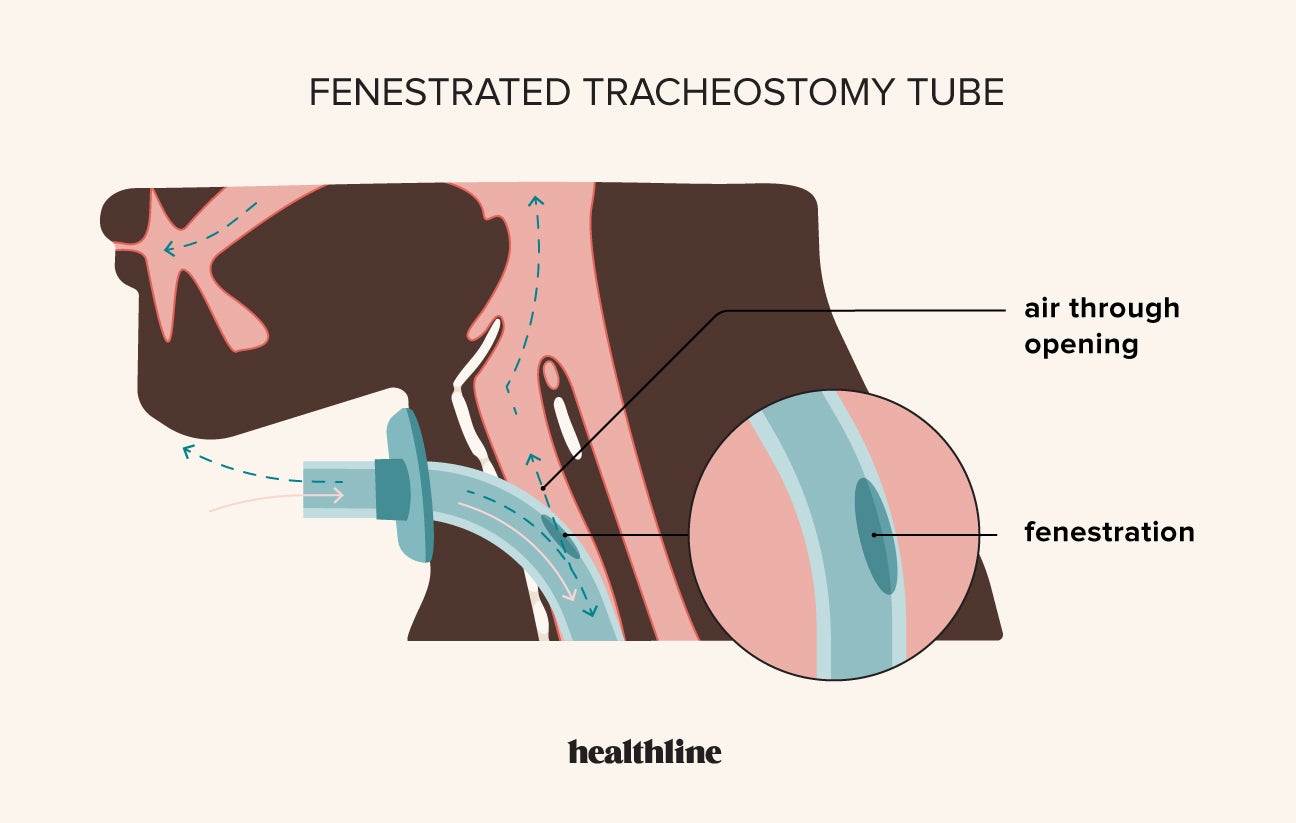
Tracheostomy tubes come in a range of designs tailored to clinical needs. Some include cuffs to reduce air leaks and protect the lungs, inner cannulas that make cleaning simpler, or fenestrations that help with speaking.
Tracheotomy is a procedure that can be performed emergently and is often reversible. However, some tracheotomies are planned and intended for long-term use, for example when prolonged ventilator support is anticipated.
Reasons for a tracheotomy
A tracheotomy may be necessary in situations such as:
- injury to the head, neck, or airway
- emergencies like anaphylaxis, when an airway tube cannot be placed through the mouth
- bilateral vocal cord paralysis
- tumors of the head and neck
- neuromuscular disorders, for example paralysis or amyotrophic lateral sclerosis (ALS)
- long-term dependence on a ventilator, such as from congenital airway problems or severe obstructive sleep apnea
What is a laryngectomy tube?
In a laryngectomy, surgeons remove the larynx (voice box) and bring the trachea to an opening at the front of the neck, called a laryngectomy stoma.
Unlike a tracheotomy, a laryngectomy severs the airway permanently from the nose, mouth, and throat. After this operation, breathing occurs only through the stoma.
Surgeons may use a tracheostomy tube in a laryngectomy stoma during procedures that require ventilator support.
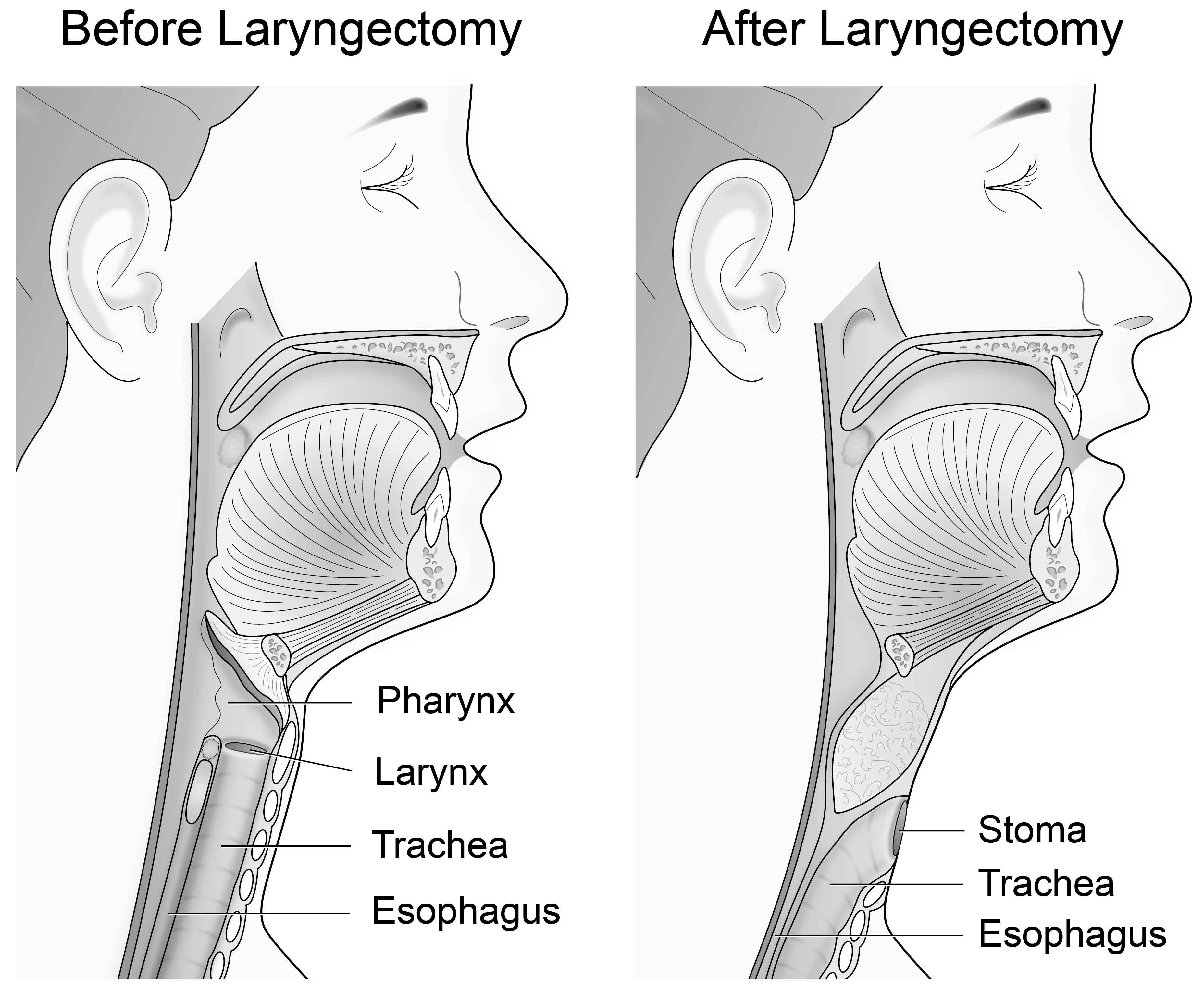
After surgery, however, they typically place a short, flexible silicone tube directly into the stoma to keep it open and encourage healing. This device is called a laryngectomy tube.
Many people with laryngectomy stomas do not need a tube once the stoma has healed well.
Reasons for a laryngectomy
Indications for a laryngectomy include:
- cancer of the head or neck
- severe trauma to the larynx
- radiation-induced necrosis of the larynx (a complication from cancer therapy)
- rare situations such as cranial nerve palsy or recurrent laryngeal papillomatosis
How do you care for a laryngectomy stoma and tube?
Hospital staff will instruct you on stoma and tube care. Typical recommendations include:
- Clean the skin around the stoma with gauze, mild soap, and water at least twice daily.
- Remove the laryngectomy tube to clean it using a special brush and clean water.
- Use a home humidifier and saline (sterile saltwater) spray or mist to prevent the stoma from drying out or forming crusts.
- Use suction as needed to clear mucus and secretions from the airway. A specialized filter over the laryngectomy tube can help humidify inhaled air and keep out irritants.
- When showering, use a protective shield to prevent excess water from entering the stoma.
If you are looking into support for milk supply during recovery, you might find resources about fenugreek breastfeeding useful, but always check with your care team before using supplements.
Frequently asked questions
What is the difference between a stoma and a tracheostomy tube?
A “stoma” simply refers to an opening. Both tracheotomy and laryngectomy produce a moist, pink stoma on the front of the neck.
A tracheostomy tube is a plastic tube inserted into that stoma to provide ventilation. A laryngectomy tube is a small, flexible silicone device that may be used with a laryngectomy stoma.
Can you suction a laryngectomy tube?
Yes. Often you’ll remove and clean the tube first, then attempt to cough or suction the stoma.
If necessary, a suction machine and catheter can be used with the laryngectomy tube in place.
How often should you replace a laryngectomy tube?
Laryngectomy tubes require routine cleaning, and experts commonly recommend replacing them every three months. Replace sooner if you see signs of wear, such as cracks, or follow your doctor’s instructions.
Do you need a feeding tube after a laryngectomy?
In the first week after surgery, your team may provide a temporary nasogastric feeding tube. As recovery progresses, clinicians will guide you in safely reintroducing oral intake.
If cancer therapy or other issues cause long-term problems with swallowing or maintaining nutrition and hydration, a surgically placed gastrostomy tube may be recommended.
Takeaway
Both tracheotomy and laryngectomy create a stoma in the front of the neck through which breathing or ventilation can occur.
However, a laryngectomy permanently disconnects the nose, mouth, and throat from the windpipe; air moves only through the stoma. In contrast, a tracheotomy often preserves the upper airway connection and can be reversible.
Tracheostomy tubes are made in many sizes and with varying features and are intended for tracheotomy stomas, though they may also be used in laryngectomy stomas when mechanical ventilation is necessary.
After laryngectomy, a laryngectomy tube is commonly used to support the healing stoma. These tubes are small, soft, and shaped to follow the tracheal curve after surgery and are not typically connected to ventilators.
Not everyone will require long-term tube use after laryngectomy surgery.























Leave a Reply
You must be logged in to post a comment.