

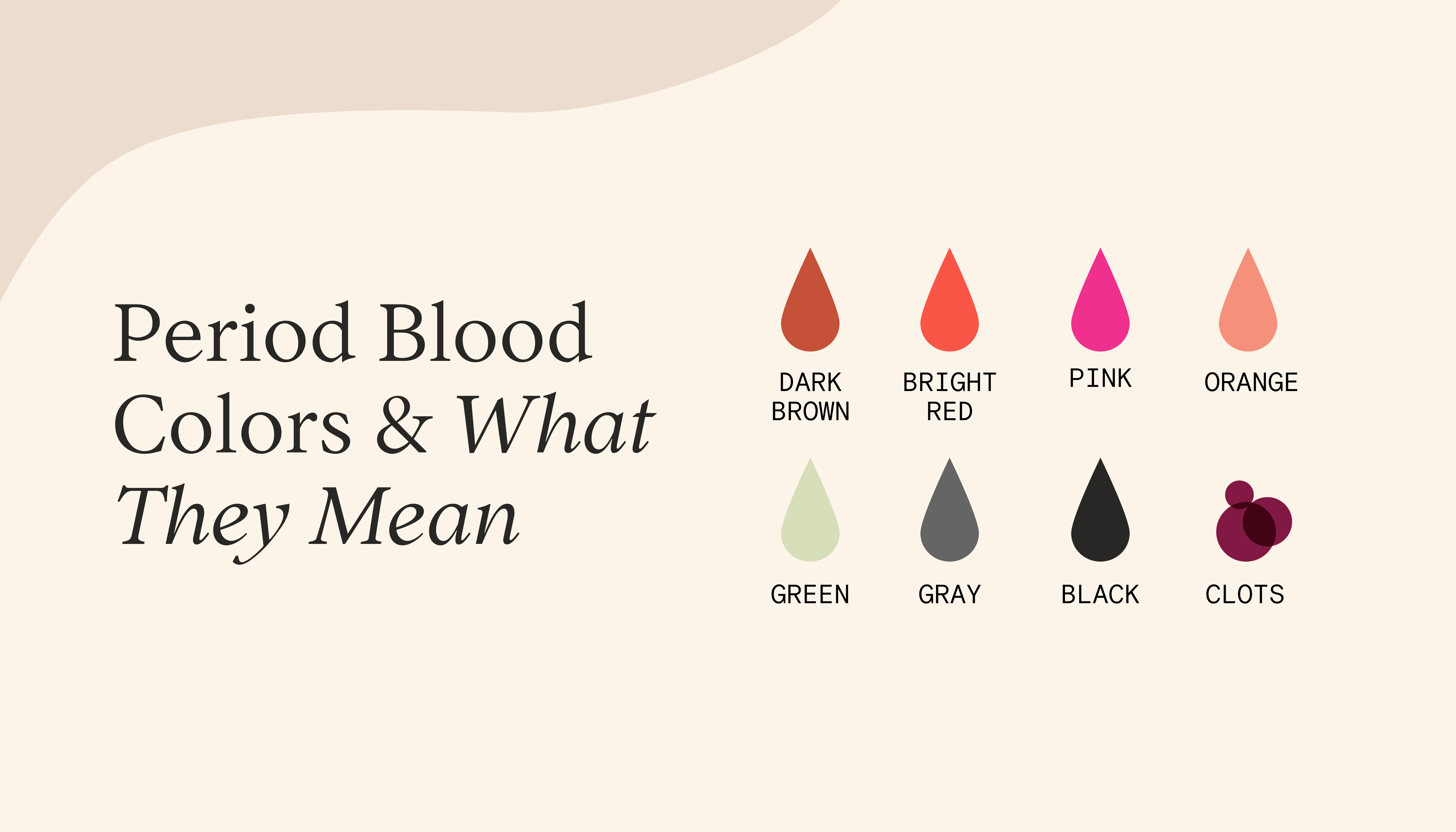
Menstrual blood can present in a spectrum of colors during your period, from bright red to pink to brown.
If you pull down your underwear while on your period and notice a hue other than red, try to stay calm. Period blood isn’t always bright red, and various shades can indicate different, generally benign, things.
Most color variations aren’t worrisome. Occasionally, however, they can signal an issue that deserves evaluation by a healthcare provider.
What makes period blood brown?
Brown discharge is typically older blood that has oxidized, which gives it that darker tone. Several situations can cause this:
The start or finish of your period
Flow tends to be lighter at the beginning and end of your cycle, so blood may take longer to leave the body.
The longer it remains inside, the more it oxidizes and turns brown. Sometimes brown blood is simply leftover from your prior period.
Pregnancy
Brown spotting can be implantation bleeding, an early sign of pregnancy, usually occurring about 10 to 14 days after conception.
Other possible signs of implantation include:
- mild cramping
- breast tenderness
- nausea
- vomiting
Lochia
Lochia is the postpartum bleeding experienced in the first four to six weeks after childbirth.
This bleeding often begins heavy and shifts to a pinkish or brown color by around day four.
Missed miscarriage
While miscarriage often involves bright red bleeding, some people have a missed miscarriage (also called a “silent miscarriage”), where the pregnancy ends but the tissue does not pass for at least four weeks.
There may be little bleeding, usually dark brown spotting rather than heavy flow.
Any bleeding during pregnancy should prompt a call to your healthcare provider.
Perimenopause
Estrogen levels fluctuate during perimenopause, affecting the uterine lining.
This can alter the timing, consistency, and color of your flow, including brown spotting or period blood at unexpected times.
Brown blood in this setting is generally just blood and uterine tissue exiting the body.
Perimenopause may bring symptoms from mild to severe. Alongside period changes, you might notice hot flashes, vaginal dryness, and sleep disturbances.
FYI, the average age for menopause is 51, though perimenopause can begin in your 30s.
Polycystic ovarian syndrome (PCOS)
PCOS can interfere with ovulation. When ovulation doesn’t occur, the uterine lining can build up and shed irregularly, resulting in light or missed periods with brown discharge between cycles.
Other PCOS signs to discuss with your provider include:
- excessive hair growth
- weight gain
- difficulty conceiving
- acne
What causes dark red period blood?
Dark red blood is often noticeable when you first rise in the morning or after lying down for a while.
The deeper red color may occur because gravity keeps the blood in the uterus for a short time, but not long enough for it to oxidize into brown.
Dark red blood can also be linked to:
The end of your period
Near the end of your cycle, slowing flow can make blood appear darker red.
Lochia
Postpartum bleeding is frequently heavy and dark red for the first three days, then becomes darker as the flow decreases.
What causes bright red period blood?
Bright red blood is fresh and fast-flowing, such as at the onset of your period. For some people, bleeding remains bright red throughout, while for others it darkens as flow slows.
Bright red blood can also be associated with:
Infection
Some sexually transmitted infections (STIs), including chlamydia and gonorrhea, can cause bleeding between periods.
STIs may also present with:
- foul-smelling discharge
- pain during penetrative sex
- burning or pain when urinating
If you suspect an STI, see a healthcare professional for testing.
Other infections, such as bacterial vaginosis or yeast infections, can irritate the vagina and cause bleeding as well.
Miscarriage
Spotting or bleeding during pregnancy isn’t always a miscarriage, but it can be. Any bleeding in pregnancy should be evaluated by a clinician.
Miscarriage can cause bright red bleeding or clots, often accompanied by abdominal pain, cramping, and lightheadedness.
Uterine polyps or fibroids
These benign growths in the uterus can cause heavy menstrual bleeding or bleeding at other times in the cycle.
They vary in size and may also cause pelvic discomfort or pressure.
Adenomyosis
Adenomyosis happens when the tissue that lines the uterus grows into the muscle wall, thickening it.
This condition may lead to heavy, painful periods, persistent pelvic pain, and pain during intercourse.
What causes pink period blood?
Pink blood at the start or finish of your period, especially when spotting, usually reflects blood diluted by cervical mucus.
Pink blood can also be related to:
Lochia
After about day four postpartum, lochia may have a pinkish or brownish tint.
Low estrogen
Pink menstrual blood can sometimes indicate low estrogen. Estrogen helps maintain the uterine lining.
When estrogen is low, the lining may shed at odd times, causing spotting in various colors, including pink.
Perimenopause, menopause, and estrogen-free contraception (like the progestin-only pill or certain IUDs) can result in low estrogen.
Ovulation
Some people notice spotting around ovulation, typically mid-cycle.
Ovulation increases cervical fluid, which can dilute blood, producing a light red or pink appearance.
Miscarriage
If you’re pregnant, a sudden release of clear or pink fluid could indicate miscarriage.
Other miscarriage signs include:
- cramping
- passing tissue
- loss of pregnancy symptoms
What causes orange period blood?
Orange discharge can occur when blood mixes with cervical fluid. Orange hues may also be seen with:
Implantation spotting
Some people notice orange or pink spotting around the time implantation might occur, roughly 10 to 14 days after conception.
Not everyone gets implantation spotting, but when spotting doesn’t develop into a period, taking a pregnancy test is sensible.
Infection
Unusual discharge color can signal a bacterial infection or an STI.
Other symptoms that may accompany abnormal discharge include a bad odor and discomfort when urinating or during sex.
What causes gray period blood?
Gray or off-white period blood is not normal and should be evaluated by a healthcare professional.
Possible reasons include:
Infection
Gray discharge can point to infections such as bacterial vaginosis. Additional signs include:
- itching
- foul smell
- fever
- pain
Miscarriage
In pregnancy, gray discharge may indicate miscarriage. Passing gray-colored tissue can also be a sign.
What causes black period blood?
Black blood can be alarming, but like brown blood, it’s often just very old blood that’s been in the body long enough to darken. This commonly happens on low-flow days at the start or end of a period.
Less common causes of black discharge include:
Stuck or forgotten object
Black discharge might mean a foreign object is lodged in the vagina (it happens). A forgotten tampon or a second inserted tampon, for example, can lead to this.
Sex toys, menstrual cups, and some contraceptive devices can also be retained.
Objects left inside can irritate the vaginal lining and cause infection.
With a retained object you might notice a foul odor, itching, a rash on the vulva or vagina, and fever.
If you think something is stuck, see a healthcare professional promptly.
Infection
Pelvic inflammatory disease and certain STIs can produce abnormal bleeding and discharge.
Heavy, foul-smelling discharge of any color can be a symptom, along with:
- bleeding during or after sex
- painful urination
- itching
- pelvic pain or pressure
- spotting between periods
Missed miscarriage
Black or very dark brown spotting may indicate a missed miscarriage, where the pregnancy ceases developing but does not pass for four weeks or more.
There may be minimal other symptoms aside from dark discoloration and light bleeding.
Lochia
Postpartum lochia can begin heavy and red with clots, then slow and turn brown after about day four.
If the flow is particularly slow, it can appear dark brown or black.
Other common questions
Is it normal for color to vary from the beginning to the end of my period?
Yes. Your menstrual blood can change color over the course of a cycle and from month to month.
Typically, brightness versus darkness relates to flow and how long the blood has been in the uterus. Flow is usually faster at the start and tapers off by the end, which can cause blood to darken. You may also notice dark red blood after lying down for a while and bright red on heavy days.
What if my period blood is watery or full of clots?
Watery blood usually means fresh blood moving quickly from the uterus. Clots are often normal as the uterus sheds its lining; however, size matters.
Passing clots larger than a quarter is worth mentioning to your healthcare provider, as is clotting that accompanies unusually heavy bleeding.
Heavy menstrual bleeding (menorrhagia), possibly with clots, can cause anemia and symptoms such as fatigue and shortness of breath.

When to see a doctor or other healthcare professional
Periods can vary widely in color and texture, but some changes should prompt medical attention.
See a clinician if your period lasts longer than 7 days or is so heavy you’re soaking a pad or tampon every hour or two.
Other reasons to seek care include:
- cycles that are highly irregular or change dramatically month to month
- cycle lengths shorter than 24 days or longer than 38 days
- no period for three months or more
- severe pain accompanying bleeding
- bleeding between periods
- bleeding after menopause
- spotting or bleeding in pregnancy
- gray discharge, which could signal miscarriage or infection
The bottom line
Period blood color and consistency can shift from cycle to cycle or even day to day, particularly during life stages such as the onset of menstruation or the approach of menopause.
Most color changes are harmless, but it’s useful to note them and any accompanying symptoms. If you’re worried about your period, contact a healthcare professional for guidance.























Leave a Reply
You must be logged in to post a comment.