
Injecting Botox to control excessive sweating can be an effective, though temporary, approach.
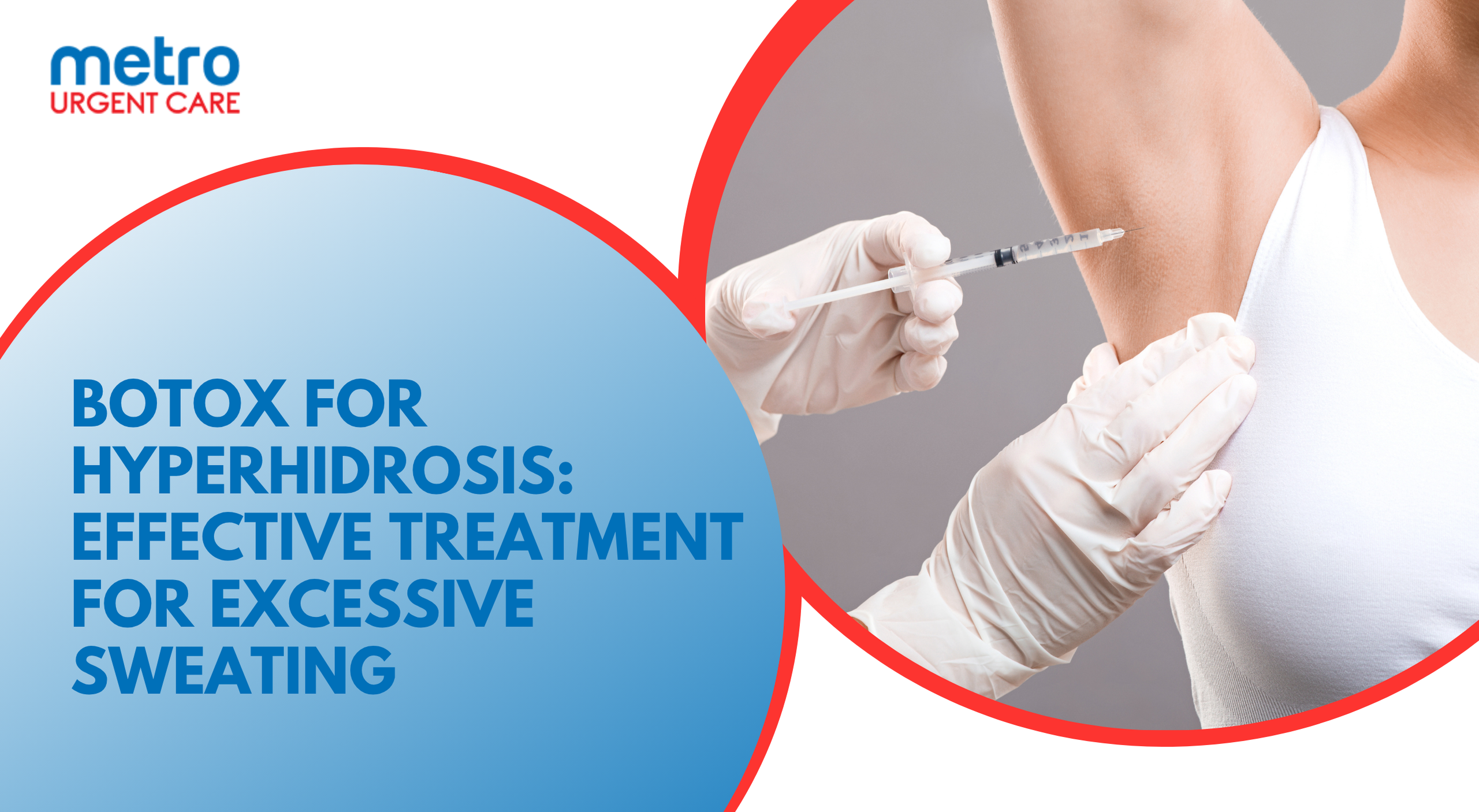
Botox is a neurotoxin derived from the bacteria that cause botulism (a form of food poisoning). When administered correctly by a healthcare professional, it is considered safe.
Botox is best known as a cosmetic procedure to smooth facial lines by temporarily relaxing muscles. Physicians also use it to treat neuromuscular disorders such as migraine, muscle spasms, and hyperhidrosis — a condition marked by unusually heavy sweating.
You might be a good candidate for Botox if prescription-strength antiperspirants haven’t helped your sweating. The FDA has approved Botox for people who experience severe underarm sweating. Clinicians may also use it “off-label” to reduce sweating in other regions, like the hands, feet, and face.
Key Terms
“Off-label” means using a medication for a purpose other than the one it was officially approved to treat. In this context, it indicates that Botox hasn’t undergone the same extent of testing to verify its safety and effectiveness for treating excessive sweating in other body areas.
Advantages and disadvantages of Botox for sweating
Advantages
- less invasive compared with surgical alternatives
- mild discomfort when injected into the armpits
- generally well tolerated
- can be effective, with multiple studies showing a notable reduction in sweat production starting as soon as 1 week after the initial session and some sessions remaining effective for over 12 months
Disadvantages
- costly, with treatment for both underarms often around $1,000 or higher
- can be painful when administered to the palms or soles
- maintenance injections are typically required about every 7 to 16 months
- only FDA-approved for underarm hyperhidrosis
- possible pain and side effects, though usually mild
How do Botox injections reduce sweating?
Botox blocks the release of the neurotransmitter acetylcholine, which normally interacts with your sweat glands to trigger sweat production.
Typically, your nervous system activates sweat glands when your body temperature rises, allowing the body to cool itself. In individuals with hyperhidrosis, the nerves that stimulate the sweat glands are overly active.
When Botox is injected into a problem area, it essentially paralyzes those overactive nerves. Without nerve signals, the sweat glands don’t produce sweat. Keep in mind Botox stops sweating only in the area where it’s injected.
Where is Botox used on the body to treat sweating?
At present, Botox is approved only for treating underarm sweating. Research shows mixed outcomes, but there is substantial evidence that Botox can cut armpit sweat production by more than 50% for at least six months.

Clinicians also use it off-label for other locations on the body.
- Palms: There’s limited research on Botox for sweaty palms. Some studies suggest it may reduce palm sweating by roughly 25% to 50% for periods ranging from three weeks to six months.
- Face: Small studies indicate Botox can help with facial sweating. A 2024 study reported significant reductions in facial sweating and improved quality of life over one year.
- Soles of the feet: Botox might control sweating of the soles, but research is limited and most studies emphasize quality-of-life improvements rather than precise measurements. In a 2024 study, most participants reported “substantial” quality-of-life gains, though the authors called for further research.
How should I prepare for the procedure?
Botox injections are quick and straightforward and are performed in a doctor’s office. Providers usually ask that you wear a short-sleeved shirt and avoid shaving your underarms for two to three days before your visit.
If you take blood thinners, your clinician may advise stopping them briefly before the injections to reduce bruising risk. Tell your provider about any medications you take and do not stop them unless instructed to do so.
Your clinician might suggest wearing a dark shirt to prevent visible ink stains.
What happens during a Botox appointment?
Your visit will typically last around 45 minutes, although the injections themselves take about 10 minutes.
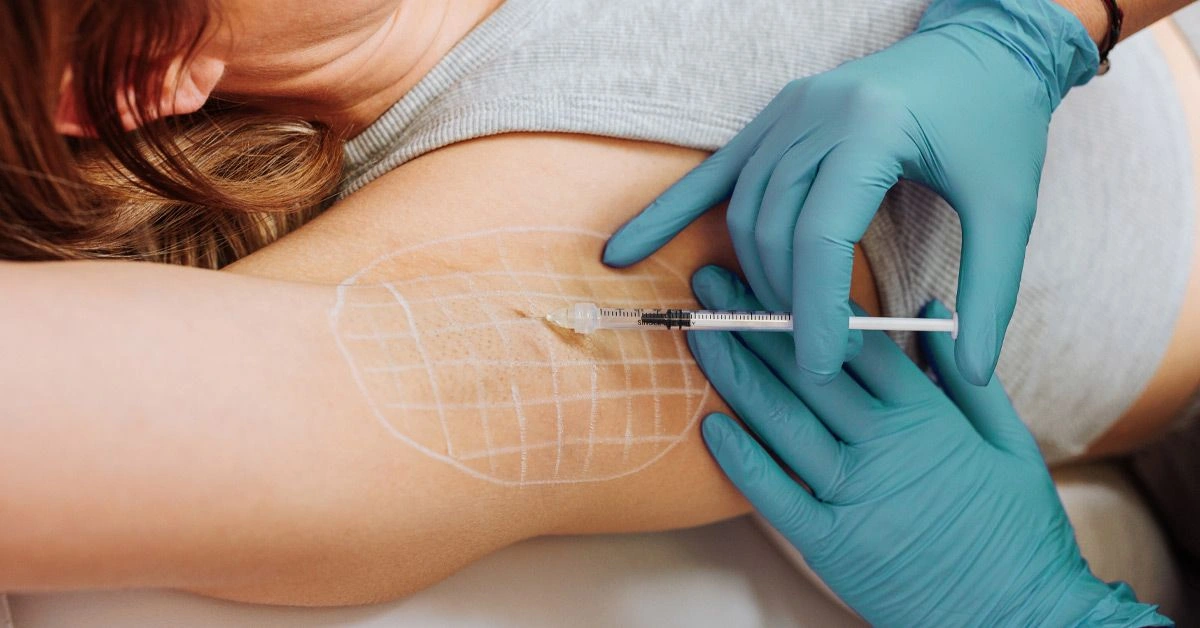
Botox is most effective when given by an experienced clinician. After marking the area with ink, or after the clinician applies a povidone-iodine solution and dusts corn starch, the starch will change color where sweat is produced most heavily. Then the provider injects Botox just beneath the skin with a fine needle.
You’ll typically get about 25 injections arranged in a grid over the treated area (for example, one underarm). Some clinics may vary the number slightly.
The provider may use ice or a topical numbing agent to reduce discomfort.
You can usually return to normal activities right away. The clinician will likely set up a follow-up visit to assess results and address any missed spots.
When will I notice the effects on sweating?
You may go back to your usual routine immediately after treatment. Most people notice improvements within 2 to 4 days, with full effect around two weeks.
Botox’s effects are temporary, so repeat injections are required. For underarm sweating, boosters are commonly needed every 7 to 16 months. Results for hands and feet may wear off sooner, often around six months, though research on these areas is limited.
What to expect after the procedure
You should be able to leave immediately after treatment. Little aftercare is usually necessary. The treated area may feel sore for a day or two.
Your provider will likely ask you to return about two weeks after the injection to confirm results and touch up any spots if needed.
Physicians may advise avoiding deodorants or fragranced products under the arms for up to a day to prevent irritation. Steering clear of intense exercise and hot baths for a couple of days may also be beneficial.
How much does Botox for sweating cost?
Costs vary considerably depending on the treatment area, clinic, and location. If multiple body sites are treated, the total expense can add up.
The average price for both underarms is roughly $1,000.
Some insurers may cover all or part of the cost for people with hyperhidrosis. Typically, insurers want proof that other treatments, such as prescription antiperspirants, were tried first.
What are the risks and side effects?
Numerous studies have evaluated Botox’s safety for underarm hyperhidrosis, and most people tolerate the procedure well. There is less research on injections in other body areas to reduce sweating.
Possible side effects include:
- pain or bruising at the injection site
- skin irritation
- bleeding
- headache
- flu-like symptoms
- drooping eyelid (for facial injections)
- eye dryness or tearing (for facial injections)
- facial weakness (for facial injections)
Severe systemic reactions are extremely uncommon. When they do occur, it’s because the toxin affects the whole body — and this can happen hours, days, or weeks after injections. Rare but serious side effects include:
- widespread muscle weakness
- vision problems
- difficulty breathing
- loss of bladder control
Bottom line
Botox is frequently an effective option for managing excessive sweating and can significantly improve quality of life for many people. The treatment can be expensive and may not always be covered by insurance, but it may be worth considering if other measures like prescription antiperspirants haven’t worked. Talk with your doctor or your insurer about potential coverage for Botox injections.
















Leave a Reply
You must be logged in to post a comment.