

Fleas can bite people, yet they reside and reproduce on animals, shielded by fur and plumage. To eradicate fleas, you must treat both your pet and your dwelling.
When fleas come to mind, you likely picture your companion animal. Fleas typically inhabit dogs, cats, birds, or other warm-blooded creatures, because their fur and plumage provide easy concealment and breeding grounds.
Fleas are tiny, wingless parasites that puncture skin and draw blood to survive.
Although fleas don’t commonly inhabit human bodies, they can still bite you. A flea can leap as far as 13 inches, making it possible for a pet or another animal to transfer them to you.
This guide examines where fleas prefer to reside, their lifespan, and strategies to eliminate them.
Can fleas dwell on humans as well as on pets?
Fleas do not reside on humans, but they can bite us. In the United States, the most widespread fleas are cat fleas. These can inhabit both cats and dogs. There are also dog fleas, though they’re less common in the U.S.
Fleas can also inhabit other mammals and birds, such as rodents and livestock. There are 2,500 distinct flea species worldwide.
Fleas are drawn to animals due to their fur or plumage. They can burrow into fluffy bodies to conceal themselves and feed. They then lay eggs that eventually hatch after the larval and pupal stages.
This cycle can trigger a flea infestation on your pet (or livestock) that will require treatment.
Fleas do not reside on humans because we lack substantial hair like animals, and it’s challenging to reproduce without the shelter of fur or plumage.
Can people get fleas in their hair?
Fleas do not reside on humans, but they may jump onto your hair if you’re sleeping with a pet or leaning down to stroke them.
Typically, though, flea bites occur near the feet, ankles, and legs by jumping from an infested pet or an item in your home. Fleas can inhabit carpets, fabric-covered furniture (like sofas), and pet beds.
How long can fleas live on humans?
It is highly unlikely that a flea remains on your body for a long period. Humans lack fur or plumage like other animals and birds. Fur and plumage give fleas a safe place to lay eggs and repopulate without notice.
If a flea lands on you, you’ll likely wash or scratch it off before it can breed.
Can humans carry fleas from one home to another?
It’s uncommon for a flea to transfer from one person to another. More likely, an animal or person will acquire fleas from places where animals reside and sleep.
It’s possible that bringing an infested pet bed into a new home could spread fleas to another source.
Do fleas bite people?
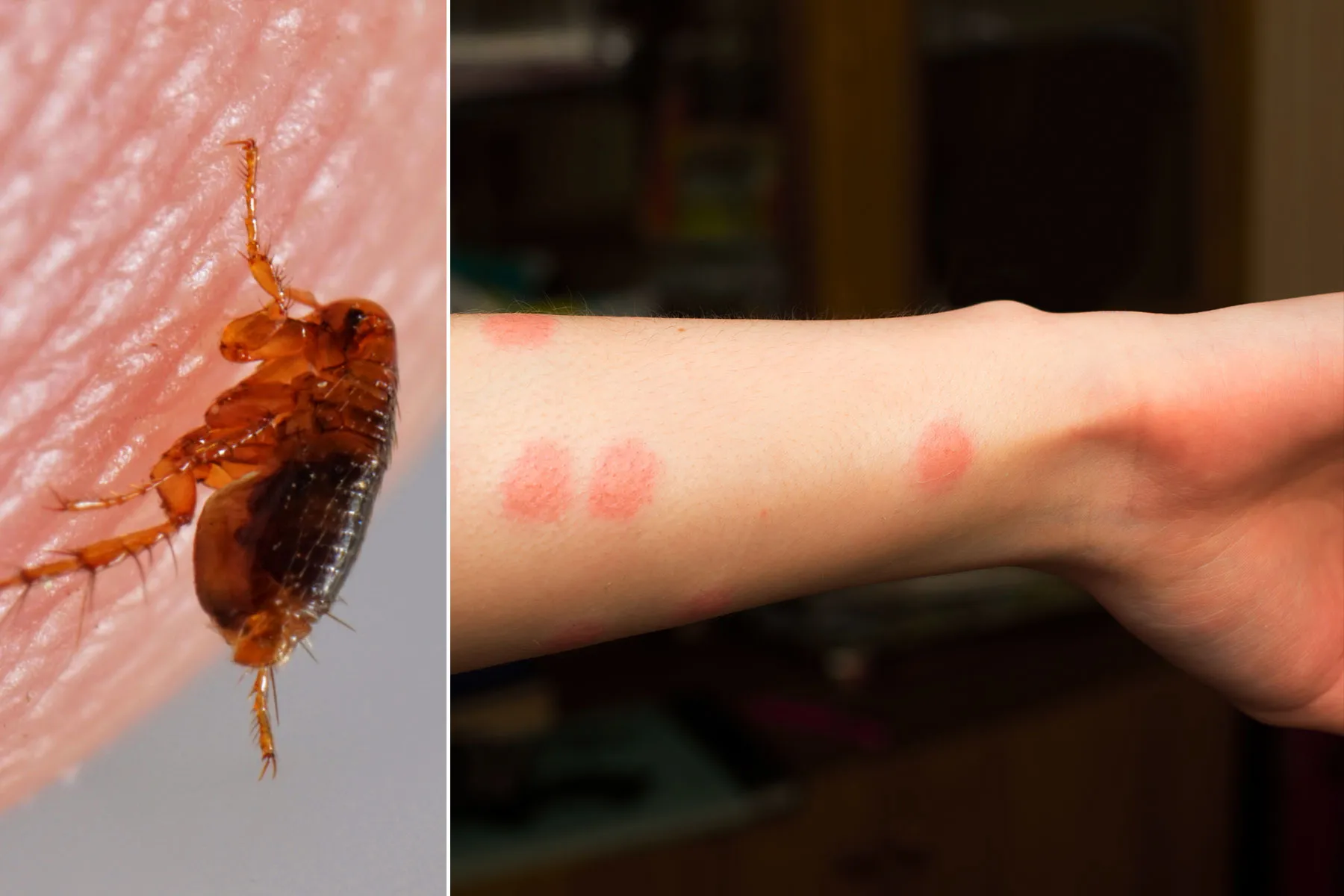
Fleas can bite individuals, most often on the feet, ankles, and legs. They may bite three times in a row. This is known as “breakfast, lunch, and dinner.”
Typically, initial bites do not produce a lesion in the skin, but with longer exposure to fleas, a person may develop a hypersensitive reaction.
The red marks from a flea bite may endure for several days, but they can worsen if you’re more susceptible to bites or if the area becomes infected.
The photo below demonstrates what flea bites on a person with fair skin look like.
Do fleas pose any other hazards to people or pets?
Fleas are more than a nuisance. They can provoke several serious conditions and may be lethal to animals if the infestation becomes so severe that it compromises their well-being.
Fleaborne diseases
Fleas can carry several different illnesses that may be transmitted during a bite. In the U.S., the most common include:
- plague (in Western states)
- typhus (in Southern states)
- cat scratch fever (also called cat scratch disease)
- parasites (such as tapeworms)
These diseases, whose incidence rates appear to be rising due to climate change, require medical treatment, such as antibiotics or antiparasitic medications.
Allergic reactions
A flea bite may trigger an allergic reaction on your skin as your body reacts strongly to the flea’s saliva.
An allergic reaction to the bite can cause flea allergy dermatitis. This can lead to:
- irritated, red skin
- intense itchiness
- hives
- infection
Allergic reactions to flea bites can also occur in animals. An allergic reaction can cause an animal to scratch their bites to such an extent that their skin becomes raw or they lose fur.
In these situations, you’ll need to take your pet to a veterinarian for diagnosis and treatment.
How to eliminate a flea infestation
If you suspect a flea infestation, you must treat both your pet and your home. There are several approaches you can try to remove fleas.
To remove fleas from your pet
- Consult a veterinarian about the safest and most effective flea-removal method.
- Utilize a flea comb during grooming.
- Leave soap on your pet for at least 5 or 10 minutes during bathing.
- Use a veterinarian-prescribed flea medication that kills fleas.
- Adhere closely to the instructions for over-the-counter flea products.
- Protect your pet by avoiding application of flea products near their eyes, nose, and mouth.
- Wear gloves and protective gear when applying flea-removal products on yourself.
To remove fleas from inside or outside your home
- Wash pet beds and other fabric toys or mats in hot water.
- Vacuum thoroughly, then place the vacuumed debris into a plastic bag, seal it, and dispose of it outdoors immediately.
- Apply insecticides to baseboards, ensuring the products used are safe for pets.
- Clean all upholstery (furniture, rugs, carpets, bedding, window coverings) frequently.
- Seal holes that could allow wild animals to access your home.
- Clear debris surrounding your house.
- Call a pest-control service if you suspect a severe flea infestation.
Preventing a flea infestation in your home
You can avert a flea outbreak in several ways, including:
- regularly inspecting your pet for fleas
- cleansing your pet’s sleeping areas
- preventing your pet from entering spaces likely to harbor fleas from other animals, such as crawl spaces or barns
The most common reason veterinarians observe pets with fleas is that owners discontinue providing high-quality flea and tick prevention during the cold winter months.
Fleas can survive off an animal’s body in the summer, but must be on a body in winter to persist. That’s why year-round monthly flea prevention is essential to safeguard your pet and prevent infestations.
Bottom line
Fleas can bite people, but they prefer residing on creatures that offer the protection of fur and plumage. Fleas can also inhabit the sleeping areas of your pets, such as beds, carpets, and couches.
Flea bites are irritating and may also cause a more serious health condition that requires a doctor’s treatment.
Monitor your pets for fleas and clean and vacuum your house regularly to reduce the chances of a flea infestation.






















Leave a Reply
You must be logged in to post a comment.