
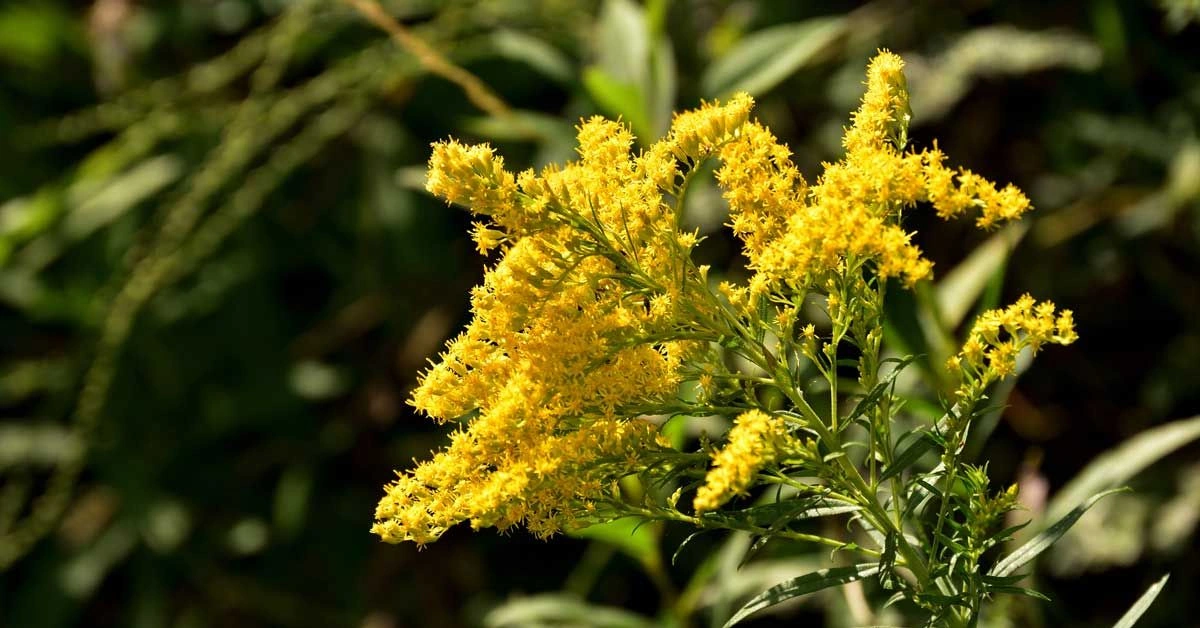
You may recognize goldenrod primarily as a bright yellow wildflower, but it’s also commonly used in herbal supplements and teas.
The plant’s scientific name is Solidago, which translates to “to make whole or heal,” reflecting its role in traditional herbal remedies.
Goldenrod is frequently taken to support urinary tract health and to help reduce inflammation.
This article examines the possible benefits, recommended dosages, and safety considerations for goldenrod.

What is goldenrod?
Goldenrod is native to Europe, Asia, and the Americas. It thrives along roadsides and in fields and is often regarded as a weed.
The plant produces yellow blossoms in late summer and early autumn. It cross-pollinates readily with other varieties, resulting in over 100 different goldenrod species. Many of these are believed to share similar medicinal properties.
Solidago virgaurea — sometimes called European goldenrod — is among the most researched species for health effects. It’s been used in traditional Chinese medicine and in herbal practices across parts of Europe (1).
People typically use the above-ground portions of the plant — especially the flowers and leaves — to obtain its benefits (2).
Goldenrod is available as a brewed tea or as a dietary supplement. The tea can be slightly bitter, and some choose to sweeten it lightly.
Summary: Solidago virgaurea is the goldenrod variety most often employed for health purposes. Its flowers and leaves are used to make teas and supplements.
Good source of plant compounds
Goldenrod contains numerous beneficial phytochemicals, such as saponins and flavonoid antioxidants like quercetin and kaempferol (3).
Saponins are plant-derived compounds associated with several health advantages. They may be especially effective at inhibiting the growth of harmful bacteria and fungi like Candida albicans.
Candida albicans is a fungus that can lead to vaginal yeast infections and other infections in the body (4).
Saponins have also demonstrated anticancer and anti-inflammatory properties in laboratory and animal studies (5).
The flavonoid antioxidants quercetin and kaempferol in goldenrod help defend cells from damage caused by reactive molecules known as free radicals (6).
Free radical damage contributes to many chronic illnesses, including cardiovascular disease and cancer (7, 8).
Notably, goldenrod’s antioxidant activity has been reported to exceed that of green tea and vitamin C in some comparisons (1, 9, 10, 11).
The flavonoids and other constituents in goldenrod also contribute anti-inflammatory effects.
Summary: Goldenrod contains valuable plant constituents such as saponins, which may act against fungi, and flavonoids, which offer antioxidant and anti-inflammatory actions.
May help reduce inflammation
In folk medicine, goldenrod has been used to address inflammation, a driver of pain and swelling (12).
In animal experiments, goldenrod extract combined with extracts from aspen and ash trees in the supplement Phytodolor reduced tissue swelling by up to 60%.
It also reduced arthritis-related inflammation in rodents by 12–45%, with stronger effects at higher doses (13).
Phytodolor, which contains goldenrod, has been evaluated in people as well. A review of 11 clinical studies found Phytodolor to be as effective as aspirin in easing back pain and knee arthritis (14).
Part of this effect may stem from quercetin, a potent anti-inflammatory flavonoid present in goldenrod (15, 16, 17).
However, aspen bark contains salicin — the precursor to aspirin — which also contributed to the anti-inflammatory effects of the herbal combination.
Laboratory studies of Phytodolor indicate that the blend’s combined ingredients — not a single component — likely produce the strongest pain relief. Therefore, the independent effect of goldenrod alone remains uncertain (18).
Clinical trials that investigate goldenrod by itself are needed to determine its specific role in relieving inflammation and pain.
Summary: Goldenrod has traditionally been used to ease inflammation and pain. Animal and human research suggests it may help, but it has mainly been tested within an herbal mixture rather than alone.
May support urinary tract health
The European Medicines Agency (EMA) recognizes goldenrod as potentially useful for enhancing conventional treatment of minor urinary complaints (19).
This implies goldenrod might boost or complement medications like antibiotics for urinary tract infections (UTIs), but it should not replace standard medical treatment for such conditions.
Laboratory studies indicate goldenrod may help prevent UTIs, though it appears most effective when combined with other herbs such as juniper berry and horsetail (20).
For that reason, many urinary health supplements include goldenrod along with other botanical ingredients.
Additionally, in vitro research suggests goldenrod extract may benefit overactive bladder by reducing the frequent urge to urinate and lowering painful urinary spasms (21).
In one report, 512 individuals with chronic overactive bladder who took 425 mg of dry goldenrod extract three times daily experienced improvement in urinary urgency and painful urination in 96% of cases.
It’s unclear how long these people took the extract before noticing improvements (22).
The EMA also notes goldenrod has a diuretic effect, increasing urine flow. This may help flush out bacteria and support kidney function (19).
Consequently, it’s generally recommended to stay well hydrated when taking goldenrod.
While these findings are promising, more human research is necessary to confirm goldenrod’s benefits for urinary health.
Summary: Early evidence suggests goldenrod may complement conventional treatments for urinary issues, including overactive bladder and UTIs, but more high-quality studies are required.
Other potential benefits
Several studies have explored additional uses for goldenrod, but more research is needed to validate these effects in people.
Initial studies have examined goldenrod for:
- Weight management.Laboratory and mouse studies suggest goldenrod may influence genes involved in fat creation and fat cell size, which is why it appears in some weight-loss teas (23, 24).
- Cancer prevention.Test-tube studies indicate goldenrod extract may kill certain cancer cells. In a rat study, injections of goldenrod extract suppressed prostate tumor growth (2).
- Heart protection.Rats given oral goldenrod extract daily for five weeks prior to induced heart injury showed 34% lower levels of a blood marker of heart damage compared with controls (25).
- Anti-aging.In a laboratory study, goldenrod extract delayed the buildup of aged, dysfunctional skin cells, suggesting potential to slow premature skin aging (26).
Because human evidence is lacking in these areas, it’s unknown whether goldenrod would produce similar results in people.
Summary: Preliminary lab and animal research indicates goldenrod may help with weight control, possess anticancer activity, support heart health, and slow skin aging, but these effects have not been confirmed in human trials.
Forms and dosing
Goldenrod is sold as a herbal tea, liquid tinctures, and capsules or tablets.
Tinctures are packaged in dropper bottles for convenient dosing. Capsules and tablets containing dried goldenrod extract are commonly formulated with other herbs like juniper berry.
Human dose data are limited, but traditional guidelines propose the following amounts (19):
- Tea.Use 1–2 teaspoons (3–5 grams) of dried goldenrod per cup (237 ml) of boiling water. Cover and steep for 10–15 minutes, then strain. Consume up to 4 times daily.
- Liquid extract.0.5–2 ml up to 3 times per day.
- Dry extract.350–450 mg up to 3 times daily.
These recommendations apply to adults and adolescents. Goldenrod is generally not advised for children under 12 due to insufficient safety data.
When used for a specific issue, goldenrod is usually taken for 2–4 weeks (19).
Additional dosing instructions can be found on supplement labels.
Summary: Goldenrod is available as tea, tincture, and capsules or tablets, often combined with other herbs. Dosage guidance is based on traditional practice since human trial data are limited.
Precautions
Goldenrod is typically well tolerated, but there are some precautions to consider, including allergic reactions and interactions in people with certain medical conditions (19).
Allergies
Although goldenrod is sometimes blamed for seasonal allergies, its heavy pollen is not easily dispersed by wind, so it’s not usually the main cause.
Still, it can provoke allergic responses such as skin rashes and asthma, especially in people who handle the plant frequently, like florists and farmers.
Goldenrod may also trigger reactions in those allergic to related plants, such as ragweed and marigolds (27, 28).
Oral ingestion can rarely cause an itchy skin rash (29).
The leaves contain latex, a natural rubber source. People with latex allergy — such as reactions to certain medical gloves — may also react to goldenrod (30).
Medical conditions
If you take medications or have a medical condition, check with your healthcare provider before using goldenrod.
Because goldenrod may increase urine output, it shouldn’t be used with prescription diuretics, as this could lead to excessive fluid loss.
For the same reason, goldenrod is not recommended for conditions requiring fluid restriction, such as some cases of congestive heart failure and kidney disease (19).
The National Kidney Foundation in the U.S. advises people with any stage of kidney disease — including those on dialysis or who have had a transplant — to avoid goldenrod.
Goldenrod may also promote sodium retention, which could worsen high blood pressure (31).
Avoid goldenrod during pregnancy and breastfeeding, as safety data for these populations are lacking (19).
Summary: Goldenrod is usually well tolerated, but can cause allergic reactions. People with kidney or certain heart conditions, and women who are pregnant or nursing, should avoid it.
Bottom line
Goldenrod has a long history in traditional medicine as a tea or supplement for inflammation and urinary complaints.
Early lab and animal research indicates goldenrod may help with these and other issues, but few clinical studies have assessed its effects when used alone.
Because evidence is limited, do not replace prescribed medications with goldenrod, and consult your healthcare provider before combining it with conventional treatments.
If you’re interested in trying goldenrod, it’s available as tea, tinctures, and pills at health retailers and online.




















Leave a Reply
You must be logged in to post a comment.