
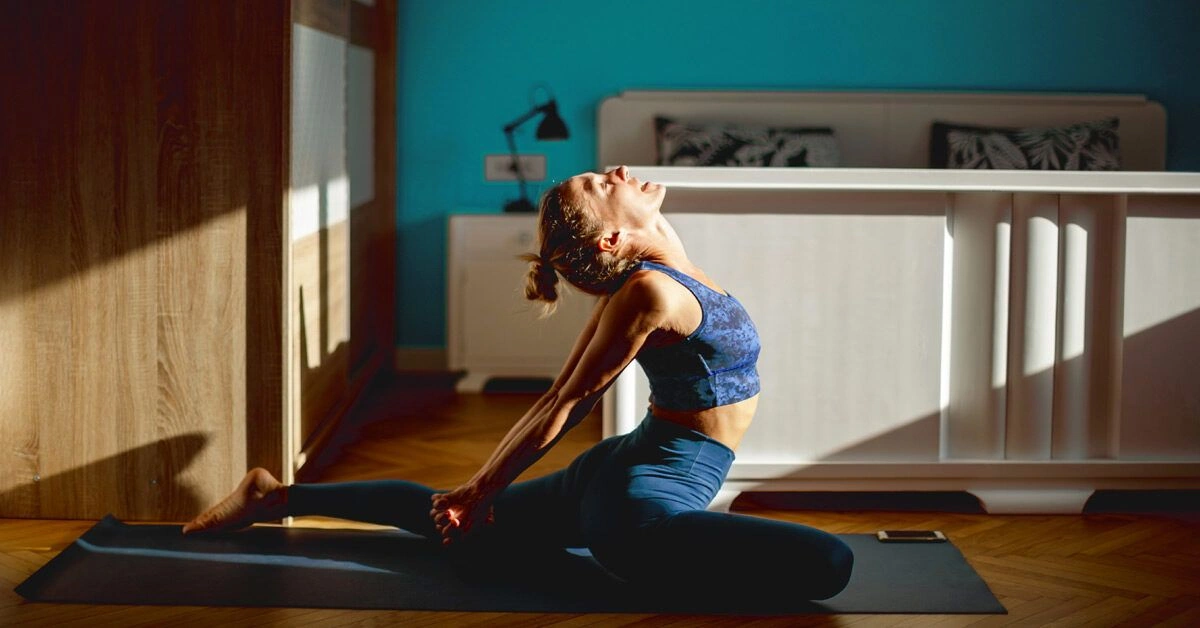
Tight and weak hip flexors can lead to lower back discomfort, hip soreness, and increased risk of injury. Performing targeted hip flexor routines, including yoga-based stretches, can help build strength and reduce tightness.
Although not all of us will have hips as limber as Shakira’s, we can all gain from lengthening and reinforcing the muscles that support these ball-and-socket joints.
Our hips do more than power occasional dance moves. They’re a crucial joint for runners, cyclists, and everyday people alike, since they play a central role in mobility and movement.
Spending long hours sitting, as many of us do, promotes tight hip flexors. A sedentary way of life is also linked with weakness in the hip musculature — not only the hip flexors but also the opposing muscles such as the glutes, hamstrings, and abductors (1).
Stiffness and weakness in the hip flexors may contribute to lower back pain, hip discomfort, and injury (2, 3).
Hip-related issues extend further. Studies indicate that hip replacement procedures and hip arthroscopy — a technique to inspect joint problems — are rising in the United States (4, 5).

What are the hip flexors?
Hip flexors are a set of muscles that enable hip flexion — pulling the leg up toward the torso. The main hip flexors are the psoas major and the iliacus, which together are commonly referred to as the iliopsoas.
The psoas begins at the lower spinal vertebrae, while the iliacus starts on the inner surface of the pelvis. They converge and attach to the top of the femur, the thigh bone (6).
The iliopsoas helps stabilize the trunk during tasks like lifting, pushing, or pulling. It also brings the knee toward the chest — for instance, swinging the leg forward when running or kicking in sports like soccer (7).
To help you avoid injuring yourself when you’re dancing up a storm — or simply walking down the block — here are eight effective hip flexor stretches and strengthening exercises to keep your hips flexible, resilient, and mobile.
An important note
For many people who are seated most of the day, hip flexors can be both tight and weak, which may tilt the pelvis. Strengthening the glutes, hamstrings, abductors, and adductors is crucial to restore balanced hip mobility and proper pelvic alignment.
Strengthening the hip flexors without addressing tightness can sometimes increase hip tension. It’s wise to consult a physical therapist or certified trainer who can evaluate your individual needs.
How to stretch your hip flexors
Use these stretches to relax your hip flexors and improve joint range of motion. They’re best performed when your body is warmed up, such as after exercise.
1. Half-kneeling hip flexor stretch
This straightforward stretch targets the iliopsoas/hip flexors of the back leg and the glutes of the front leg. Use a folded towel under your knee or a yoga mat for comfort.
- Kneel with your left foot planted in front of you and your right knee on the floor behind you.
- Keep an upright trunk. You may rest your hands on your left knee for balance.
- Slide your right knee back until you sense a gentle stretch in the front of your hip.
- Engage your right glute as if pushing forward, bringing your hips and trunk toward your left foot. Slightly tuck your pelvis into a pelvic tilt.
- Breathe deeply and maintain the stretch for 10–30 seconds.
2. Knee-to-chest stretch
- Lie on your back with legs extended. Slowly draw one knee toward your chest.
- Keep your back flat and pull the knee as close as feels comfortable.
- Extend the other leg straight out and squeeze the glute of the bent leg.
- Return to the starting position and repeat on the other side.
- If you don’t feel much stretch, try this on a bench with the lower leg hanging off.

3. Pigeon pose
Pigeon is a common yoga posture and can be intense. Only attempt it if you feel stable in the position. You can modify by doing a supine figure-four or seated variation.
- Begin in a plank position.
- Bring your left foot forward and place the knee near your left hand and the foot near your right hand. Placement will vary with flexibility.
- Slide your right leg back as far as possible while keeping hips squared. Lower onto your forearms or elbows, bringing your torso down.
- Hold the stretch without collapsing your chest. Switch sides after achieving a good stretch.

4. Bridge
The bridge primarily strengthens the glutes and can also help lengthen tight hip flexors.
- Lie on your back with arms at your sides, knees bent, feet hip-distance apart on the floor. Aim to position your feet so your fingers can graze your heels.
- Squeeze the glutes and press through your heels to lift the hips toward the ceiling. You should feel this in the glutes and hamstrings rather than the low back.
- Hold for a few seconds, then lower back down. Repeat several times while breathing steadily.

How to strengthen your hip flexors (and surrounding muscles)
Try the following movements to fortify your hip flexors and nearby muscles. These also support overall hip health and can help prevent conditions like hip flexor strain.
5. Lunge
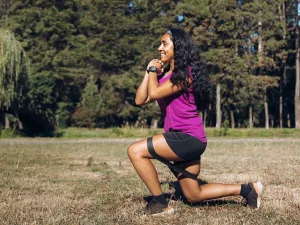
Lunges target the front leg’s glute and quadriceps muscles (including the rectus femoris, which also acts as a hip flexor). They simultaneously stretch the hip flexors of the back leg depending on step length.
- Stand tall and look forward. Take a substantial step forward with your right foot while keeping your torso upright.
- Bend the front knee and shift your weight onto the right leg. Lower until your left knee is just above or softly touches the floor. The right knee should align over the right ankle.
- Push back up to standing. Repeat with the left leg leading.

6. Floor-sliding mountain climbers
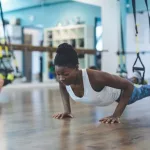
Use sliders, paper plates, or towels on a smooth surface to perform this dynamic core-and-hip exercise.
- Set up on a wood or other slick floor.
- Place sliding discs under the balls of your feet while in a pushup position.
- Draw your right knee toward your chest, then alternate with the left, mimicking standard mountain climbers.
- Begin slowly, then increase speed as you get comfortable.

7. Straight-leg raise
This move activates the iliopsoas and rectus femoris, with the abdominals stabilizing the trunk during the lift.
- Lie on your back with one knee bent and the other leg extended straight.
- Engage your core and lift the straight leg until the thigh aligns with the opposite bent knee.
- Hold for a count of two, then lower slowly to the start. Repeat for repetitions.

8. Psoas hold
This exercise targets the deep hip flexor, the psoas, which can help lengthen stride and reduce injury risk — a beneficial addition to your hip exercises routine.
- Stand and bend your right knee, lifting your thigh upward toward hip level.
- Balance on your left foot, holding the right knee and thigh at hip height for about 30 seconds.
- Slowly lower the right leg and repeat on the other side.
- Maintain an upright trunk throughout. If your torso leans forward or the head drops, lower the height of the lifted leg.

The bottom line
With these stretching and strengthening techniques in your toolkit, practice them consistently. Keeping hips flexible and strong helps reduce injury risk and may help you avoid future surgeries.
















Leave a Reply
You must be logged in to post a comment.