
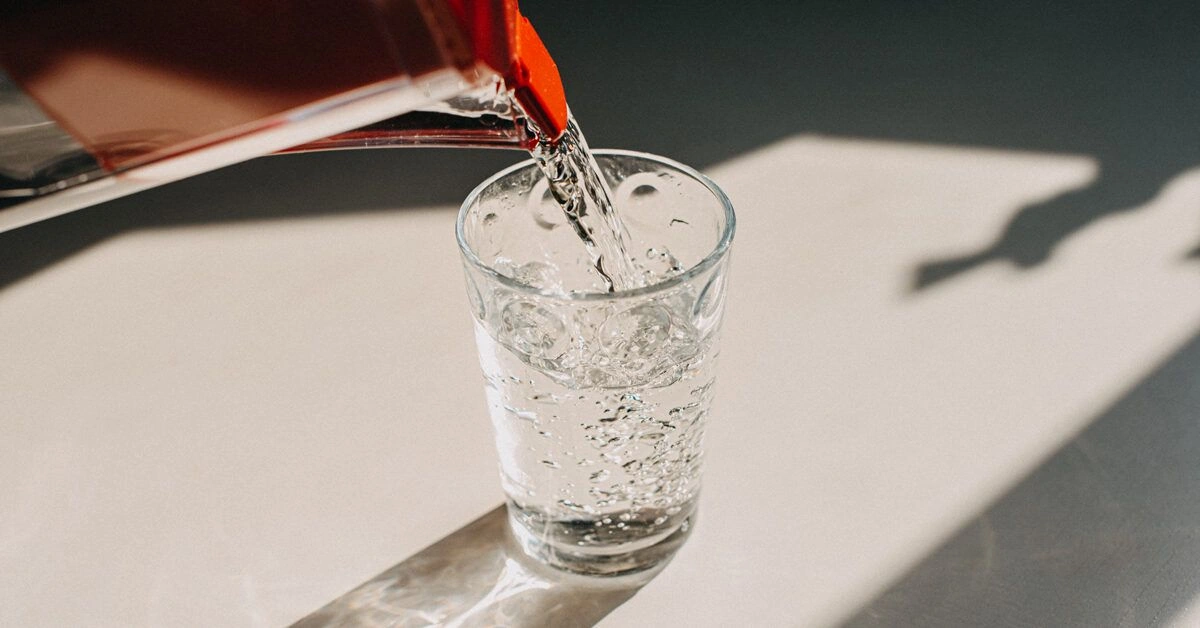
Liquid can be taken up within minutes of swallowing. Your kidneys are continually functioning, so any water your body does not require will be expelled through urine or perspiration. This occurs far more rapidly than the time it takes for solid food to be eliminated as stool.
Rates differ between individuals, but on average it takes about 28 hours for food to travel through the digestive system. Liquids are absorbed into the bloodstream quickly, and any surplus fluid beyond what the body needs is removed by the kidneys as urine, much sooner.
Water uptake can begin as quickly as 5 minutes after you drink and tends to peak near 20 minutes afterwards. Because your kidneys are always producing urine, extra fluids are rapidly expelled this way.

When is water absorbed after drinking?
After you drink, water moves through your digestive tract via a shortened route. In other words, not every digestive organ has to be deeply involved for water to be processed. If you consume a large volume of water, you might want to be sure a restroom is within reach.
When consumed, water enters the stomach and is quickly passed on to the small intestine. The large intestine (colon) also takes up some water. The bulk of water absorption into the bloodstream happens in the small intestine.
Any extra fluid that enters the bloodstream is filtered by the kidneys, which generate urine that is carried to the bladder.
How is processing water different from other beverages?
Pure water is usually processed faster than many other drinks. That’s because there is very little modification your body must perform to absorb water.
If a drink contains carbohydrates (like sugar), colorants, fats, or proteins, your body has to handle those components. That’s why beverages such as sweetened coffee or iced tea may take longer to be processed, and drinks like smoothies or broths that include proteins and fats can require even more time to digest.
Typically, simple drinks like tea and juice are absorbed in roughly 30 minutes. More complex liquids, for example bone broth, may take an hour or longer.
Does water move through your body faster than food?
Water travels through the body significantly faster than solid food.
Take a peanut butter and jelly sandwich: enzymes in your mouth begin breaking it down. Each mouthful is pushed down the esophagus into the stomach, where stomach acid continues to degrade its components.
The sandwich’s various elements (carbohydrates, sugars, fats, proteins) are then further dismantled and taken up in the intestines. Material that remains after passing through the colon is expelled as feces.
With water, many of these steps aren’t necessary. There’s nothing to extract or derive from water aside from the water itself, which the body needs for multiple functions. That simplicity makes handling water much quicker — essentially a rapid filtration and absorption process rather than true digestion.
What influences digestion speed?
How quickly things move through your digestive system depends on the individual. Several factors can either accelerate or delay digestion.
- Your metabolism. Some people naturally digest and eliminate food more slowly. This variation is normal.
- Your diet. Soft, starchy foods may be broken down quickly in the stomach and intestines, but they might not leave your body right away. The quantity and type of fiber in foods also affect transit time. Your dietary choices play a role.
- Your medical history. Conditions such as inflammatory bowel disease (IBD) and colitis alter day-to-day digestive patterns.
- Prior surgeries. Certain post-surgical digestive issues, like dumping syndrome, are more prevalent in those who have had stomach operations.
- Activity level. How much you move and exercise can also affect how rapidly your body processes and moves food.
How does water exit the body?
Urination isn’t the only way water leaves your body. After absorption, some water becomes part of your cells and contributes to blood volume.
When the body needs to remove consumed water, it can do so via several routes:
- Urine. The kidneys filter much of the absorbed water and it is expelled as urine.
- Sweat. To regulate temperature, the body releases water through sweat.
- Stool. Feces contain water that helps give them sufficient bulk to be eliminated.
Takeaway
Water is absorbed by the body quite rapidly after drinking. Unlike food, it can begin to be taken up in as little as 5 minutes. Excess water is removed through urination and feces, and it is also lost via sweating.
Your body relies on water for many everyday functions, and because it moves through you so quickly, maintaining proper hydration is important.














Leave a Reply
You must be logged in to post a comment.