

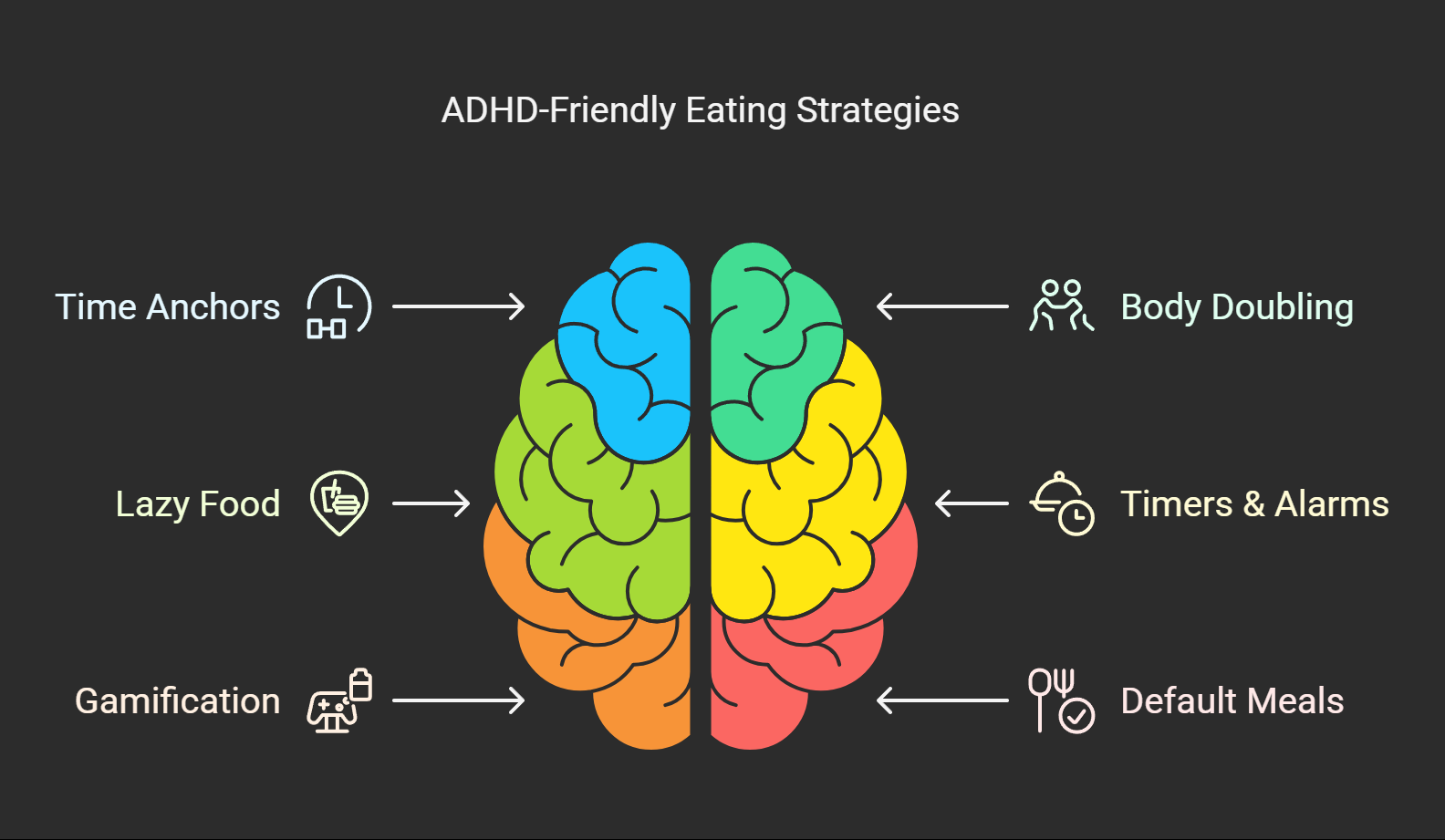
If you live with ADHD, you might notice you frequently skip meals. A few strategies that can help include using reminders, stocking up on grab-and-go foods, and preparing meals in advance.
Attention deficit hyperactivity disorder (ADHD) can make it easy to forget to eat because it impacts your working memory, which is in charge of everyday responsibilities like:
- following and recalling directions
- arranging your daily routine
- deciding which tasks come first
These challenges can interfere with eating-related activities, such as remembering to shop for groceries or prepping meals ahead of time.
That said, there are several practical approaches you can try to help prompt yourself to eat more consistently.
Set reminders
You might intend to eat, but when other urgent matters arise, mealtimes can slip away. Using alarms or scheduled reminders to prompt you to eat can help bring attention back to your meals.
Treating meals like appointments or tasks can also be useful. Jot down when you plan to eat — for instance, lunch at 12:00 — so you’re more likely to stick to it. Place that note somewhere you’ll notice regularly, such as on a sticky note behind your computer monitor.
Eating at consistent times each day can further reinforce the habit of remembering to eat.
Keep ready-to-eat options on hand
Having quick snacks and foods that require no preparation can be a lifesaver. If you’re pressed for time, these items can curb hunger immediately while you prepare something more substantial later.
Healthy, convenient choices to buy ready-made include:
- pre-cut or sliced fruit
- string or cubed cheese
- raw vegetables paired with hummus
- single-serve Greek yogurt cups
- nutritious granola bars
Keep in mind some granola bars and flavored yogurts are high in added sugar. Aim for options with little or no added sweeteners.
Nonperishable items like granola bars are handy to carry when you expect to be out for several hours. Toss a few in your bag so you have something to eat if hunger strikes.
:max_bytes(150000):strip_icc()/XADHD-FriendlyMealsThatRequireZeroMentalEffort_A-6658d2aabe2c40ff8eda0b3d5fa32949.jpg)
Meal prep
Meal prepping means cooking larger quantities of meals ahead of time, often on the weekend, so weekdays are less hectic.
When you do the bulk of the cooking at once, you only need to reheat pre-portioned meals later in the week. This can ease morning or lunchtime stress.
With meal prep, you’ll consistently have a nutritious meal ready in minutes.
If you’re new to meal prep
If meal prepping feels overwhelming at first, start small and learn as you go. For more guidance tailored to attention challenges, check out our tips on adhd eating for stimulation.
Takeaway
Eating regularly is vital for your wellbeing and for keeping your body running smoothly. But when you have ADHD, remembering to eat can be a real challenge.
Strategies that often help include setting electronic or physical reminders, keeping convenient ready-to-eat foods available, and doing some meal prep.
These approaches might not all work right away — trial and error is normal. Keep what helps you and discard what doesn’t; everyone’s needs are different.






















Leave a Reply
You must be logged in to post a comment.