
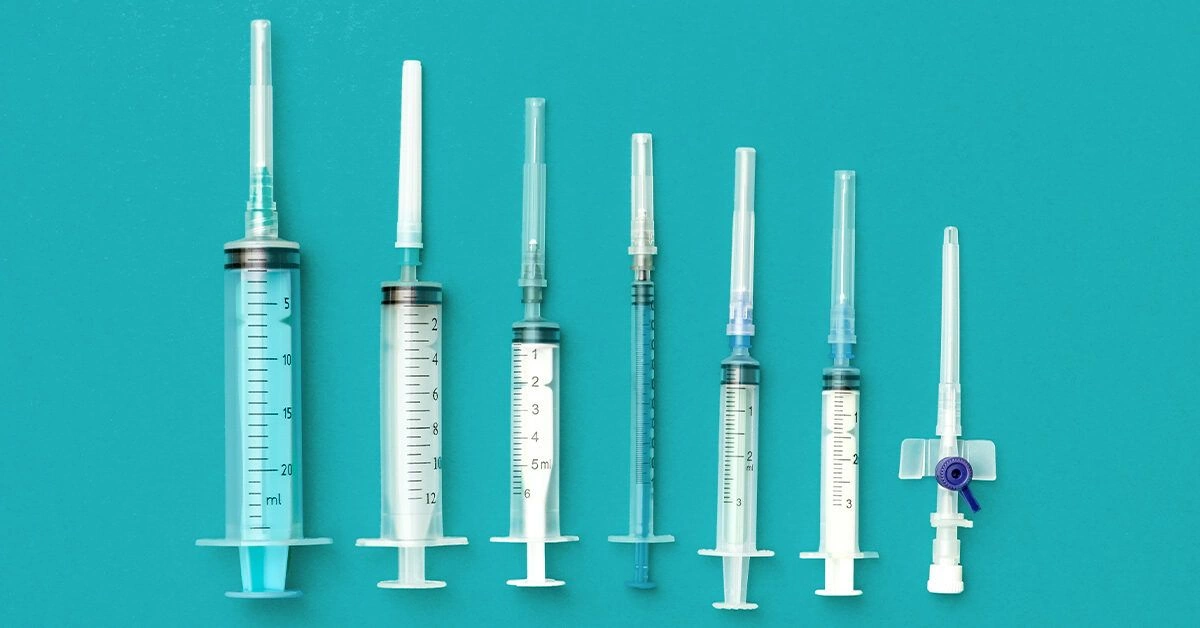
For people with diabetes who self-administer insulin, the dimensions of the syringe and needle can significantly influence comfort and adherence to maintaining stable blood glucose.
According to a 2024 statistics summary from the Centers for Disease Control, roughly 38.4 million people in the United States are living with diabetes.
In type 1 diabetes, the body is unable to produce insulin to control blood sugar. In type 2 diabetes, the body either doesn’t use insulin effectively or doesn’t make enough of it.
People with type 1 diabetes, and some with type 2 diabetes, require insulin injections to keep blood glucose within target ranges.
Insulin can be administered through different methods — syringes, pens, or pumps. Your clinician will advise which option is best, based on your total insulin needs, comfort preferences, and cost considerations.
Whether you’re learning to inject insulin for the first time or you do it every day, there are important factors to consider regarding syringes and keeping your glucose levels steady.
This article covers insulin syringes, needle lengths and gauges, and why these choices matter.
Key points about insulin syringes and injection technique
Keep the following tips in mind when selecting and using insulin syringes.
- Single use.Insulin syringes are disposable and intended for one-time use. This helps ensure the needle remains sterile and reduces the risk of infection from reused needles.
- Rotate injection sites.Rotating where you inject helps prevent lipohypertrophy (localized fat buildup under the skin), a frequent issue with repeated injections in the same spot.
- Subcutaneous injections.Insulin is delivered subcutaneously — just beneath the skin — so you should avoid injecting into muscle, which can alter insulin absorption and affect blood glucose.
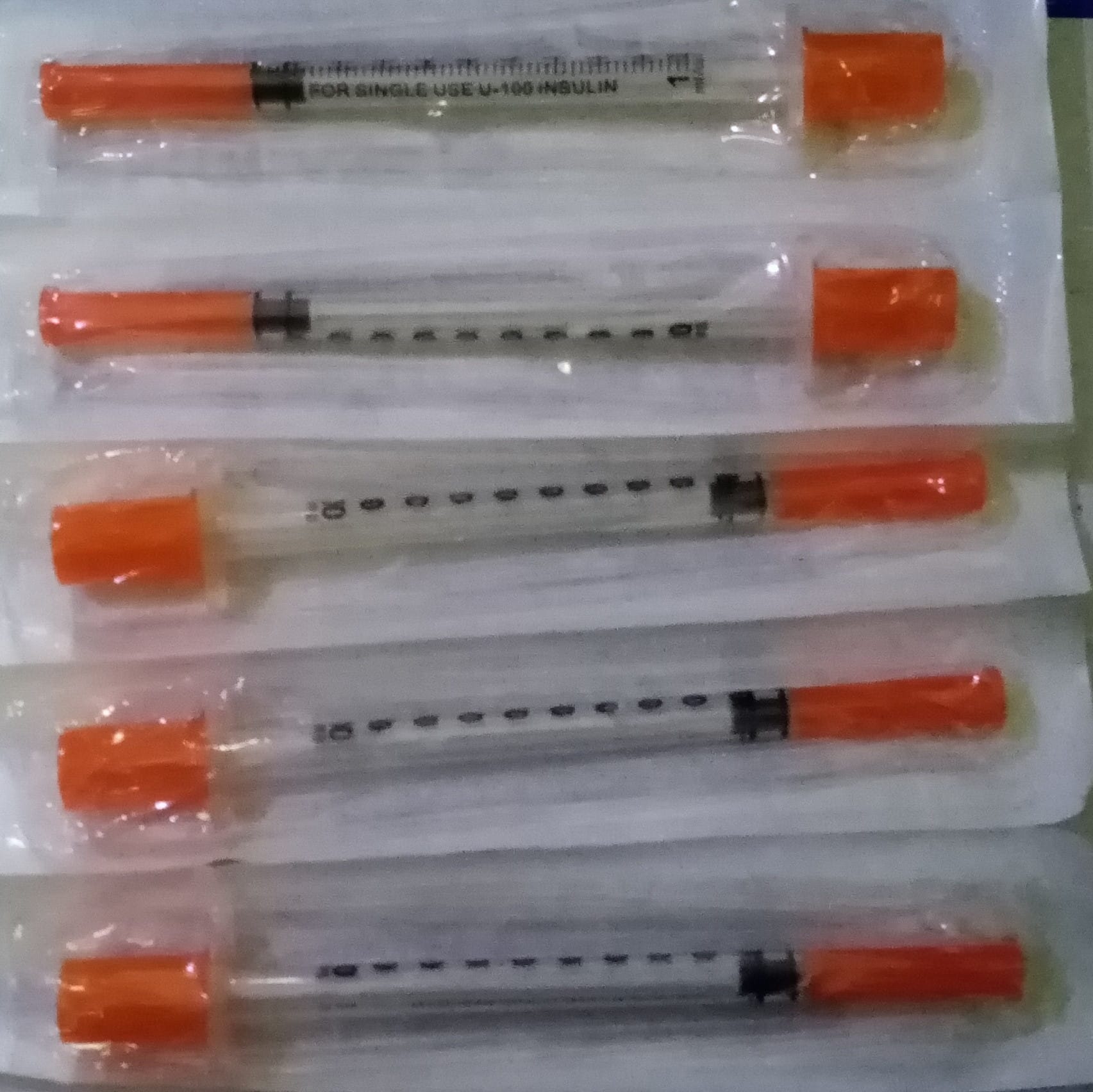
The most suitable syringe capacity depends on your insulin dose. Because doses may change over time with adjustments to glucose control, you might need several syringe sizes so you can accurately measure different amounts.
Needles themselves are available in a variety of lengths and thicknesses.
Insulin syringe and needle capacities and lengths
Insulin syringes come in different volumes and needle length choices. The markings on a syringe, noted in milliliters (mL), indicate the following:
- 0.3 mL syringes are intended for doses under 30 units and are marked in 1/2-unit or 1-unit increments.
- 0.5 mL syringes are used for 30 to 50 units and are labeled in 1-unit steps.
- 1.0 mL syringes are for doses over 50 units and typically show 2-unit intervals.
The barrel size determines how much insulin the syringe can hold, while the needle gauge indicates thickness. Finer-gauge needles can be more comfortable for many people.
Needle length determines how deeply the needle reaches beneath the skin. Insulin only needs to reach the subcutaneous tissue, not muscle. Shorter needles reduce the chance of intramuscular injection.
Recommended syringe and needle dimensions
The International Scientific Advisory Board for the Third Injection Technique Workshop notes there is no clinical rationale for using needles longer than 8 mm.
The Advisory Board suggests that 4 mm, 5 mm, or 6 mm needles are most commonly recommended, although larger sizes may be appropriate in specific situations. They advise selecting needle length based on individual needs.
A 2020 study reported a preference among users for shorter needles in the 4–9 mm range. A 2015 study found that people often preferred thinner needles because they were less painful and easier to insert.
The table below summarizes barrel volume, typical insulin units, and common needle lengths and gauges for several syringe options.
| Barrel size (syringe fluid volume) | Insulin units | Needle length | Needle gauge |
|---|---|---|---|
| 0.3 mL | < 30 units of insulin | 3/16 inch (5 mm) | 28 |
| 0.5 mL | 30 to 50 units of insulin | 5/16 inch (8 mm) | 29, 30 |
| 1.0 mL | > 50 units of insulin | 1/2 inch (12.7 mm) | 31 |
Selecting the right syringe size for your dose
The appropriate syringe capacity depends on how much insulin you require and your personal comfort. Choosing the right syringe helps you deliver the full prescribed dose in one injection and reduces dosing errors from using an unsuitable syringe.
If you administer varying amounts throughout the day, you may find it useful to have more than one syringe size. For instance, taking 35 units in the morning and 10 units at night may mean using a 0.5 mL syringe for the larger dose and a 0.3 mL syringe for the smaller dose.
Syringes also offer flexibility when daily dose adjustments are needed based on glucose readings.
If your typical dose approaches the maximum capacity of a syringe, consider moving up a size to make the injection easier to handle.
Why syringe and needle dimensions are important
Research on insulin needle length indicates that body mass index (BMI) is not a reliable determinant of the needle length required for accurate insulin delivery. BMI is a basic estimate of body fat based on height and weight.
Needles as short as 4 mm have been shown to deliver accurate doses. If you find larger needles intimidating, shorter options may make daily injections more tolerable.
Finer-gauge needles tend to be less painful, which is helpful for people who need frequent injections. Discuss needle length and gauge with your clinician so they can recommend an option tailored to your dosing needs and comfort.
Your injection technique, choice of syringe and needle, and rotating injection sites all play a role in managing blood glucose and avoiding complications.
Final thoughts
For many people who administer insulin daily, the syringe and needle dimensions can greatly affect comfort and the ability to maintain stable blood glucose levels.
Whether you’re new to insulin injections or have been using them for years, understanding safe and effective injection practices is important.
Depending on dose, comfort, and cost, other delivery options are available. Insulin syringes are typically the most affordable method of insulin administration. For additional guidance on dosing and timing, consult an insulin chart or your healthcare provider.
If you have concerns about needles or injecting insulin, speak with your clinician. They can help you choose the best option and provide practice until you’re confident administering your dose.
Always dispose of used needles safely — never toss them in the regular trash. For information on safe disposal, visit SafeNeedleDisposal.org.















Leave a Reply
You must be logged in to post a comment.