
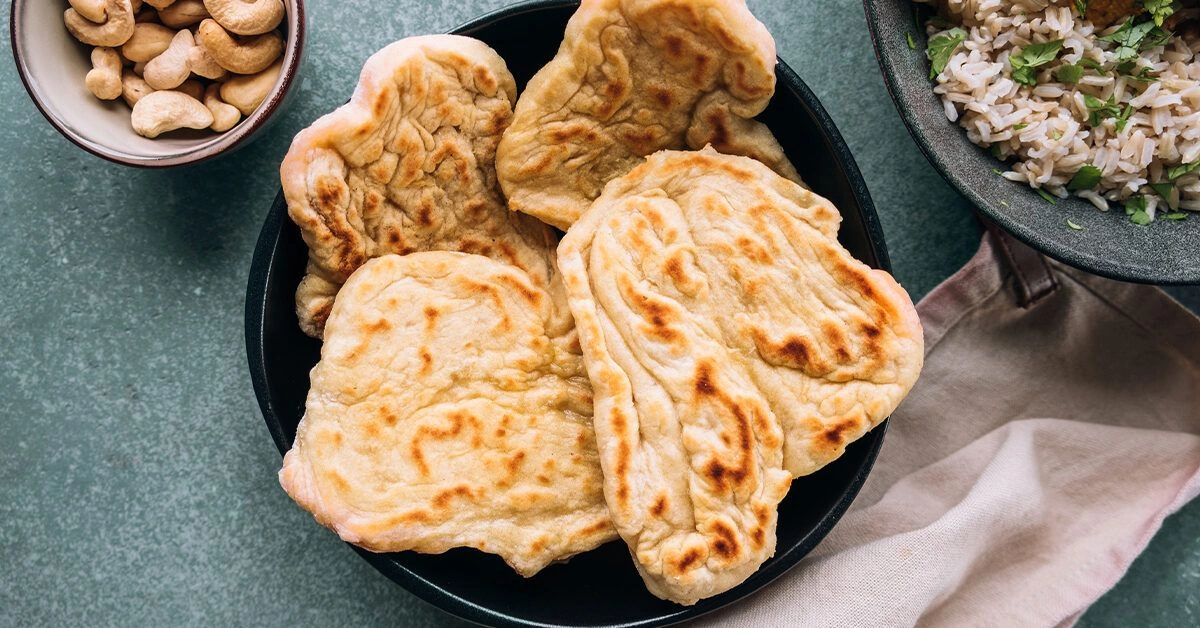
Naan is a carbohydrate-rich bread that may support healthy cholesterol and triglyceride profiles. Using whole wheat flour can also raise the fiber level in naan.
Warm and fresh from the oven, naan can be a comforting option on a chilly evening.
With a long history and straightforward method, naan continues to be a fixture in many culinary traditions. You’ll find it in restaurants or easily prepare it at home, served in a variety of elegant ways.
Naan’s popularity has spread globally, and you might even spot it at your neighborhood grocery or bakery.
Still, you may be curious whether this soft, much-loved flatbread is a healthy choice, especially if you’re mindful of weight management.
This piece explores naan’s nutrient profile, health perks, the different varieties available, and how it stacks up against pita and other breads.

What is naan?
In English usage, people sometimes say “naan bread,” though that’s redundant because naan comes from the Persian word “non,” which means bread.
One historian notes that naan originated from ancient Persian methods of baking flatbreads on heated stones.
The basic naan-making process resembles that of many breads: mix flour, water, salt, and fat, shape the dough by hand, and bake.
If you want a more authentic version, you can use fire plates or clay ovens rather than a conventional oven.
In short, naan is an adaptable, time-honored bread recipe you can recreate at home.
Naan varieties
There are several kinds of naan, varying by region and ingredients. Some are more common, but you’ll likely encounter one of these types in shops:
- Naan-e roghani. A thicker, softer Afghan naan made with extra oil compared to the standard type. It’s often topped with sesame and nigella seeds.
- Butter garlic naan. A classic Indian favorite, this version is brushed with melted butter and garlic.
- Peshwari naan. A Pakistani style filled with dried sultanas, raisins, coconut, and almonds.
- Naan-e barbari. A traditional Persian naan with a crisp top and a tender interior, usually sprinkled with sesame seeds.
- Aloo naan. An Indian naan stuffed with boiled, mashed potatoes.
- Whole wheat naan. Made with whole wheat flour to increase fiber content.
Naan nutrition
Naan shares many nutritional characteristics with other freshly made breads, supplying carbohydrates, iron, and B vitamins.
Below is the nutrition breakdown for one piece of commercially made plain naan (90 grams):
- Calories: 262
- Fat: 5 grams
- Carbs: 45 grams
- Protein: 9 grams
- Fiber: 2 grams
- Sugar: 3 grams
- Sodium: 18% of the Daily Value (DV)
- Iron: 16% of the DV
- Thiamine (vitamin B1): 58% of the DV
- Niacin (vitamin B3): 33% of the DV
Although naan is not high in fiber, it does provide a decent amount of protein, which supports healthy organ function.
Additionally, naan delivers vital vitamins and minerals—most notably vitamins B1 and B3—and is a reasonable source of iron.
Downsides
Naan does present some concerns for people who must limit specific nutrients.
About one-quarter of naan’s fat is saturated fat. The U.S. Department of Agriculture (USDA) advises that saturated fat make up less than 10% of total daily calories.
Therefore, if you’re monitoring saturated fat intake, you shouldn’t overindulge in naan.
The glycemic index (GI) of naan is estimated at 71, classifying it as high. The GI measures how rapidly carbohydrate-containing foods raise blood sugar; foods scoring 55 or below are considered low GI.
You can include naan in a low-GI eating plan, but pair it with higher-protein and lower-GI items. Low-GI diets have been shown to lower blood glucose and insulin needs in people with prediabetes and diabetes.
Naan on its own can spike blood sugar, but combining it with protein, vegetables, and healthy fats helps moderate that effect.
Also, store-bought plain naan carries a relatively high sodium level—about 18% of the DV. Excessive sodium intake may raise blood pressure and increase the risk of heart disease and stroke.
How does it stack up against pita and bread?
If you enjoy naan but are concerned about health implications, compare it with other breads and with pita, another widely eaten flatbread.
One plain naan (90 grams) contains roughly 70% more carbohydrates, protein, and fiber than two slices of white bread (54 grams). Both have similar sugar amounts.
With naan, you consume more carbs, but you also get substantially more protein and fiber—nutrients that help you feel full and support healthy weight management.
Compared to a 45-gram serving of pita, naan has about 80% more carbohydrates and roughly 200% more protein. It also supplies twice the fiber of pita, though around 60% more sugar.
Keep in mind that one naan is about twice the weight of a pita and around 1.5 times the weight of two slices of bread.
In essence, naan is denser in nutrients than pita or white bread. While it may contain higher carbs and sugars, its comparatively generous protein and fiber content contribute to its standing as a healthier option.
Health benefits of naan
Like most breads, naan is rich in carbohydrates and relatively low in fiber, offering quickly available energy.
Naan is a good source of niacin and thiamine, both of which provide important health effects.
Niacin (vitamin B3) is essential for cellular energy production and has roles in genetic stability, metabolism, and aging processes.
A deficiency in B3 can be associated with neurological issues, cognitive decline, and even psychiatric symptoms.
Thiamine (vitamin B1) is also water-soluble, meaning the body keeps limited stores and requires regular dietary intake to maintain levels.
People lacking thiamine may have nervous system, cardiac, and gastrointestinal problems. Symptoms of thiamine deficiency can include weight loss, poor appetite, confusion, memory issues, fatigue, muscle weakness, and heart complications (source).
Lastly, naan supplies a modest amount of iron, which is crucial for producing red blood cells that ferry oxygen throughout the body.
Iron plays a key role in numerous proteins and enzymes and helps muscles store and use oxygen effectively.
To support brain and circulatory health, include naan alongside other B-vitamin-rich foods such as poultry, fish, and legumes.
High fiber alternatives
Consuming carbohydrates influences blood sugar, insulin, and lipid markers like cholesterol and triglycerides, a type of blood fat.
Although plain white naan made from refined flour is low in fiber, other naan varieties can provide more.
Using whole wheat flour or other whole-grain flours like chickpea flour can raise the fiber content of your naan.
Moreover, dietary fiber intake has been associated with better heart and colon health; diets higher in fiber are linked to a lower risk of cardiovascular disease.
The bottom line
Naan can be part of a balanced eating pattern when enjoyed in moderation. Opt for whole wheat naan to boost health benefits, and serve it with nutritious accompaniments.
Remember to consider your overall diet: naan alone won’t offset a pattern high in processed sugars and unhealthy fats and low in nutrients.
Naan also serves as a carrier for healthy foods like vegetables and legumes. In many Indian meals, whole wheat naan accompanies lentils, beans, chickpeas, and peas.
If naan fits your dietary goals and lifestyle, savor it!
Just one thing
Try this today: For a creative twist, top naan with hummus, leafy greens, and a sprinkle of nuts or seeds. It also works wonderfully as a wrap for roasted vegetables, beans, or eggs.






















Leave a Reply
You must be logged in to post a comment.