
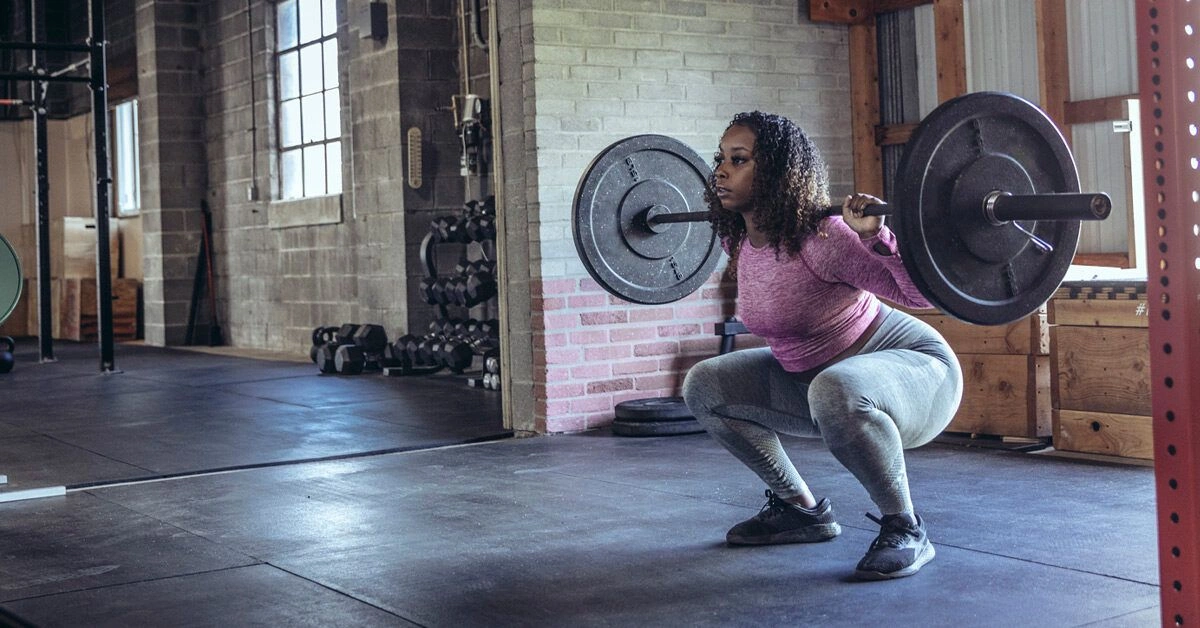
Feeling discomfort in your lower back while squatting — whether during a workout or routine tasks — can stem from a variety of factors.
Low back pain is widespread: as many as 84% of adults report experiencing it at some point. The causes are numerous and often overlapping.
You may notice pain begin or intensify with specific motions like squatting. That can happen whether you’re performing squats as part of an exercise program or bending down for everyday activities.
Often, pain during squats is linked to faulty form and lifting too heavy. Inadequate core strength or limited mobility in the hips and ankles can also contribute to discomfort.
Sometimes, back pain signals an underlying injury that needs attention; conditions such as herniated discs may require medical evaluation.
Below we’ll review the most common reasons your back might hurt when you squat and what you can do about it.

Why does squatting hurt my lower back?
There are numerous explanations for lower back pain during squatting. The most frequent culprits include the following.
Poor squatting mechanics
Squatting with incorrect technique places extra load on the joints and muscles of the lower back and raises the chance of injury. Working on your mechanics on your own or with a coach can help lower that risk.
Excessive load
Using more weight than your form can handle will often push your body into less-than-ideal positions that increase injury risk. Only progress the load as long as you can preserve good technique throughout the lift.
Limited hip mobility
Tight hip flexors are common, particularly in people who sit for long periods. Stiff hips are a recognized risk factor for lower back discomfort.
Regularly stretching your hip flexors and breaking up extended sitting sessions can help reduce tightness.
For more on addressing tight hip flexors, see guides and stretches tailored to that issue.
Poor ankle mobility
A 2017 study showed that individuals with restricted ankle mobility tended to lean forward more during back squats — a posture associated with greater lower back stress.
Working on ankle range of motion can help you squat in a more upright alignment.
See recommended exercises to improve ankle mobility.
Inadequate warm-up
A proper warm-up before intense activity raises muscle blood flow, can reduce injury risk, and often improves performance.
In a 2020 study, doing 6 repetitions at 80% of the training load prior to a session increased force output during squatting.
Learn more about effective warm-up strategies for strength training.
Underlying lower back injury
A sharp pain when squatting may point to an injury. The two most frequent back issues in lifters are muscle strains and herniated discs.
Muscle strains are often mild and resolve with home care, though more severe strains can require medical evaluation.
A herniated disc can produce neurologic signs such as:
- numbness or tingling in the lower legs
- weakness in the legs
- radiating pain down the back of the leg (sciatica)
- loss of bowel or bladder control
If you notice any of these symptoms, seek medical attention promptly.
Read guidance on treating muscle strains.
Weak core stability
Your core muscles support your trunk and spine during movement. A weak core can make your lower back more susceptible to injury when performing squats.
Strengthening core musculature can help protect the lower back.
Explore exercises to build core strength.
Occupational squatting
Squatting for work is among the top risk factors for developing lower back pain in workers. Where possible, limit prolonged squatting — for instance, by sitting on a stool instead of staying in a deep squat for long stretches.
How to squat properly
While there are different squat styles, the following are general tips to protect your lower back when performing a bodyweight squat.
- Position your feet roughly shoulder-width apart with toes slightly routed outward. Rest your arms by your sides, cross them in front, or extend them straight ahead.
- Take a full breath and brace your core.
- Push your hips back as if sitting on a chair. Keep your knees tracking in line with your toes. Avoid letting one or both knees collapse inward.
- Descend as far as you can while maintaining your spine’s natural curve. If mobility permits, go until your thighs are parallel or slightly below parallel to the floor. Keep your heels planted throughout the movement.
- Drive through your entire foot to return to the starting position.
For more detailed instruction on squatting well, consult technique resources.
How do I stop my lower back from hurting when I squat?
Here are practical steps to reduce back pain during squats.
- refine your technique alone or with a qualified coach or trainer
- always warm up before squatting
- when using weights, lift only what you can handle without sacrificing form
- build core strength
- work on hip and ankle mobility
- avoid unnecessary prolonged squatting during daily activities
If you experience hip-related pain while performing squats, consider reading about hip pain when squatting for more targeted advice.
When to contact a doctor
See a doctor if your back pain doesn’t improve after a few weeks of home care or if your symptoms worsen.
Seek immediate medical attention if you have signs suggestive of a herniated disc.
Should you squat with lower back pain?
Lower back pain commonly worsens after long periods of rest and may feel better with gentle activity. If your pain is mild, light squatting might be tolerable.
Avoid squatting if it increases your pain or if you have signs of a herniated disc unless cleared by a healthcare professional.
Takeaway
Squats are a frequent trigger for lower back pain. Faulty technique or lifting too much weight are typical causes, and weak core muscles, limited hip and ankle mobility, or an underlying injury can also play roles.
Consult a healthcare provider if your back pain is severe or doesn’t improve within a couple of weeks.


















Leave a Reply
You must be logged in to post a comment.