
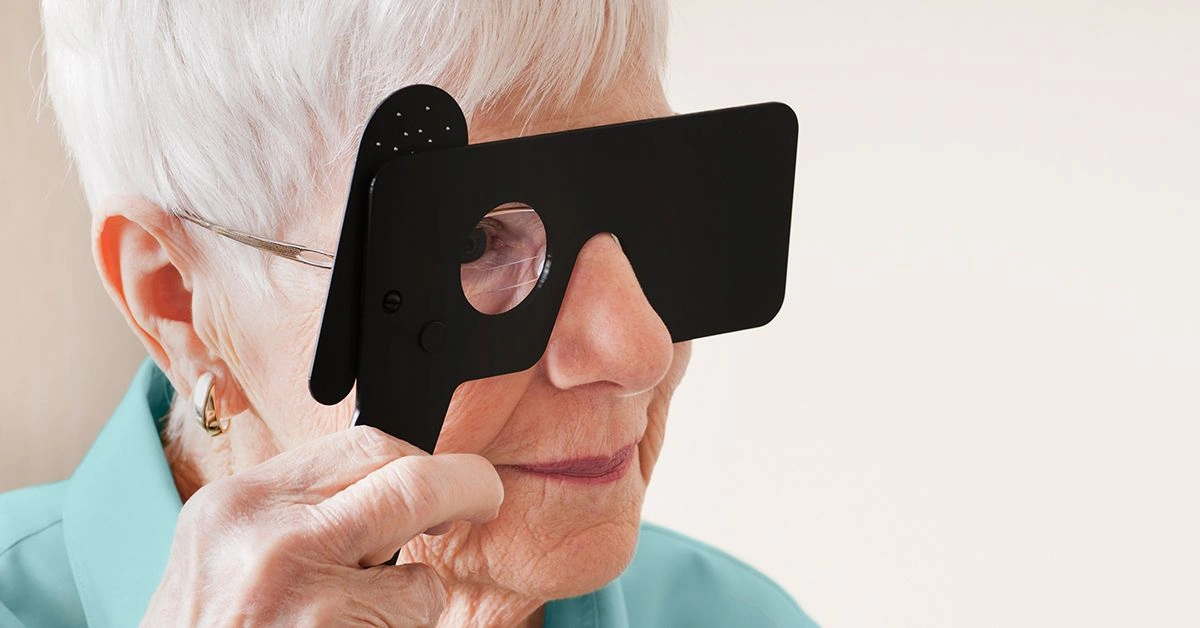
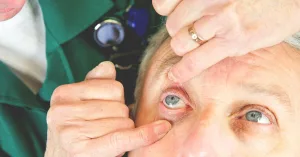
The pinhole test is a straightforward exam that helps your eye specialist pinpoint the reason for recent changes in your vision and decide whether spectacles can improve it.
The primary aim of the pinhole test is to answer: Can a pair of glasses make your sight better, and if so, by how much? It’s also an initial tool clinicians use when evaluating for macular degeneration and other ocular disorders. The test employs an occluder — a card or handheld shield that covers one eye so only the other receives light.
The occluder used in a pinhole test contains a small aperture that you peer through. This narrows and centers the light onto the retina, temporarily correcting or reducing refractive vision errors — such as myopia (nearsightedness), hyperopia (farsightedness), or astigmatism (blurred vision) — and can momentarily enhance vision in the eye used for the test.
When a clinician suspects macular degeneration, the pinhole test serves as an early step in the diagnostic pathway.
What does the pinhole test diagnose regarding macular degeneration?
A pinhole test can indicate whether the visual problem is related to the eye’s lens or to the retina/optic nerve.
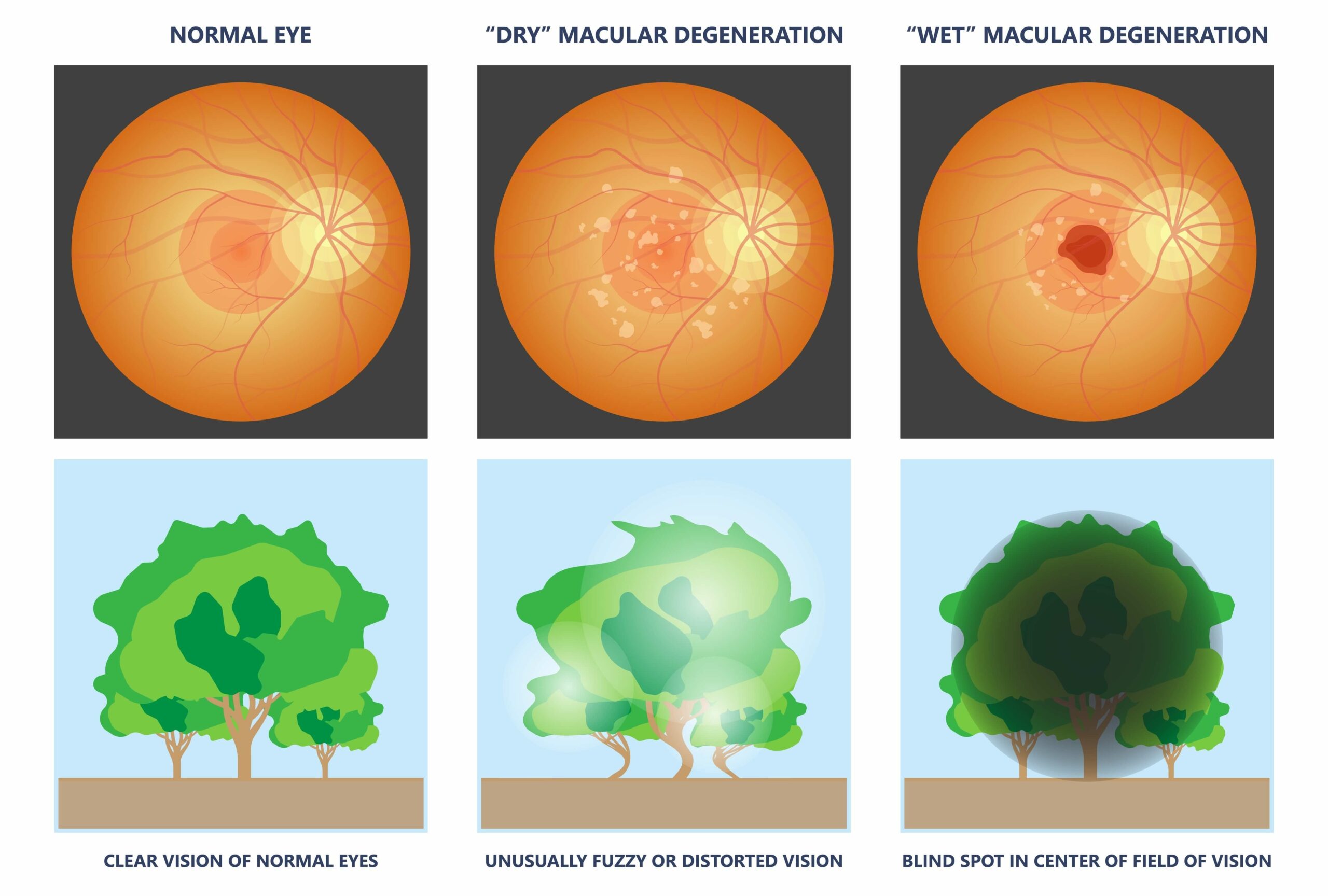
Macular degeneration involves the macula, a small central portion of the retina responsible for detailed vision.
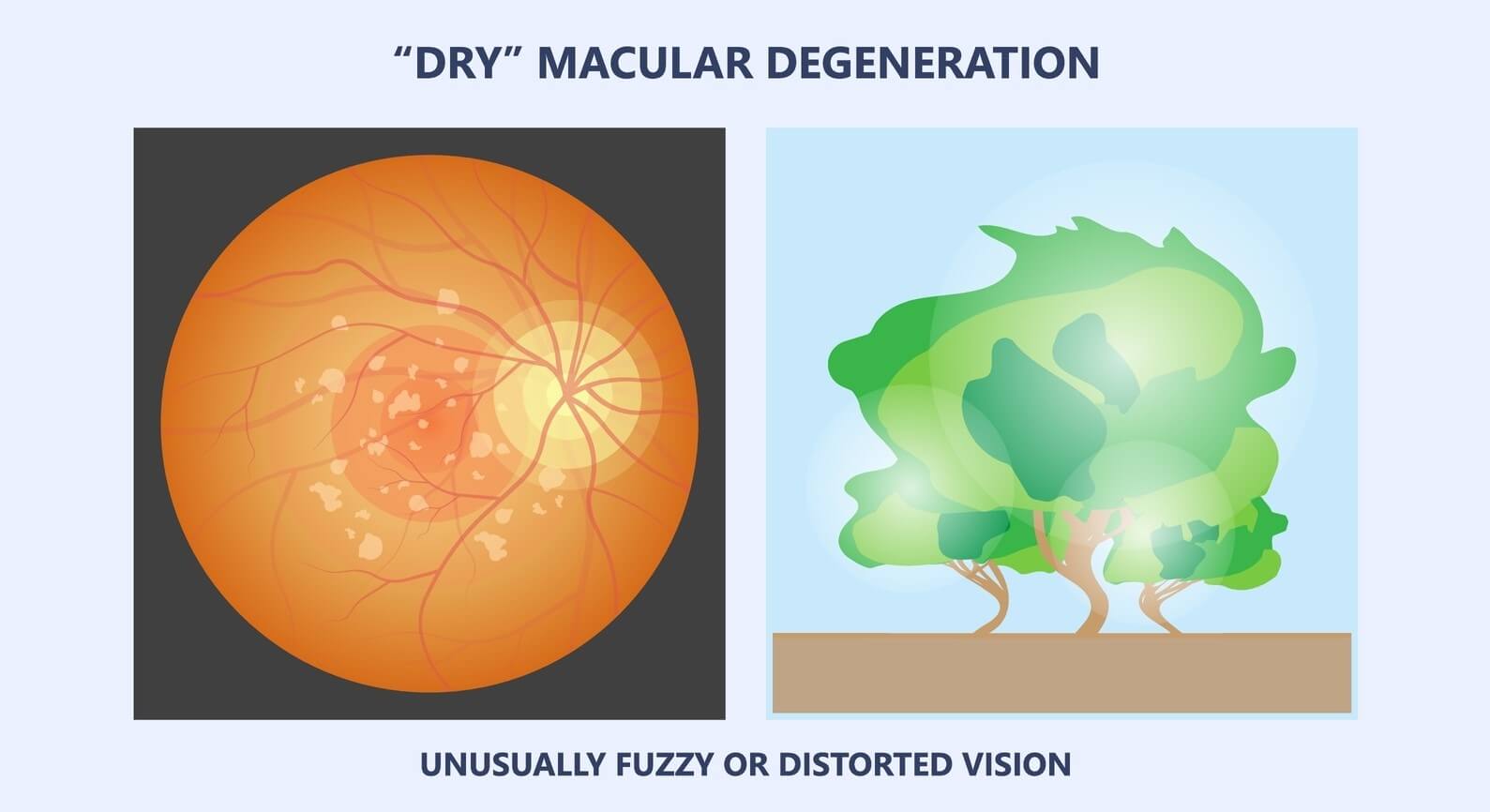
If your sight does not temporarily improve when viewing through the occluder, that finding suggests the visual deficit may stem from macular degeneration rather than a simple refractive issue.
How is a pinhole test for macular degeneration performed?
The procedure for a pinhole test generally includes:
- covering one eye while you look through a small hole (the pinhole) in a cover placed before the other eye
- reading the smallest line you can on an eye chart while peering through the pinhole
- removing the pinhole cover from the eye
- reading the smallest line you can on the chart without the pinhole
Following this brief assessment, your eye doctor will determine whether further tests are needed to evaluate the possibility of a retinal condition.
What is the outlook if the pinhole test suggests macular degeneration?
The prognosis depends on the pinhole test outcome. If results point toward macular degeneration, it is typically a progressive disease, meaning it can worsen over time and cannot be halted completely.
If the pinhole test indicates that vision changes are more likely caused by refractive error or by media opacity (for example, a cataract), the outlook is generally better. Many refractive problems have effective treatments. If the issue is opacity and diagnosed as a cataract, surgical removal is often a very successful intervention that restores sight.
Frequently asked questions
How does the pinhole test distinguish refractive errors from macular degeneration?
If your vision sharpens when you peer through the occluder, that suggests a refractive cause of the visual change — such as myopia, hyperopia, astigmatism, or presbyopia. In contrast, if you have macular degeneration, your vision typically will not improve (and may deteriorate) when looking through the pinhole.
If your vision sharpens when you peer through the occluder, that suggests a refractive cause of the visual change — such as myopia, hyperopia, astigmat
The pinhole test is a straightforward exam that helps your eye specialist pinpoint the reason for recent changes in your vision and decide whether spectacles can improve it.
The primary aim of the pinhole test is to answer: Can a pair of glasses make your sight better, and if so, by how much? It’s also an initial tool clinicians use when evaluating for macular degeneration and other ocular disorders. The test employs an occluder — a card or handheld shield that covers one eye so only the other receives light.
The occluder used in a pinhole test contains a small aperture that you peer through. This narrows and centers the light onto the retina, temporarily correcting or reducing refractive vision errors — such as myopia (nearsightedness), hyperopia (farsightedness), or astigmatism (blurred vision) — and can momentarily enhance vision in the eye used for the test.
When a clinician suspects macular degeneration, the pinhole test serves as an early step in the diagnostic pathway.
What does the pinhole test diagnose regarding macular degeneration?
A pinhole test can indicate whether the visual problem is related to the eye’s lens or to the retina/optic nerve.
Macular degeneration involves the macula, a small central portion of the retina responsible for detailed vision.
If your sight does not temporarily improve when viewing through the occluder, that finding suggests the visual deficit may stem from macular degeneration rather than a simple refractive issue.
How is a pinhole test for macular degeneration performed?
The procedure for a pinhole test generally includes:
- covering one eye while you look through a small hole (the pinhole) in a cover placed before the other eye
- reading the smallest line you can on an eye chart while peering through the pinhole
- removing the pinhole cover from the eye
- reading the smallest line you can on the chart without the pinhole
Following this brief assessment, your eye doctor will determine whether further tests are needed to evaluate the possibility of a retinal condition.
What is the outlook if the pinhole test suggests macular degeneration?
The prognosis depends on the pinhole test outcome. If results point toward macular degeneration, it is typically a progressive disease, meaning it can worsen over time and cannot be halted completely.
If the pinhole test indicates that vision changes are more likely caused by refractive error or by media opacity (for example, a cataract), the outlook is generally better. Many refractive problems have effective treatments. If the issue is opacity and diagnosed as a cataract, surgical removal is often a very successful intervention that restores sight.
Frequently asked questions
How does the pinhole test distinguish refractive errors from macular degeneration?
If your vision sharpens when you peer through the occluder, that suggests a refractive cause of the visual change — such as myopia, hyperopia, astigmatism, or presbyopia. In contrast, if you have macular degeneration, your vision typically will not improve (and may deteriorate) when looking through the pinhole.
If your vision sharpens when you peer through the occluder, that suggests a refractive cause of the visual change — such as myopia, hyperopia, astigmatism, or presbyopia. In contrast, if you have macular degeneration, your vision typically will not improve (and may deteriorate) when looking through the pinhole.
Can the pinhole test detect other eye problems besides macular degeneration?
The pinhole test helps your eye doctor determine whether spectacles can correct your vision or whether further evaluation and treatment are necessary.
The pinhole test helps your eye doctor determine whether spectacles can correct your vision or whether further evaluation and treatment are necessary.
Do I need to prepare for a pinhole test?
No special preparation is required for the pinhole test. It’s a good idea to bring any glasses or contact lenses you use, since your eye doctor may want to assess your vision while you’re wearing them.
No special preparation is required for the pinhole test. It’s a good idea to bring any glasses or contact lenses you use, since your eye doctor may want to assess your vision while you’re wearing them.
Takeaway
The pinhole test provides a quick way for an eye doctor to gauge whether macular degeneration might be responsible for vision changes. The examination is simple: you read lines on a chart while looking through a small opening in an eye cover.

The pinhole test is one component of the diagnostic process that helps determine appropriate care to improve vision. If signs suggest macular degeneration, additional testing will be performed to guide treatment decisions.




















Leave a Reply
You must be logged in to post a comment.