
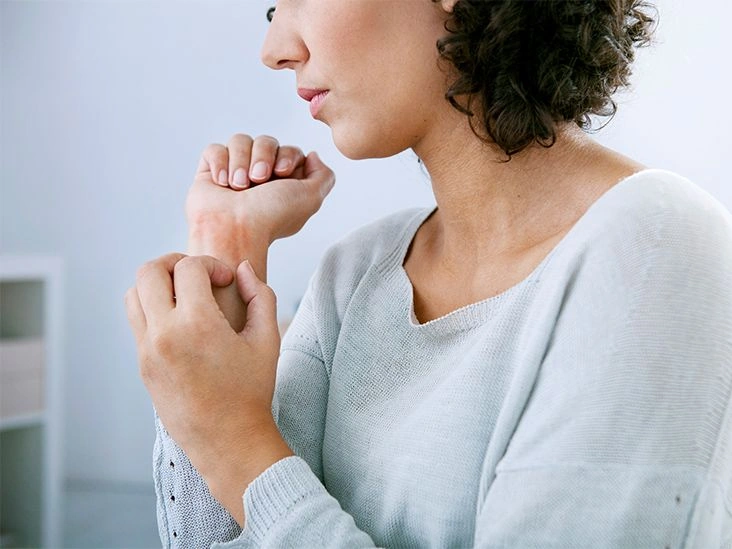
Dust mites are tiny arthropods related to ticks. They look somewhat like insects but do not have wings or eyes. Reactions to dust mites are usually non-threatening, though those with allergies may experience swelling, itching, or other hay fever and asthma-like symptoms.
Because dust mites are so small, they’re difficult to spot. Many people don’t realize they’ve been exposed until they notice what appear to be small bites.
Continue reading for treatment options for mite bites, plus a photo guide to help you identify which type of mite may have bitten you.
Can dust mites bite?
When people suspect they’ve been bitten by mites, they often assume dust mites are to blame. However, dust mites do not bite humans. They also don’t live on people, though they may occasionally get onto clothing.
Dust mites can provoke allergic responses that can look like bites. That’s why these reactions are frequently called “mite bites.”
Household dust commonly contains dust mite droppings and decaying mite bodies. Many individuals who think they’re allergic to dust are actually allergic to the proteins in this dust, which can trigger asthma and hay fever symptoms.
What are the symptoms of mite bites?
Mite bites can be difficult to recognize. You might not notice anything until an allergic reaction appears after exposure to dust mites. Not knowing what’s biting you can be unsettling and frustrating.
Symptoms vary depending on the specific mite involved, but some general signs can help distinguish a mite bite from, for example, a spider bite.
What do mite bites look like?
If you’re unsure what bit you, the photo guide below may be useful.

How do I know what bit me?
If you want to determine exactly what bit you, sticky traps or tape can sometimes capture the offender. Specific traits or symptoms of your bite can also point to the type of mite involved.
Chiggers
Chiggers live outdoors in soil crevices, typically in moist rural areas with tall grass and dense vegetation.

Only chigger larvae feed on people. They inject digestive saliva that breaks down skin tissue and then suck up the resulting fluid. If not removed, they can feed for several days.
Chigger bites commonly occur on your:
- waist
- armpits
- ankles
Bites usually develop into welts within 24 hours, which then harden and become inflamed. Chigger bites are often intensely itchy; avoid scratching because it can lead to infection and fever.
Scabies
Scabies mites require a human or animal host to survive. They burrow into the skin and lay eggs. They are highly contagious and spread easily through close contact.
With scabies, symptoms may not appear for several weeks, but eventually you’ll develop rash-like bumps and blisters along skin folds, including:
- between your fingers
- in the bends of your knees and elbows
- around your waist, breasts, or buttocks
- around the male genital area
- on the soles of young children’s feet
Itching from scabies is often intense and can be worse at night. Scabies need medical treatment, so contact a healthcare professional if you suspect an infestation.
Demodex
Demodex mites can live on the human body. There are two main species:
- Demodex folliculorum, the hair follicle mite, typically inhabits facial hair follicles.
- Demodex brevis more commonly resides on the neck or chest.
These mites are microscopic and often asymptomatic. However, some people may experience:
- itchy or scaly skin
- skin discoloration
- heightened skin sensitivity
- burning sensations
- rough, sandpaper-like skin texture
People with weakened immune systems may be more prone to skin problems and other signs of Demodex overgrowth.
Bird and rodent mites
Bird and rodent mites usually live in nests and on animal hosts. If a host dies or abandons the nest, these mites may bite humans.
You might feel a small sting when they bite and later notice:
- pain
- intense itching
- a rash
- swelling
- skin irritation
Oak mites
Oak mites usually feed on tiny flies living on oak leaves but can fall from trees and bite humans, most often in late summer. Oak leaves with brown, crusted edges may indicate oak mite presence. If you spot such leaves, avoid sitting or working beneath the trees.
Oak mite bites leave welts, commonly on the face, neck, or arms. These welts are often mistaken for chigger bites. Within about 12 hours, the bites usually turn into pimple-like bumps that are extremely itchy. You may develop multiple bumps that form a painful rash that can last up to two weeks.
Straw itch mites
Straw itch mites inhabit stored grain, hay, seeds, and also trees and leaf litter. They primarily feed on insects but will bite humans; they do not remain attached to the body after biting.
You’re likely to encounter these mites if you sit or walk under the trees they occupy or lie down in piles of leaves. They commonly bite the shoulders and neck, leaving itchy marks that may appear as a rash.
How are mite bites treated?
If you have visible bites or suspect a mite bite, it can help to:
- shower thoroughly with plenty of soap
- wash clothes and any bedding that may be affected in warm, soapy water
- carefully use a topical permethrin cream (scabicide) to remove remaining mites from your body
Most care focuses on easing itch and skin discomfort.
Antihistamine or anti-itch creams, including products containing hydrocortisone, can lessen itching. Oral antihistamines may help when itching is severe. For painful bites, topical anesthetics can provide relief.
Mite bites commonly cause intense itching, but scratching increases the risk of infection. Try to manage the itch with medication, cold compresses, or other remedies.
Treating your home for mites and insects can sometimes be beneficial, but it’s best to identify the exact infestation before applying sprays or repellents, as these measures may not be effective against all mite types.
»MORE:Get care for insect bites and stings in as little as 15 minutes with Optum Now Online Care.
Optum Now is operated by RVO Health. By clicking this link, we may receive a commission. Learn more.
The bottom line
Mite bites can be very uncomfortable, causing itching, pain, and skin irritation that may persist for up to two weeks.
Most mite bites resolve on their own, so medical care is often unnecessary. Over-the-counter pain relievers and anti-itch creams can reduce discomfort.
If you repeatedly experience unidentified bites, consult a healthcare provider. Identifying the mite species responsible can help determine whether you have an infestation.





















Leave a Reply
You must be logged in to post a comment.