

Frequent reasons for discomfort above the knee include inflammation of the quadriceps or hamstring tendons, various forms of arthritis, and inflammation of the knee bursae.
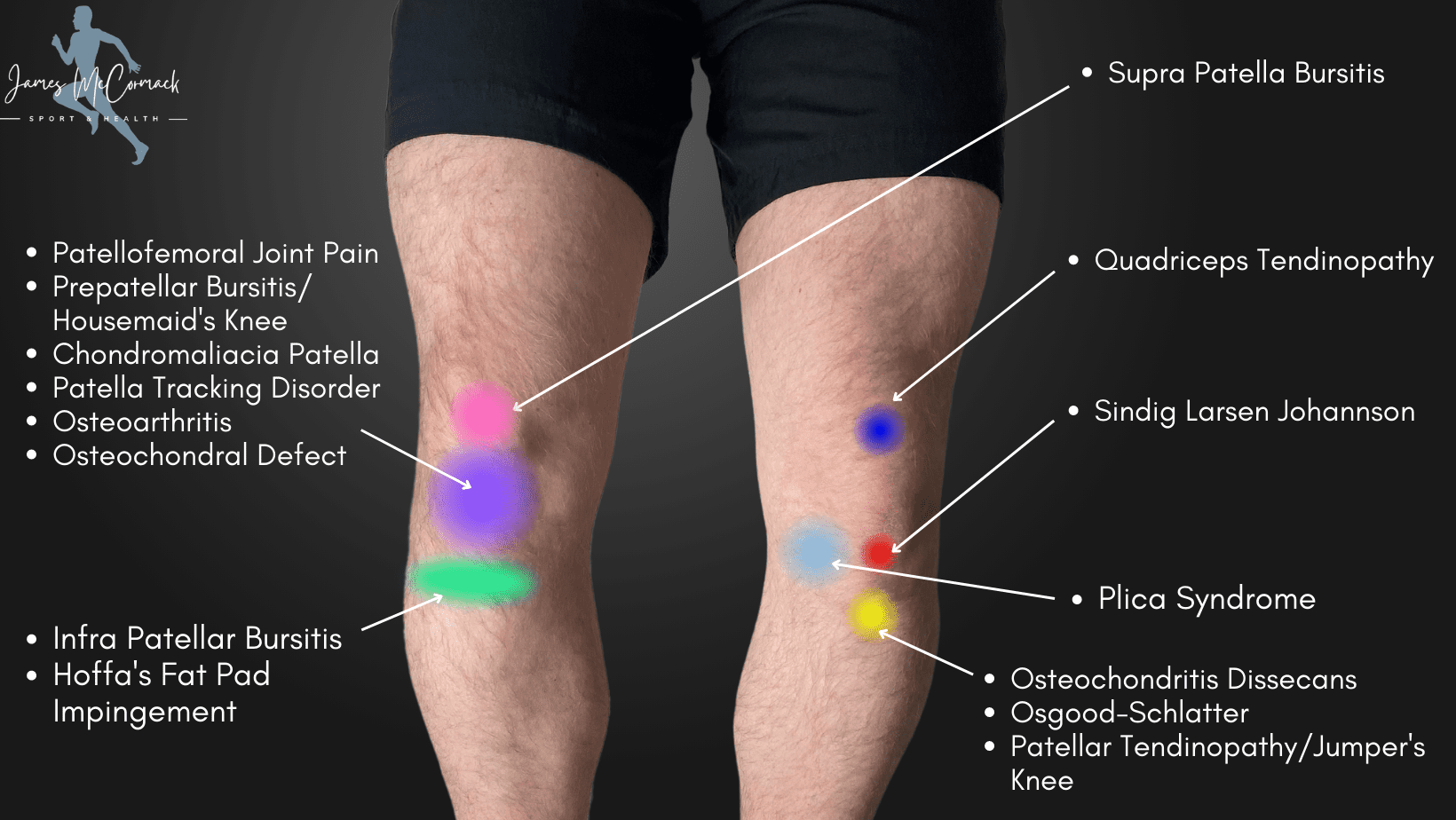
Your knee is the body’s largest joint, created where the femur meets the tibia. Pain or injury around this joint can arise from gradual degeneration or from an acute injury.
Sometimes pain is felt directly on the kneecap from injuries like fractures or a torn meniscus. However, pain located above the knee — whether at the front or back of the thigh — can stem from different problems.
Common causes of pain above the knee
Typical culprits behind pain above the knee are quadriceps or hamstring tendonitis, arthritis, and bursitis of the knee.
Quadriceps or hamstring tendonitis
Tendons connect muscles to bones. Tendonitis refers to irritation or inflammation of those tendons.

Tendonitis can affect any tendon, including the quadriceps in the front of the thigh that extends toward the knee, or the hamstrings at the rear of the thigh.
Overuse or incorrect technique during athletic activities, exercise, or physically demanding work often leads to quadriceps or hamstring tendonitis.
Signs and symptoms include:
- tenderness to touch
- swelling
- dull pain or aching when moving or bending the leg
Treatment aims to reduce pain and inflammation. Typical strategies include:
- resting the leg and keeping it elevated when possible
- applying cold or heat for short intervals several times daily
- gentle stretching and strengthening exercises to restore mobility and function
If the condition is more serious, a physician may suggest temporary support with splints or braces, and in rare cases, surgical removal of the inflamed tissue.
Arthritis
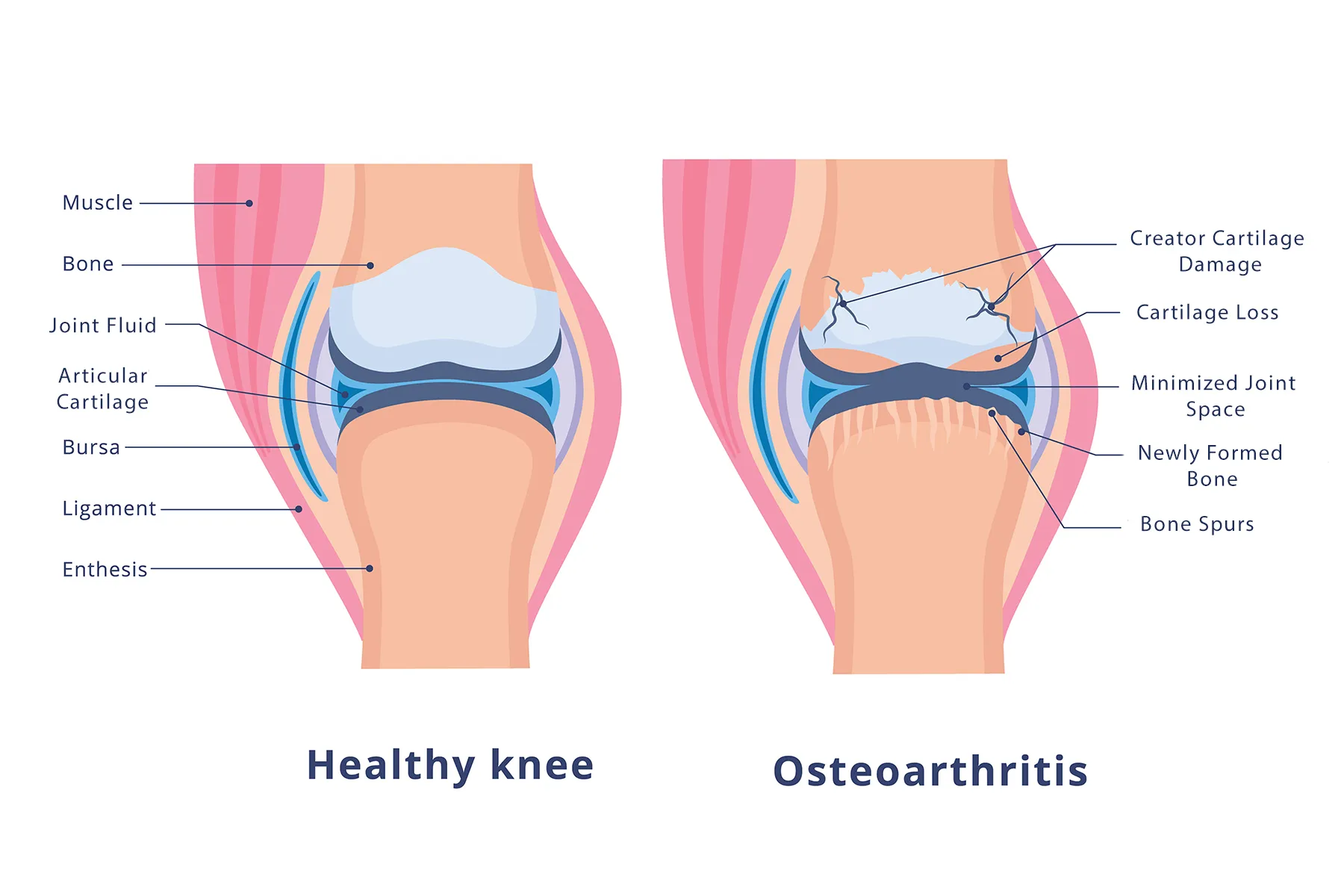
Arthritis of the knee happens when the cartilage cushioning the joint deteriorates.
Common arthritis types — including osteoarthritis, rheumatoid arthritis, and lupus-related arthritis — can all produce pain around the knee and neighboring joints.
Treatment often involves physician-prescribed exercise programs, pain-relief medications, and injections. Certain inflammatory types of arthritis, such as rheumatoid arthritis, may respond to medications that target inflammation.
Knee bursitis
Bursae are small fluid-filled sacs that reduce friction between bones, tendons, muscles, and skin. When a bursa becomes inflamed, it can cause pain above the knee, particularly with walking or bending.
Management typically targets symptom relief while the inflammation resolves. Anti-inflammatory medications and targeted physical therapy exercises can help.
Surgery to remove an affected bursa is rarely required and is usually reserved for persistent or severe cases that fail to improve with conservative treatment.
Preventing pain above the knee
Many sources of pain above the knee can be avoided by performing appropriate stretching before activity and avoiding overuse or poor mechanics during exercise.
Conditions like arthritis or bursitis are harder to prevent entirely, but a healthcare professional may offer guidance on symptom control and ways to reduce the risk of worsening injury. If you experience sensations such as tightness in knee or occasional knee buckling, mention these to your clinician as they can aid diagnosis and management.
When to get urgent medical care
Some causes of pain above the knee — particularly when accompanied by symptoms elsewhere in the leg — require immediate evaluation.
Numbness or sudden weakness in a leg can be a sign of stroke. Likewise, persistent pain or tenderness with swelling that does not improve with elevation could indicate a blood clot (deep vein thrombosis).
If you notice either of these serious signs, seek emergency medical attention right away.
Takeaway
Discomfort above the knee can result from a variety of conditions, many linked to overuse or gradual wear. Treatments range from rest and physical therapy to medications and, rarely, surgery.
If symptoms continue or get worse, consult your doctor for an accurate diagnosis and tailored treatment plan.





















Leave a Reply
You must be logged in to post a comment.