
The Fast Facts
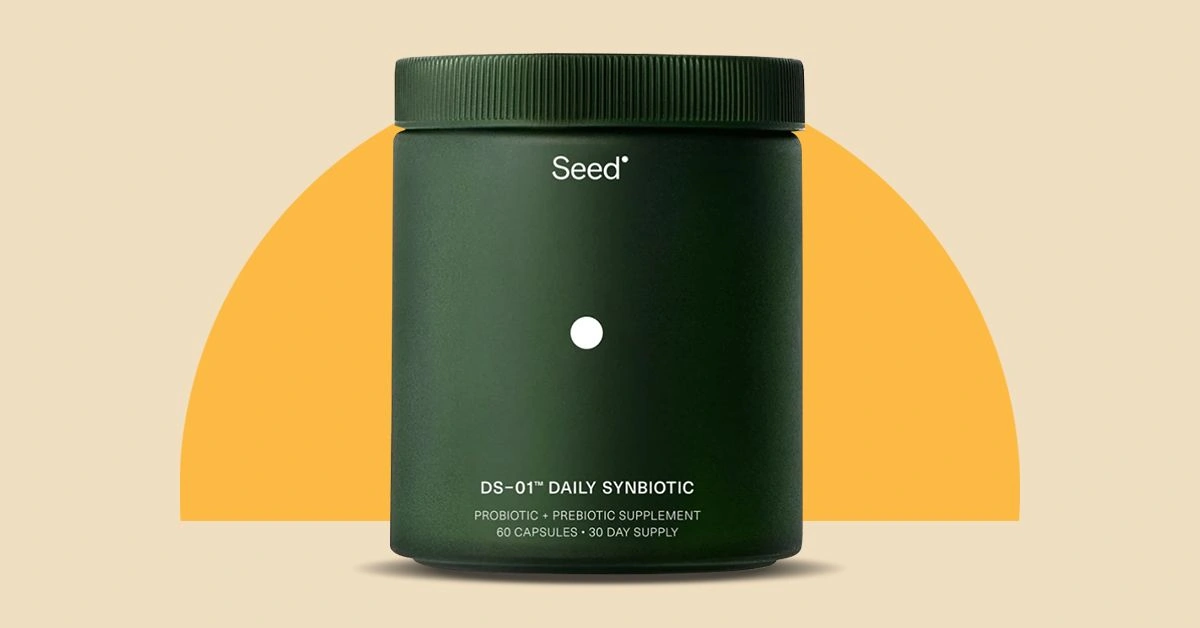
- Our Seed probiotics review examines in depth the DS-01 Daily Synbiotic.
- This is a top-tier probiotic featuring 24 distinct strains.
- Our testers found it eased bloating and was straightforward to use, even when traveling.
Seed is a gut health supplement brand that’s rapidly gaining traction.
The flagship item, DS-01 Daily Synbiotic, combines both prebiotics and probiotics for holistic gut wellness.
Because the supplement can be pricier than some competitors and requires a subscription, you might wonder if Seed DS-01 Daily Synbiotic is worth the investment.
Read on for our dietitian’s analysis of the science behind Seed Daily Synbiotic, along with our editors’ first-hand experiences using the supplement.
Seed supplied a 30-day supply of its DS-01 Daily Synbiotic at no cost, but our judgments remain independent.
Our Medical Standards and Insights team has meticulously vetted more than 11,000 products and services. We fact-check health claims, assess ingredients, and investigate each brand’s reputation before presenting products and services on HealthEH.
To select the products on this page, we weighed all the probiotics that cleared our vetting process. Then, we personally tested several to narrow our list further.
Seed DS-01 Daily Synbiotic at a glance
- Price: $49.99 per month, $135.35 for 3 months
- Dose: 2 capsules daily
- Refrigeration: not required
- What makes it distinctive: Besides offering a distinctive mix of pre- and probiotics, Seed DS-01 Daily Synbiotic capsules are engineered to preserve probiotic strains intact until they reach the colon for maximum effectiveness.
What is Seed DS-01 Daily Synbiotic?
Established in 2018 by Ara Katz and Raja Dhir, Seed is a subscription-based probiotic brand.
The company offers three products:
- DS-01 Daily Synbiotic, formulated for adults
- PDS-01 Pediatric Daily Supplement, designed for children and teens aged 3 to 17
- VS-01 Vaginal Synbiotic, a suppository for an optimal vaginal microbiome
DS-01 Daily Synbiotic comprises four distinct probiotic blends with targeted health aims.
Here’s a quick overview of the blends.
AFU vs. CFU
If you’ve shopped for a probiotic before, you’ve likely seen “CFU count” on the bottle. CFU stands for colony forming units and measures the viable, cultivable probiotic cells per dose.
Seed DS-01 Daily Synbiotic stands out by using active fluorescent units (AFUs) rather than CFUs.
Research indicates that AFU may be a more precise metric than CFU since it accounts for all viable cells, including those that may not be culturable.
Digestive Health/Gut Immunity/Gut Barrier Integrity Probiotic Blend
- AFU count: 37 billion
- Strains: Bifidobacterium longum SD-BB536-JP, Bifidobacterium breve SD-BR3-IT, Lactiplantibacillus plantarum SD-LP1-IT, Lacticaseibacillus rhamnosus SD-LR6-IT, Lacticaseibacillus rhamnosus HRVD113-US, Bifidobacterium infantis SD-M63-JP, Bifidobacterium lactis SD-BS5-IT, Bifidobacterium lactis HRVD524-US, Lactobacillus crispatus SD-LCR01-IT, Lacticaseibacillus casei HRVD300-US, Bifidobacterium breve HRVD521-US, Bifidobacterium longum HRVD90b-US, Bifidobacterium lactis SD150-BE, Limosilactobacillus fermentum SD-LF8-IT, Lacticaseibacillus rhamnosus SD-GG-BE, Limosilactobacillus reuteri RD830-FR
Dermatological Health Probiotic Blend
- AFU count: 3.3 billion
- Strains: Ligilactobacillus salivarius SD-LS1-IT, Bifidobacterium lactis SD-CECT8145-SP, Bifidobacterium longum SD-CECT7347-SP, Lacticaseibacillus casei SD-CECT9104-SP, Bifidobacterium breve SD-BR3-IT
Cardiovascular Health Probiotic Blend
- AFU count: 5.25 billion
- Strains: Lactiplantibacillus plantarum SD-LPLDL-UK, Bifidobacterium lactis SD-MB2409-IT
Micronutrient Synthesis Probiotic Blend
- AFU count: 8.05 billion
- Strains: Bifidobacterium adolescentis SD-BA5-IT, Limosilactobacillus reuteri SD-LRE2-IT
The formula also includes Indian pomegranate, a prebiotic Seed says is suitable for sensitive digestive tracts and low FODMAP followers.
Ingredient quality and packaging
Seed DS-01 Daily Synbiotic is vegan-friendly, free from major allergens, and appropriate for those on a low FODMAP diet due to its nonfermenting prebiotics.
The product is shelf-stable and housed in an eco-friendly glass container.
Seed’s delivery system, known as ViaCap, is notable for protecting probiotic strains from stomach acid, ensuring they reach the intestines where they’re most beneficial.
A 2021 Seed-funded study found ViaCap effective at safeguarding probiotics in acidic environments, though further research is needed to confirm this.
Seed DS-01 Synbiotic undergoes rigorous third-party testing for pesticides, herbicides, allergens, and contaminants to guarantee purity and quality. Final products are also tested to verify potency, ensuring ingredients appear in the stated amounts.

Science behind Seed Daily Synbiotic
Two clinical trials are currently underway to study the effectiveness of Seed DS-01 Daily Synbiotic for general gut health in adults after a course of antibiotics and for improving symptoms in adults with irritable bowel syndrome (IBS).
Because the studies are in progress, the effectiveness of Seed DS-01 Daily Synbiotic is unknown. However, the product does contain several probiotic strains that have been shown to have benefits for gut, skin, and heart health.
For example, Lactiplantibacillus plantarum and Bifidobacterium lactis may be beneficial for heart health by helping lower blood pressure, cholesterol, and triglyceride levels. Still, more research is needed on the role of probiotic supplements in heart health.
Perhaps most interesting is the product’s inclusion of probiotics intended to support the gut-skin axis.
For example, Bifidobacterium longum may help even skin tone and aid in the treatment of atopic dermatitis, while Ligilactobacillus salivarius may be a potentially effective treatment for atopic dermatitis.
DS-01 Daily Synbiotic also contains Lacticaseibacillus rhamnosus, which has been shown to be effective in managing diarrhea in people with IBS. It also includes several strains that test tube studies suggest may help support the gut’s protective lining, a key component of the body’s immune defense.
Finally, Seed DS-01 Daily Synbiotic also includes Indian pomegranate. Pomegranates are rich in polyphenols, which may act similarly to prebiotics. The good bacteria in the gut can break down these polyphenols, potentially using them for energy, similar to how they use prebiotics.
Overall, Seed DS-01 Daily Synbiotic contains several evidence-backed probiotic strains. Still, it’s important to note that some of the reported health benefits of these probiotics are based on test tube studies or older research.
While there’s some evidence to support the benefits of specific strains found in Seed DS-01 Daily Synbiotic, newer human studies are needed to confirm whether taking these probiotics in supplement form translates to meaningful effects on health.
How much does Seed DS-01 Daily Synbiotic cost?
At the time of publication, Seed DS-01 Daily Synbiotic costs $49.99 for a 30-day supply. You can save money by purchasing a 3-month supply.
Here’s a breakdown of the two subscription options:
| Delivery frequency | Number of bottles per delivery | Price | Cost savings |
|---|---|---|---|
| Every month | 1 | $49.99 | — |
| Every 3 months | 3 | $135.35 | 10% |
Shipping is free within the United States and costs $10 for international orders.
Customers can manage their subscriptions through Seed’s website, with options to pause, cancel, or change their subscription as needed.
Pros and cons
Pros
- third-party tested for purity and potency
- vegan-friendly
- free of gluten and other major allergens
- shelf-stable
- contains research-backed probiotic strains
- subscription-based refillable glass jar
- includes travel-sized vial
- eco-friendly packaging
- easy to swallow
Cons
- pricier than some other probiotics
- may cause unwanted gastrointestinal (GI) symptoms, especially during the first few days
- may not be appropriate for everyone
- some probiotic strains in Seed lack newer human studies to support their benefits
- relatively large capsule size
Our testers’ firsthand experience with Seed DS-01 Daily Synbiotic
Several of our editors tested Seed DS-01 Daily Synbiotic.
First up was Rita Mauceri, who tried Seed DS-01 for 30 days.
The product comes with detailed instructions on how to begin taking DS-01. She commented: “Seed advises you to start with 1 capsule a day for several days, before moving to 2 capsules a day. I followed the directions and had no issues. I did notice after 4-5 days that my bloating disappeared, which was great.”
She went on to say, “I typically prefer very small capsules or pills. These were a bit larger (I’d say average capsule size), but I found them very easy to take.”
Rita also appreciated the travel-size vial included. “I find traveling often makes my gut act up, but Seed’s travel packaging makes it easy to take these on the go, which I recently did on a trip to Italy.”
Next up was Lois Zoppi, who experiences IBS symptoms. She tried this probiotic for 5 weeks.
She said, “I have IBS symptoms that are exacerbated by other medications I take. I took the starter dose of one capsule a day for a week as Seed recommends. It took about 5 days for me to notice any effects, but I was really happy to find that they helped my bloating. I found I got less cramping as well. However, after going up to the full dose of two capsules a day, my IBS symptoms got a lot worse, and as they were being compounded with the medication that was also messing with my stomach, I decided to just stick with the starting dose of one capsule a day.”
She continued: “After going back down to the single daily dose, the flare-ups stopped and I’m back to having far less bloating and cramping than before.”
Lois added: “I’d recommend Seed to other people, but they are a more expensive option that will feel like a big spend for people on tight budgets. They have been great for reducing my bloating, but the full dose did give me quite severe IBS symptoms, so staying flexible with your dose is probably a good idea with these probiotics.”
Who is Seed DS-01 for?
Seed DS-01 Daily Synbiotic is designed for healthy individuals over 18 who are interested in its potential health benefits.
It may be particularly beneficial for people regularly experiencing digestive symptoms like diarrhea or constipation.
However, this supplement may not be suitable for certain individuals, including:
- Pregnant or breastfeeding people: While probiotics are generally considered safe for pregnant and breastfeeding individuals, the specific effects of the DS-01 formulation on these individuals have not been extensively studied, so it’s a good idea to run it by your doctor first.
- Immunocompromised people: People with weakened immune systems, either due to medical conditions or treatments, should meet with their doctor first. Probiotics introduce live bacteria into the body, which could pose risks for individuals with a compromised immune system.
Keep in mind that probiotics are not necessary or appropriate for everyone and can lead to unwanted side effects. Additionally, because different probiotic strains have different health effects, you’ll want to consider your reasons for taking a probiotic supplement to ensure that DS-01 is the right fit.
Before taking Seed or another probiotic supplement, it’s important to talk with a trusted healthcare professional for personalized advice.
Potential side effects
According to the company, it’s not unusual to experience mild GI side effects during the first few days of taking Seed DS-01 Daily Synbiotic. These side effects may include:
- bloating
- nausea
- changes in stool
- general GI discomfort
To help your body adjust to the supplement, Seed recommends taking just 1 capsule per day for the first 3 days and then increasing to the full dose of 2 capsules on day 4.
Seed DS-01 Daily Synbiotic alternatives
If you’re interested in trying a synbiotic, there are a growing number of products to choose from, including options from Ritual and mindbodygreen. Here’s a quick look at how they compare:
The bottom line
Seed DS-01 Daily Synbiotic is a high quality probiotic supplement that offers a convenient way to support your overall gut health, though it’s not appropriate for everyone.
In addition to being expensive, Seed DS-01 Daily Synbiotic may cause unwanted side effects and shouldn’t be taken by people who are pregnant, breastfeeding, or immunocompromised.
Because probiotic supplements are not necessary or suitable for everyone, it’s important to talk with a healthcare professional before adding them to your wellness routine.


















Leave a Reply
You must be logged in to post a comment.