

Things to consider
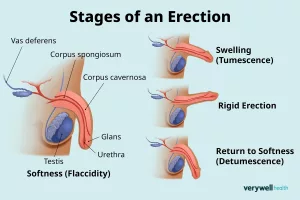
People often debate the average length of an erect penis (5.165 inches), yet far less is discussed about the typical length of the vaginal canal.
That’s possibly because, like many topics involving the vagina, it’s surrounded by misconceptions and folklore.
The typical vaginal canal measures about 3 to 6 inches, roughly the span of a hand. However, this isn’t fixed — its actual length can vary throughout the day.
For instance, sexual arousal causes the vaginal canal to lengthen. This change helps the cervix and uterus lift away from the canal so penetration feels more comfortable.
The vaginal canal changes in many ways, and no two are identical. Each person’s length, shape, and dimensions differ. All of these variations are normal.
And if you aren’t feeling pain or discomfort, it’s probably fine.
If you are having discomfort, it may not be due to a “shallow” vagina. An underlying condition could be making penetration painful.
Continue reading to understand why this can occur and what steps you can take to find relief.
If vaginal penetration is uncomfortable
You might assume painful penetration only happens during sex with someone who has a penis.

But penetration can be uncomfortable in other situations too.
For example, inserting a tampon, menstrual cup, or sex toy may cause pain.
Additional signs may include:
- resistance when attempting insertion
- increasing soreness
- deep pain during movement or thrusting
- burning or aching in the vaginal and groin area
- persistent throbbing while an object is inserted or during intercourse
Possible causes include:
- vaginal dryness
- infection
- tears or scar tissue
- fibroids
What you can do
If the discomfort with penetration isn’t due to a medical problem, you may be able to address the pain and unease on your own.
- Try a smaller size. If your menstrual flow is light compared with the tampon or cup size, insertion may lack sufficient lubrication. The same applies to sex toys — larger isn’t always better.
- Take it slow. Allowing more time lets both your mind and body prepare for insertion. If you’re with a partner, share what you’re feeling. You may need longer foreplay to become adequately aroused and produce natural lubrication for easier penetration.
- Use lubricant. Lubricant reduces friction and can make insertion smoother. It can help to put a little on the outside of your vulva and on the item you’re inserting.
- Relax your muscles. If insertion hurts, you may be subconsciously tensing. This is more likely if you’ve had previous problems and expect pain.
- Change position. Experimenting may help. If you’re not already, angle your menstrual product or toy toward your lower back rather than pushing straight upward into the body.
If vaginal penetration isn’t possible
If this is the first time insertion failed, it might not signal a serious problem.
Sometimes mental factors can prevent the body from performing what would otherwise be normal activity.
But if you frequently have trouble or have struggled with insertion before, consider seeing a doctor or another healthcare professional.
Occasionally, scarring, tight muscles, or another physical issue is to blame. It can also stem from past trauma or an underlying mental health concern.
Your clinician will ask about your symptoms and medical history to help identify the cause.
From there, they’ll collaborate with you to create a care plan aimed at easing symptoms and facilitating insertion or penetration.
What you can do
Your provider will tailor a care plan to your needs. They may suggest one or more of the following.
- Pelvic floor exercises. The vaginal canal is a long muscular tube. Like any muscle, it benefits from regular exercise. Without it, it may not function as expected, making penetration uncomfortable or impossible.
- Sex therapy. If worries about sexual intimacy are part of the issue, a sex therapist can help you explore thoughts and experiences in a supportive setting.
- Medical treatment.In some instances, medical conditions make penetration difficult or impossible. Your clinician might suggest topical treatments, oral medication, or other therapies to relax muscles and ease insertion.
Conditions that can cause the vagina to be shallow
After reviewing your symptoms, your doctor may identify one of the following diagnoses.
Vaginismus
Vaginismus is an involuntary response where vaginal muscles tighten automatically when something, such as a tampon, finger, or toy, is about to be inserted.
Treatment commonly involves a mix of pelvic floor exercises and sex therapy.
This combined approach helps you learn to relax pelvic muscles and address any psychological stresses contributing to the condition.
Your clinician might also suggest using a vaginal dilator to gradually increase comfort with penetration.
Tilted uterus
The uterus is a small organ located above the vagina and typically tilts forward toward the abdomen.
However, in nearly one-third of people, it tips toward the spine. This is called a tilted, tipped, or retroverted uterus.
A tilted uterus doesn’t shorten the vaginal canal, but it can make insertion or penetration awkward. Penetration from behind and deep thrusting may be particularly uncomfortable.
Your provider can recommend different angles or positions to try during intercourse or other forms of penetration. In some cases, exercises may help adjust the uterus’s position. In more severe situations, surgery might be discussed. Your doctor will outline options based on your specific case.
Vaginal stenosis
Vaginal stenosis refers to scar tissue forming within the vaginal canal.
Consequently, the vaginal opening and canal may narrow and shorten, making penetration more difficult or impossible.
Vaginal stenosis often results from radiation therapy; surgeries and injuries can also produce scar tissue.
Treatment focuses on keeping tissues flexible and preventing stiffness. Your clinician may advise using a vaginal dilator and doing pelvic floor exercises.
Additional lubrication may also help, since vaginal stenosis can reduce natural moisture.
MRKH syndrome
People born with Mayer-Rokitansky-Küster-Hauser (MRKH) syndrome have an underdeveloped or absent uterus and vaginal canal, despite having normal external genitalia and female chromosomes in many cases.

Some individuals with MRKH don’t discover the absent or underdeveloped reproductive organs until later, such as when menstruation doesn’t begin during puberty.
These anatomical differences can cause pain or prevent penetration, making sexual intercourse impossible in some instances.
Doctors may recommend dilation methods to help lengthen the vaginal canal toward average dimensions. Surgical creation of a vaginal canal may be considered in certain cases.
See a doctor or other healthcare provider
Intermittent pain or discomfort with penetration can happen, but if it affects daily activities or makes penetration impossible, book an appointment with a clinician.
Your provider will likely perform a physical exam to rule out infections or other conditions that could cause painful penetration.
Once the root cause is determined, your healthcare professional will work with you to create a treatment plan to relieve symptoms and reduce anxiety around penetration.




















Leave a Reply
You must be logged in to post a comment.