

The thoracic section of the spine comprises twelve vertebrae positioned between the cervical vertebrae (which start at the skull base) and the lumbar vertebrae. The sixth thoracic vertebra (T6), found just beneath the level of the scapulae, functions together with the other eleven thoracic segments to safeguard the spinal nerves.
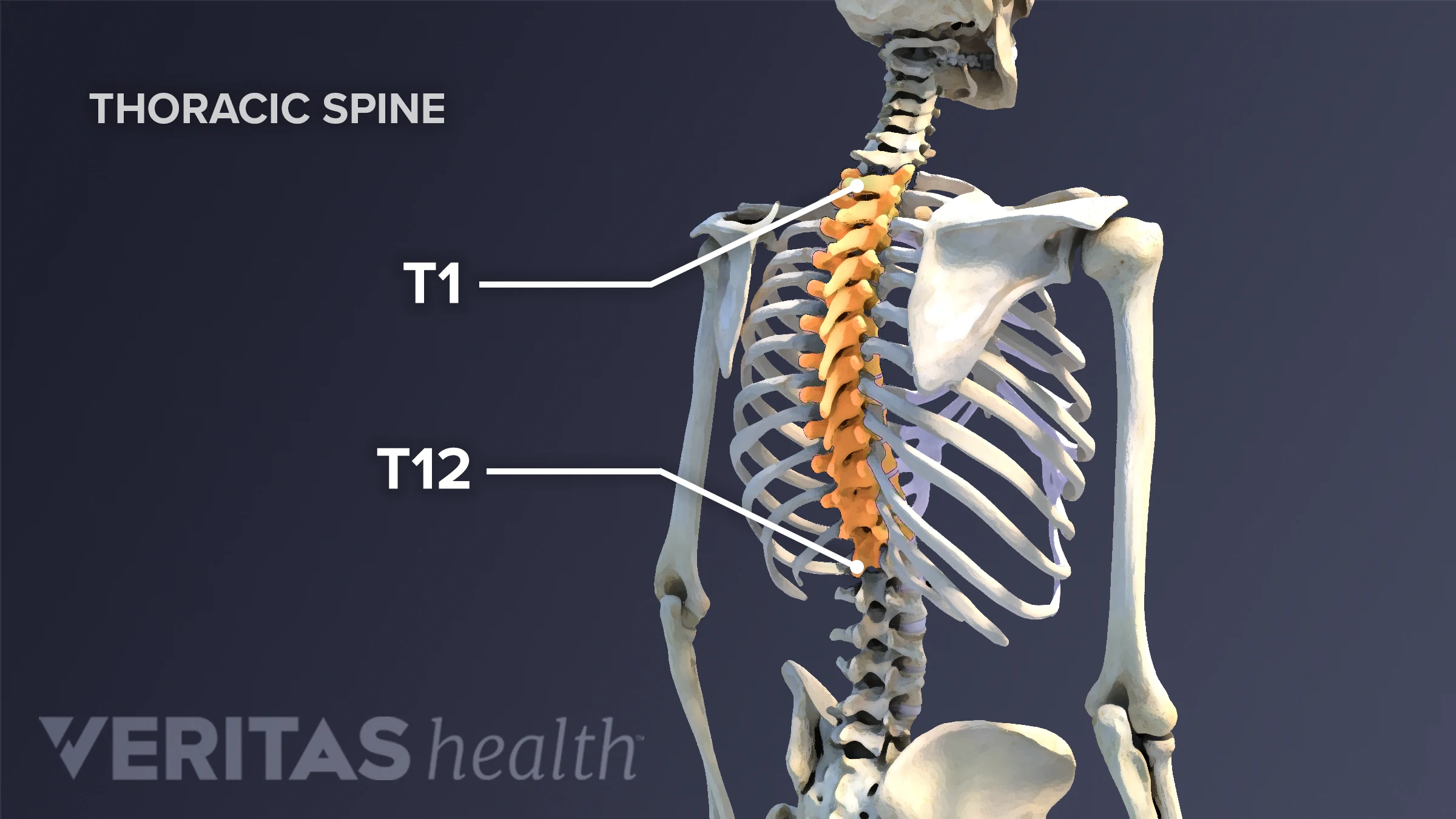
Each thoracic vertebra becomes progressively larger than the one above it, growing in diameter down the spinal column. Greater size enables a segment to bear more load. Every vertebra has two bony projections (pedicles) that surround the vertebral foramen — the hollow channel through which the spinal cord passes. In addition, vertebrae feature smaller openings called vertebral foramina or intervertebral foramina that accommodate the branching nerve roots.
The rib cage offers protection to the T6. However, this does not eliminate the possibility of injury or degenerative changes. Compression of neural elements, spinal stenosis, or disc herniation may produce referred pain, localized discomfort, episodes of numbness, and sensations of weakness. Given T6’s relative closeness to the upper abdominal area, trauma or irritation at this level can also lead to symptoms such as heartburn, dyspepsia, and indigestion — issues sometimes linked with disruption of the nerves supplying the stomach region. For related spinal shape issues, see dorsal hump.























Leave a Reply
You must be logged in to post a comment.