
Key takeaways
- A thrombotic stroke happens when a blood clot forms within an artery, cutting off blood supply to part of the brain. It’s the most frequent form of ischemic stroke.
- Thrombotic strokes can involve either large or small arteries, producing different signs and outcomes. Large vessel occlusions may lead to major injury, while lacunar strokes carry risks of recurrent strokes and cognitive decline.
- Controlling risk factors such as high blood pressure and cholesterol, together with rapid treatment using clot-dissolving drugs or mechanical clot removal, is vital for prevention and better recovery after a thrombotic stroke.
A thrombotic stroke is a variety of ischemic stroke. In this condition, a portion of the brain is damaged because an artery supplying it becomes obstructed, causing blood flow to drop or stop entirely.
Per the American Stroke Association, roughly 87% of strokes are ischemic. The remainder are most often due to bleeding within the brain from a ruptured vessel, known as a hemorrhagic stroke.
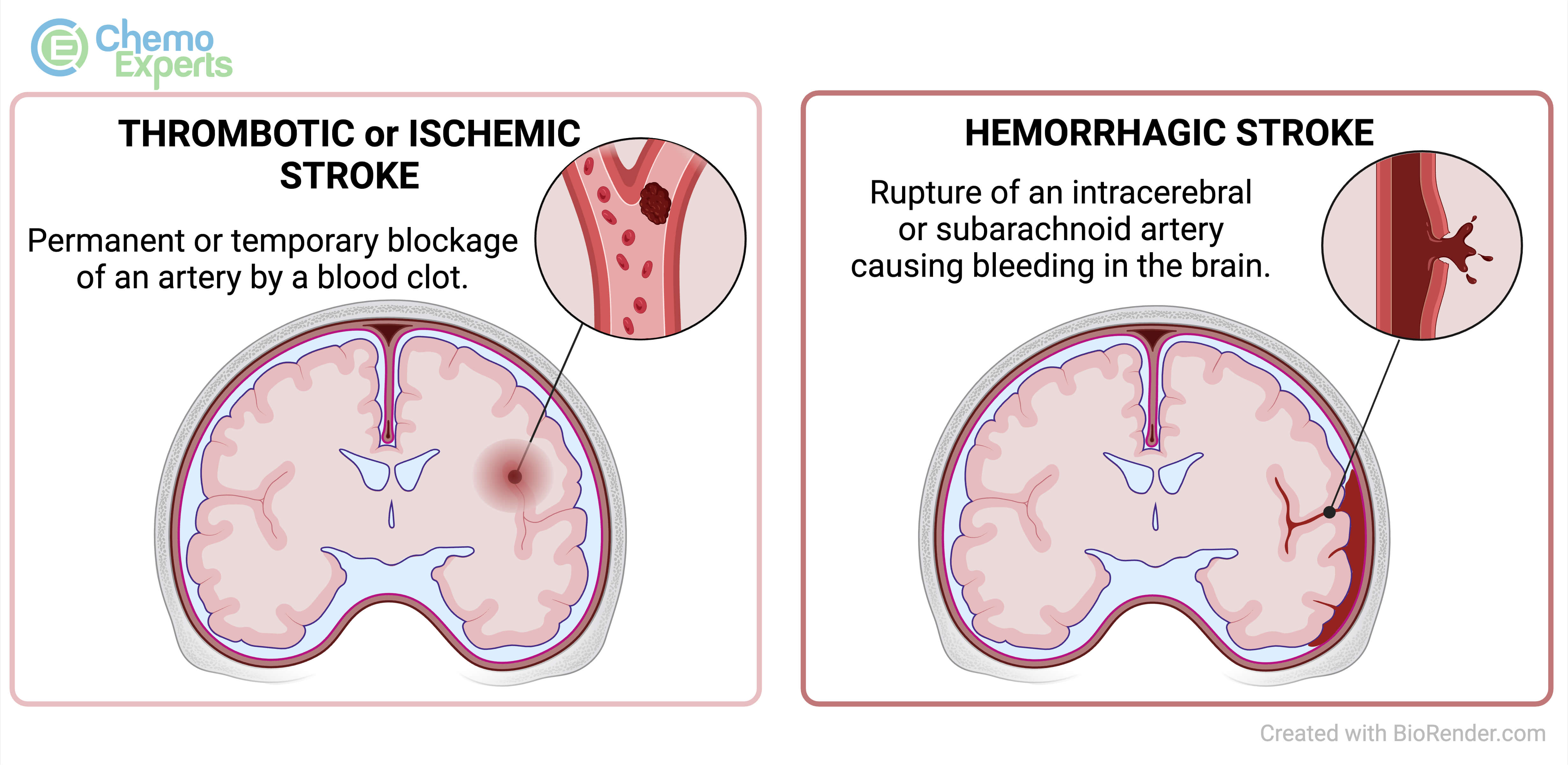
In a thrombotic stroke, an artery is blocked by a thrombus (a blood clot) that forms at that site.
How is a thrombotic stroke different from an embolic stroke?
The other main type of ischemic stroke is an embolic stroke. Here, the obstruction—called an embolus—arises elsewhere in the body and travels through the bloodstream to lodge in a brain artery, causing a blockage.
Embolic strokes commonly stem from obstructions in larger arteries because it’s harder for an embolus to reach very small vessels, although it can occur.
Thrombotic strokes, by contrast, can originate from blockages in either large or small cerebral blood vessels.
What types of thrombotic stroke are there?
Thrombotic strokes involve clots forming in either large or small arteries of the brain.
Large vessel thrombosis (LVO stroke)
Large arteries deliver blood to extensive regions of the brain. When a clot forms in one, the resulting injury can be substantial and impair key body functions.
Usually, fatty deposits (plaque) accumulate slowly over time without causing symptoms. Problems arise when a clot suddenly develops and occludes the artery.
A blockage in a large artery is termed a large vessel occlusion (LVO). LVO strokes account for 24–46% of ischemic strokes, although not every LVO results specifically from a thrombus.
Small vessel thrombosis (lacunar stroke)
Small arteries are located deep within the brain and supply blood to limited areas. When one of these becomes blocked, a lacunar stroke occurs.
Studies estimate that about 15–25% of ischemic strokes are lacunar.
What are the symptoms of a thrombotic stroke?
Common stroke signs may include:
- headache (more typical in hemorrhagic strokes)
- dizziness
- confusion
Occasionally, general symptoms are absent.
Signs of large vessel thrombosis and LVO stroke
Each bodily function—such as moving an arm, speaking, and maintaining balance—is controlled by a particular brain region. The symptoms during a large vessel thrombotic stroke depend on which brain areas are affected and how severe the injury is.
Symptoms of a large vessel thrombosis often appear suddenly, though they can develop gradually. They may include:
- weakness or paralysis of an arm, leg, or face on one side (hemiparesis)
- numbness or loss of sensation on one side of the body
- partial loss of vision in one or both eyes
- balance difficulties affecting walking, standing, and sitting upright
- trouble speaking clearly (dysarthria), trouble finding words, or difficulty understanding speech or text (aphasia)
- loss of coordination
Signs of small vessel thrombosis and lacunar stroke
Small vessel thrombosis frequently produces no symptoms until a lacunar stroke happens.
Lacunar strokes commonly present as one of five classic syndromes:
- pure motor hemiparesis: weakness or paralysis of the face (facial droop), arm, or leg
- pure sensory stroke: impaired sensation
- sensorimotor stroke: both weakness/paralysis and sensory loss
- ataxic hemiparesis: weakness with clumsiness in the arm or leg
- dysarthria-clumsy hand syndrome: trouble forming or pronouncing words and awkward hand movements
The symptoms of these syndromes typically affect only one side of the body.
What leads to a thrombotic stroke?
Thrombotic strokes occur when a thrombus obstructs an artery, depriving a portion of the brain of adequate blood flow.
A thrombus commonly forms because of the buildup of cholesterol and other substances—plaque—within the artery. This process is called atherosclerosis.
Your body interprets this plaque as an injury and deploys clotting elements to the area, forming a blood clot. If the clot enlarges sufficiently, it blocks the artery.
What increases the risk of a thrombotic stroke?
Risk factors for thrombotic stroke mirror those for atherosclerosis and include:
- high cholesterol
- high blood pressure
- cigarette smoking
- diabetes
- obesity
- physical inactivity
Your risk also rises if you or a family member has previously had a thrombotic stroke. Risk increases with age. Strokes are more frequent in men at younger ages and in women at older ages.
How is a thrombotic stroke treated?
The primary therapy for an ischemic stroke is a clot-dissolving drug called tissue plasminogen activator (tPA). Clinicians must give tPA within 4.5 hours of symptom onset. It breaks the clot apart and reopens the artery so blood can reach the brain again.
Physicians can deliver tPA intravenously or directly into the clot site by threading a catheter from the groin artery up to the brain.
When a large vessel thrombosis affects the carotid artery (in the neck) or the proximal middle cerebral artery, doctors often perform a mechanical thrombectomy after tPA if feasible. This needs to occur within 6–24 hours of the stroke.
During thrombectomy, a clinician extracts the clot and may place a stent to keep the vessel open. If tPA isn’t suitable, thrombectomy can be used alone to remove the blockage.
If you have high risk or a prior thrombotic stroke, your physician will likely prescribe an antiplatelet drug to reduce blood clotting and help prevent another stroke. These medications include:
- aspirin
- clopidogrel (Plavix)
- a combination of aspirin and dipyridamole (Aggrenox)
Although anticoagulants such as warfarin (Coumadin) are often used for embolic strokes, they are not typically the standard for thrombotic strokes.
What is the prognosis after a thrombotic stroke?
Complete recovery from a thrombotic stroke is possible if treatment restores blood flow within a few hours. Even so, long-term complications are common. A stroke can leave you unable to walk, speak, or think clearly.
Studies associate LVO strokes with poorer outcomes, including greater dependency and higher mortality.
Lacunar strokes generally have a better prognosis. Still, they’re tied to a notable risk of recurrent strokes, cognitive decline, and dementia.
The single most important determinant of outcome is how quickly the medical team can remove the clot and reopen the artery. If treatment is delayed, some or all symptoms may become permanent, or the stroke may be fatal.
With rapid recognition and therapy, clinicians can reduce damage. When injury is limited, it’s possible to regain some lost functions and achieve a more favorable recovery.
How can I lower my risk of a thrombotic stroke?
You can reduce your chance of a thrombotic stroke by addressing key modifiable risk factors. Actions include:
- reducing cholesterol levels
- controlling blood pressure
- managing diabetes if present
- quitting smoking
- keeping a healthy weight
- avoiding illicit drug use
Takeaway
A thrombotic stroke is caused by a clot forming within an artery that supplies the brain. These events can occur in large vessels (LVO strokes) or in small vessels (lacunar strokes). LVO strokes are typically more severe, though lacunar strokes can cause considerable harm, especially when multiple occur.
High blood pressure, elevated cholesterol, and diabetes are major risk factors for thrombotic stroke. Effectively managing these conditions can help lower your risk of this kind of stroke.
















Leave a Reply
You must be logged in to post a comment.