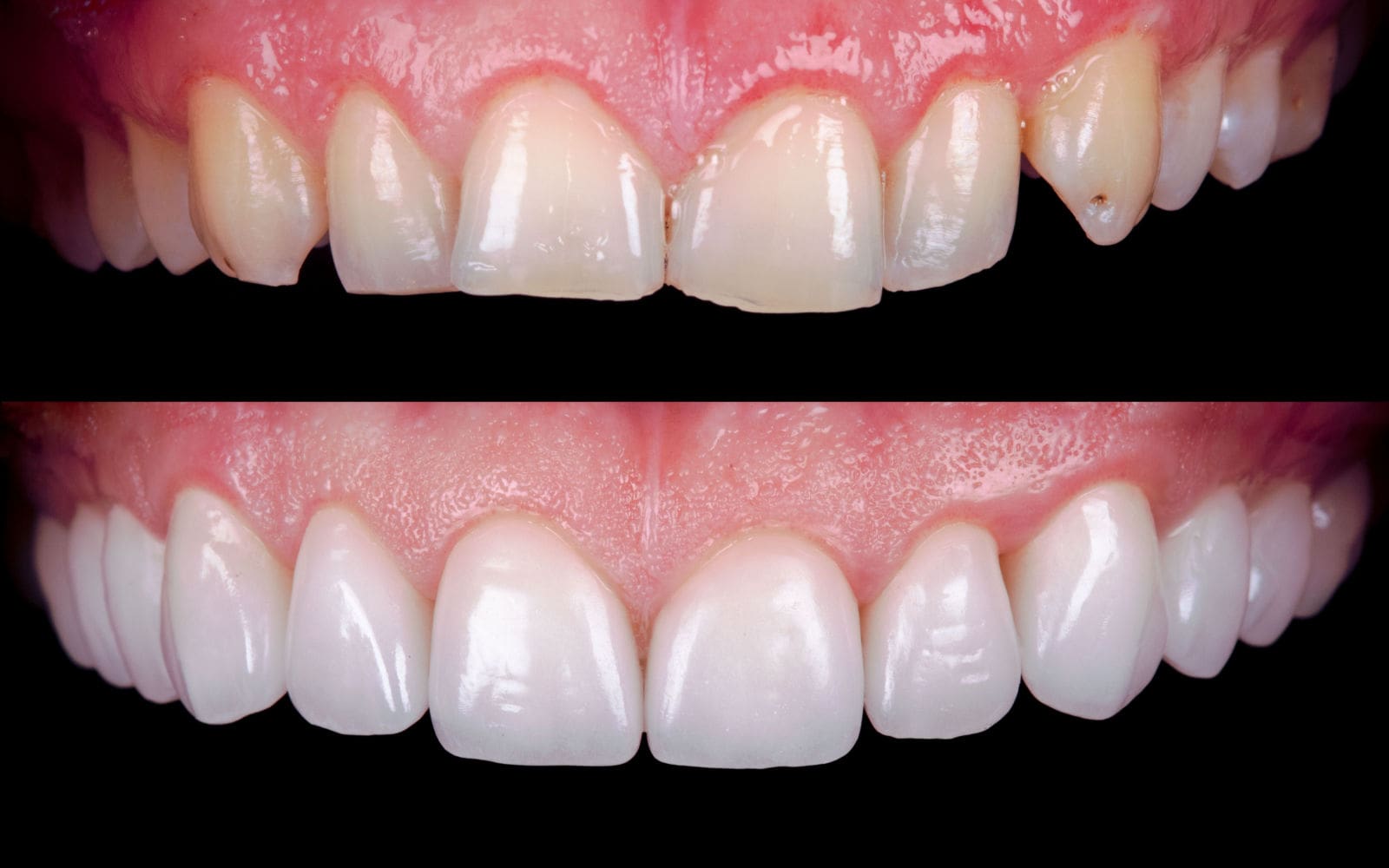
If your teeth are crooked, worn, discolored, damaged, or unhealthy, your dentist might suggest tooth or dental restoration. There are several restoration options you can consider.
Tooth restoration can recover the natural function of your teeth and help prevent further decay. These treatments can also improve the appearance of your teeth and may be sought for cosmetic reasons.
In many cases, a dental restoration procedure improves both the function and appearance of a tooth at the same time.
ADVERTISEMENT
Types of tooth restoration
Various treatments can restore the look and function of damaged teeth. The specific restoration you need depends on the kind and extent of dental damage present.
Common dental restoration procedures include:
Dental fillings
Fillings are used to fill a cavity caused by tooth decay. This is the most frequently performed type of tooth restoration.
Fillings are completed in a dental office and generally do not require a specialist.
Your dentist will remove the decayed material and fill the cavity. Different materials may be used for fillings, such as silver amalgam or composite resin.
If the tooth is near the front of your mouth and visible when you talk or smile, your dentist may suggest a tooth-colored filling. Options include:
Composite resins (white filling): A newer filling material preferred over amalgam for several reasons. They match tooth color and do not expand and contract like metal fillings, which can reduce tooth damage. Yet they are similarly strong and durable.
Glass ionomer: This material behaves more like a sealant than composite resin and is opaque.
Resin-modified glass ionomer: Similar to glass ionomer but with a more enamel-like shade to match natural teeth and improved longevity.
Discuss with your dental professional which filling material is best for your situation.
Crowns
Dental crowns are caps that cover an entire tooth. Crowns are used to protect:
teeth with cavities too large for fillings
weak or cracked teeth
worn teeth
a tooth that’s vulnerable after a root canal
They also help anchor bridges that replace missing teeth.
Crowns are placed by a dentist or a prosthodontist. Your dentist may be able to fabricate a crown in-office.
Often, a dental professional will take an impression of the tooth and send it to a lab where the crown is made. A temporary crown is commonly placed until the permanent crown is ready.
Implants
Implants are artificial roots that support replacement teeth like crowns or bridges. Two main types are:
Endosteal: The artificial root is placed into the jawbone.
Subperiosteal: The implant is positioned on or above the jawbone; this is used when the jawbone lacks sufficient healthy structure for an endosteal implant.
Dental implants look and feel like natural teeth and can improve your bite and speech.
Implant treatment involves several procedures and can take months to complete, but implants may last for decades.
Oral surgeons and periodontists typically perform implant procedures.
Cost
The cost of tooth restoration varies by procedure type, your location, and any dental insurance coverage you have.
Dental insurance plans differ in coverage. Check what your plan will pay for your intended procedure. Some plans cover certain restorations but not others, which may influence your choice.
Some insurers have annual or lifetime maximums and may impose waiting periods before coverage begins.
Fillings are frequently covered at least in part by dental plans. If paying out of pocket, cost depends in part on the material used.
The size and location of the cavity affect price. Generally, expect to pay about $150 to $400 for a filling. X-rays and extras like additional anesthesia may increase this cost.
Dental crowns
Crowns may be partially covered by dental insurance if deemed medically necessary. Cosmetic crowns may not be covered.
Crowns can be costly if you pay the full price; a single crown typically ranges from $800 to $2,000 depending on materials.
Implants
Many dental plans do not fully cover implants, though some may provide partial coverage for certain parts of the process.
Implants can cost $3,000 to $6,000 per tooth when paid out of pocket.
Bridges
Insurance often covers around 50 percent of bridge costs. The total depends on how many teeth are being replaced and the bridge type.
Expect to pay roughly $2,000 to $5,000 per bridge.
Dentures
Dental plans commonly cover about 50 percent of denture costs. Without insurance, a partial denture may cost $900 to $1,500, while a full denture may run $1,500 to $2,000 or more.
Veneers
Veneers are usually considered cosmetic and are seldom covered by insurance. Prices typically fall between $900 and $2,500 per tooth.
Bonding
Bonding is sometimes regarded as cosmetic and may not be covered. Check your plan before proceeding.
Without insurance, bonding usually costs about $300 to $600 per tooth.
ADVERTISEMENT
Can tooth enamel be restored?
Lost tooth enamel cannot be restored. Dental restoration treats weakened or damaged teeth but cannot replace enamel that has been lost.
Remineralization
Weakened enamel can be strengthened by increasing its mineral content through remineralization.
Home strategies to help strengthen enamel include:
Brush with a remineralizing toothpaste, such as fluoride toothpaste.
Chew sugar-free gum to boost saliva production, helping neutralize acids that erode teeth.
Drink plenty of water, especially tap water that contains fluoride.
Avoid sugary foods and beverages that contribute to enamel erosion.
Sealants
For children in particular, a dentist may suggest sealants be applied to the back teeth.
Sealants help prevent enamel loss but do not restore enamel that’s already gone.
Sealants are bonded to each tooth and cured with ultraviolet light, and they typically remain for several years.
Sealants contain a trace amount of bisphenol A (BPA). The tiny exposure is generally outweighed by the benefits, and most BPA is gone within hours after placement. 2016 research indicates they are generally considered safe.
How can you restore teeth color?
If your teeth are discolored, you may try natural at-home methods or over-the-counter products like whitening strips or gels.
Tray-based bleaching can produce more noticeable whitening. These trays, which fit over your teeth, use a peroxide-based gel and may be custom-made by a dentist or bought over the counter.
In-office whitening usually yields the most dramatic outcome. Your dentist applies a stronger bleaching agent alongside light or heat to whiten teeth.
ADVERTISEMENT
When to talk with a professional
Regular dental visits help you stay ahead of dental issues.
Teeth that hurt or bleed should be evaluated promptly. Signs of infection, such as drainage or swelling, need immediate attention.
If you have cracked, discolored, chipped, or missing teeth, consult your dentist about restoration options that can improve appearance and prevent further damage.
The bottom line
Tooth restoration can be performed for cosmetic or medical reasons. Multiple types of restorations are available depending on your dental needs.
Restoration can create a more even smile and restore natural tooth function, making chewing and speaking easier.
If you have dental insurance, it may cover part of the cost for many tooth restoration procedures.
ADVERTISEMENT
Frequently Asked Questions
What is tooth restoration?
Tooth restoration refers to dental procedures that repair or replace damaged, decayed, or missing teeth to restore function and appearance.
How long do common restorations last?
Longevity varies: fillings can last 5–15 years, crowns 5–15+ years, veneers 5–15 years, implants decades, and dentures/bridges depend on care and materials.
Is tooth restoration painful?
Most restorations are performed with local anesthesia, so discomfort is minimal during the procedure; mild soreness afterward is common and temporary.
Will my insurance cover tooth restoration?
Coverage depends on your plan and whether the procedure is deemed medically necessary; cosmetic procedures are less likely to be fully covered.
Can tooth enamel be fully restored?
Lost enamel cannot be fully replaced, but enamel can be strengthened via remineralization, sealants, and protective treatments to prevent further loss.
Share this article:
Disclaimer: This article is for informational purposes only and is not intended as medical advice. Please consult a healthcare professional for any health concerns.


 Cost
Cost





















Leave a Reply
You must be logged in to post a comment.