

If you’re curious about getting a “tattooth,” the trending (though not exactly new) dental fad, note that calling it a “tattoo” is a bit misleading.
Tooth tattoos don’t involve injecting ink into your teeth like you would skin. Instead, a dentist decorates a dental crown with the design before placing it on your tooth. In short, you need a crown to get a tooth tattoo.
The idea of embellishing teeth goes back a long way. Ancient Maya dental practitioners set gems and metals into teeth, and in historic Japan and other parts of Asia many women used ohaguro, a practice of blackening teeth as a beauty custom.

Are they safe?
To be clear: it’s unsafe to tattoo your natural teeth.
Conventional tattoos use needles to deposit ink into the dermis, the skin layer beneath the outer epidermis. Teeth don’t have skin.
They’re shielded by enamel, so realistically you can’t tattoo them in the way you tattoo skin. Trying to do so would likely damage the tooth and cause significant pain.
When it comes to decorated dental crowns, there’s no robust clinical research yet affirming the safety of so-called tooth tattoos. That said, there’s also no clear evidence they’re harmful.
How do you get them?
First, you go to a dentist rather than a tattoo parlor. Not every dental office offers tooth tattooing, so you’ll need to find a practice that does.
After locating a provider, schedule a consultation. Before selecting a design, you’ll probably undergo an oral exam to confirm you’re suitable for a tooth tattoo.
Dental crowns are caps fitted over fractured, damaged, or heavily worn teeth. Crowns are also commonly used after root canal therapy to strengthen and protect the remaining tooth.
What does the procedure involve?
Crowns can be fabricated from several materials, but for a tooth tattoo you’ll need a ceramic or porcelain crown.
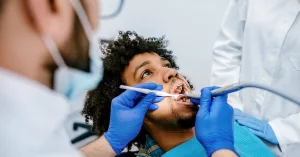
Once the dentist confirms you’re a good candidate for a crown:
- They’ll prepare the tooth by removing decay and shaping it to serve as a foundation for the crown.
- They’ll take an impression of the prepared tooth and the surrounding teeth.
- A temporary crown will be placed to protect the tooth while the final crown is fabricated.
- You’ll select the design for your tooth tattoo.
- The dentist sends the impression to a lab where a technician applies the design to the crown and seals it with a protective glaze.
- Typically after about two weeks, you return to have the temporary crown removed and the permanent, decorated crown cemented in place.
Do you need to do anything afterward?
Aftercare for a tooth tattoo closely mirrors the care you’d give any dental restoration. Your dentist will provide specific guidance for the first day or two.
In general, the more diligent you are with oral care, the longer the crown will endure.
To help your crown last:
- Maintain good oral hygiene by brushing gently twice daily.
- Floss every day — it won’t harm a permanent crown.
- Avoid biting very hard foods or chewing on ice, especially with porcelain crowns.
- If you grind or clench at night, discuss a mouth guard with your dentist.
Do they hurt?
Getting a tooth tattoo likely won’t be more painful than receiving a standard crown, a procedure that is usually comfortable thanks to local anesthetic and sometimes sedation. Pain experiences vary by individual.
You might feel mild discomfort during a root canal or while the tooth is being prepared for a crown.
Topical and injected anesthetics typically do a good job of controlling pain.
After the numbing wears off, you may notice some soreness. Pain tolerance differs among people, but over-the-counter analgesics and warm saltwater rinses generally manage it well.
Are there any risks?
There hasn’t been specific research into the risks of tooth or crown tattoos. Dental professionals generally advise against unnecessary modifications to teeth unless done by licensed practitioners.
Receiving a crown from an experienced dentist is usually safe, but as with any dental procedure, there are potential complications.
These can include:
- tooth sensitivity
- gum inflammation or disease
- a chipped or loose crown
If a crown is placed after a root canal, infection is another potential complication — a risk associated with the root canal procedure itself, not the decoration on the crown.
How long do they last?
The artwork should endure for the life of the crown — commonly 10 to 15 years, according to 2018 research. Longevity depends on factors like correct fit, placement, and your oral care habits.
“The tattoos are permanent and encased in a layer of clear glaze,” says Brian Sperry, a ceramist who produces crown tattoos for D&S Dental Laboratory.
“They won’t fade but can be chipped if the crown is mistreated or exposed to excessive wear beyond normal chewing. In my direct experience this has occurred only once,” Sperry adds.
Keeping up good oral hygiene will help extend your crown’s lifespan.
If you decide you no longer want the tooth tattoo, a dentist can remove the design by gently grinding the crown for a few minutes.
How much do they cost?
Price varies with the complexity of the design, but the decoration itself usually starts at about $150.
That fee does not include the cost of the crown, the dental procedure, or related items such as X-rays or a root canal.
The bottom line
Technically, tooth tattoos aren’t tattoos in the traditional sense.
If you’re bummed you can’t get a gnarly tooth tat without a crown, take comfort in the fact your natural teeth are untouched and you avoid a dental intervention — silver lining, right?




















Leave a Reply
You must be logged in to post a comment.