
It’s entirely feasible to craft bar soap in your own kitchen using items like lye and oils. Sticking to a recipe and understanding the necessary safety steps can make soap-making enjoyable and generally safe.
You can buy many soaps at stores, but creating soap yourself is an option too. Producing a gentle soap can be both enjoyable and economical. Additionally, you get to pick the components and fragrances to suit your tastes.
Continue reading for guidance on homemade soap-making and a starter recipe.
Bar soap making: The essentials
Strictly speaking, soap is a fat or oil combined with an alkali. The fat usually comes from an animal or plant source, while the alkali is a chemical known as lye. In solid soap production, the lye used is sodium hydroxide.
Heating and combining oil with lye produces soap through a chemical process called saponification. Saponification can’t occur without lye, so lye is essential to make soap.
A word about lye
Many people worry about lye. This highly caustic material can irritate skin, eyes, and lungs on its own. Still, when handled correctly, saponification converts lye into soap. Properly made soap will not retain any free lye.
Basic soap-making supplies and tools
Here are common soap-making supplies, many of which are available online:
- kitchen scale
- stainless steel pot or container
- glass container
- candy thermometer reserved for soap-making
- soap molds
- soap cutter
- Pyrex measuring cup
Avoid aluminumDo not use aluminum or tin vessels when working with lye, as this can be unsafe.
Soap-making safety gear
You’ll also want safety items, such as:
- safety goggles
- rubber or latex gloves
- oven mitts
- long-sleeved shirt to shield your arms
- apron
- a well-ventilated workspace
Basic ingredients
To create a DIY soap using coconut and olive oils, you’ll need:
- 7 ounces (oz.) coconut oil
- 17 oz. olive oil
- 2 oz. grapeseed oil
For the lye solution, gather:
- 78 grams (g) sodium hydroxide (NaOH)
- 215 g filtered water
Figuring fat-to-lye ratios
While you can scale ingredients to make smaller or larger batches, it’s crucial to compute a safe lye amount. The correct lye quantity depends on the kind and amount of oil you use.
Always determine the lye amount using an online lye calculator.
Bar soap for beginners
There are two main ways to make solid soap from scratch:
- Hot process: In hot process soap-making, external heat speeds up saponification. It cures faster than cold-process soap, so you can use it sooner after making it.
- Cold process: Cold process relies on the heat generated internally during saponification. The bars typically harden in about 6 weeks. Although it takes longer to cure, cold-process soap is often more moisturizing.
Below are instructions for the cold process method.
Directions
Per Stephanie Rose, creator of the Garden Therapy blog and author of several DIY books, follow these steps to make homemade bar soap:
- Put on your protective gear and weigh out all ingredients.
- Gently warm the oils in a stainless steel pot on the stove until they reach 115ºF (46ºC).
- Pour room-temperature water into a Pyrex measuring cup or heatproof glass bowl. While stirring, very slowly add the lye to the water. Always add lye into water — never pour water into lye, as that can be hazardous.
- The lye-water mix will become very hot. Stir until dissolved, then set the cup or bowl into an ice bath and cool it to 115ºF (46ºC).
- Once both the lye solution and the oils are at 115ºF (46ºC), slowly pour the lye solution into the oils. Stir briskly in circular motions until the mixture thickens.
- At this point you may add essential oils or natural colorants. Add them promptly as the mixture begins to thicken.
- Pour the batter into molds and smooth the tops. Wrap the molds in towels and set them on top of the refrigerator for 48 hours.
- After 48 hours, unmold the soap. Slice with a soap cutter, then place the bars on a wire rack. Let them cure for 6 weeks.
Reminder: Never add water to lye, since this can trigger a dangerous reaction. Always slowly add the lye to the water.
Soap-making tips
- Work in a ventilated area when preparing lye.
- When combining lye and water, avoid touching the container with bare hands or inhaling the fumes.
- Mix the lye solution and oils when both are around 115ºF. If the temperatures are too high, it can be unsafe.
- Never eat soaps or any raw ingredients. Soap can be highly toxic if consumed.
When working with essential oils:
- The drop count will depend on the oil’s potency and your preference. Fragrance oils tend to be stronger, so start
It’s entirely feasible to craft bar soap in your own kitchen using items like lye and oils. Sticking to a recipe and understanding the necessary safety steps can make soap-making enjoyable and generally safe.
You can buy many soaps at stores, but creating soap yourself is an option too. Producing a gentle soap can be both enjoyable and economical. Additionally, you get to pick the components and fragrances to suit your tastes.
Continue reading for guidance on homemade soap-making and a starter recipe.
Bar soap making: The essentials
Strictly speaking, soap is a fat or oil combined with an alkali. The fat usually comes from an animal or plant source, while the alkali is a chemical known as lye. In solid soap production, the lye used is sodium hydroxide.
Heating and combining oil with lye produces soap through a chemical process called saponification. Saponification can’t occur without lye, so lye is essential to make soap.
A word about lye
Many people worry about lye. This highly caustic material can irritate skin, eyes, and lungs on its own. Still, when handled correctly, saponification converts lye into soap. Properly made soap will not retain any free lye.

(img by VINEVIDA) ADVERTISEMENTBasic soap-making supplies and tools
Here are common soap-making supplies, many of which are available online:
- kitchen scale
- stainless steel pot or container
- glass container
- candy thermometer reserved for soap-making
- soap molds
- soap cutter
- Pyrex measuring cup
Avoid aluminumDo not use aluminum or tin vessels when working with lye, as this can be unsafe.
Soap-making safety gear
You’ll also want safety items, such as:
- safety goggles
- rubber or latex gloves
- oven mitts
- long-sleeved shirt to shield your arms
- apron
- a well-ventilated workspace
Basic ingredients
To create a DIY soap using coconut and olive oils, you’ll need:
- 7 ounces (oz.) coconut oil
- 17 oz. olive oil
- 2 oz. grapeseed oil
For the lye solution, gather:
- 78 grams (g) sodium hydroxide (NaOH)
- 215 g filtered water
Figuring fat-to-lye ratios
While you can scale ingredients to make smaller or larger batches, it’s crucial to compute a safe lye amount. The correct lye quantity depends on the kind and amount of oil you use.
Always determine the lye amount using an online lye calculator.
Bar soap for beginners
There are two main ways to make solid soap from scratch:
- Hot process: In hot process soap-making, external heat speeds up saponification. It cures faster than cold-process soap, so you can use it sooner after making it.
- Cold process: Cold process relies on the heat generated internally during saponification. The bars typically harden in about 6 weeks. Although it takes longer to cure, cold-process soap is often more moisturizing.
Below are instructions for the cold process method.
Directions
Per Stephanie Rose, creator of the Garden Therapy blog and author of several DIY books, follow these steps to make homemade bar soap:
- Put on your protective gear and weigh out all ingredients.
- Gently warm the oils in a stainless steel pot on the stove until they reach 115ºF (46ºC).
- Pour room-temperature water into a Pyrex measuring cup or heatproof glass bowl. While stirring, very slowly add the lye to the water. Always add lye into water — never pour water into lye, as that can be hazardous.
- The lye-water mix will become very hot. Stir until dissolved, then set the cup or bowl into an ice bath and cool it to 115ºF (46ºC).
- Once both the lye solution and the oils are at 115ºF (46ºC), slowly pour the lye solution into the oils. Stir briskly in circular motions until the mixture thickens.
- At this point you may add essential oils or natural colorants. Add them promptly as the mixture begins to thicken.
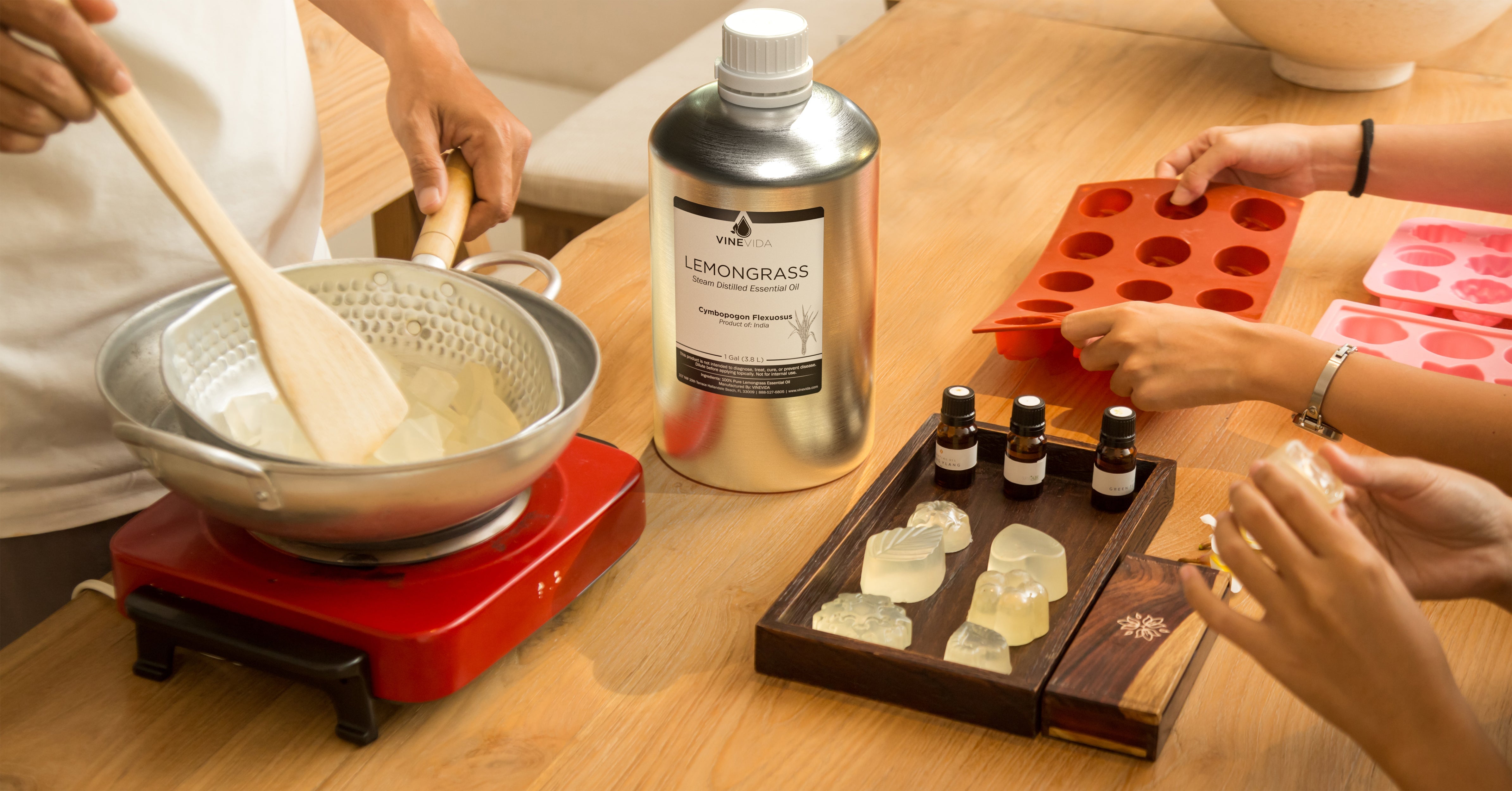
- Pour the batter into molds and smooth the tops. Wrap the molds in towels and set them on top of the refrigerator for 48 hours.
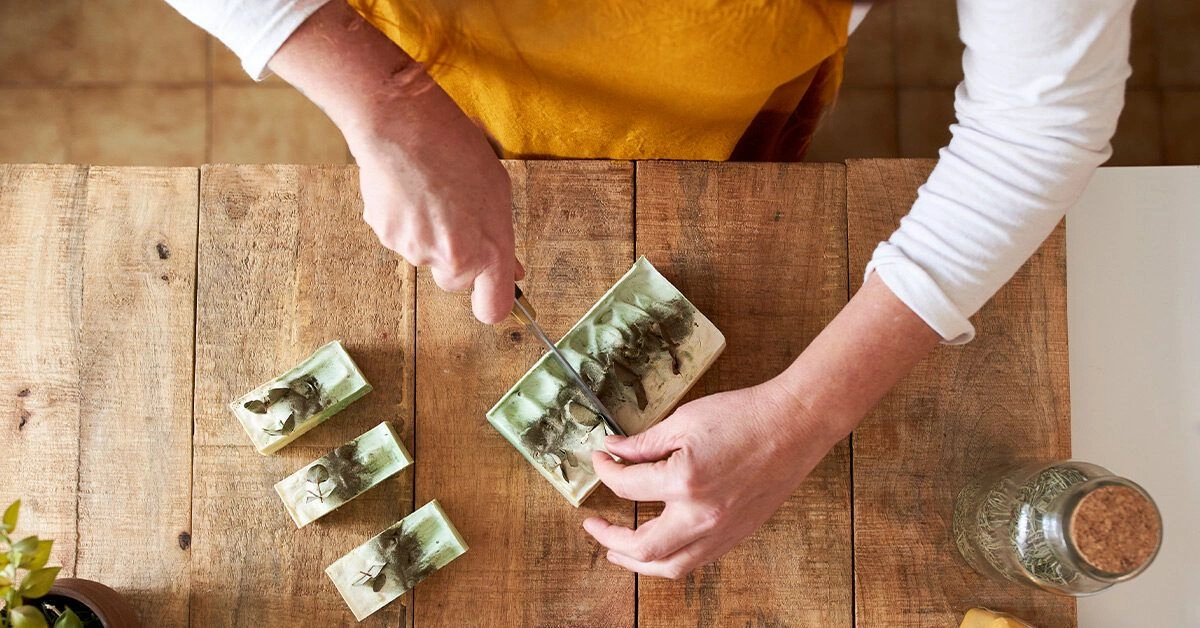
- After 48 hours, unmold the soap. Slice with a soap cutter, then place the bars on a wire rack. Let them cure for 6 weeks.
Reminder: Never add water to lye, since this can trigger a dangerous reaction. Always slowly add the lye to the water.
Soap-making tips
- Work in a ventilated area when preparing lye.
- When combining lye and water, avoid touching the container with bare hands or inhaling the fumes.
- Mix the lye solution and oils when both are around 115ºF. If the temperatures are too high, it can be unsafe.
- Never eat soaps or any raw ingredients. Soap can be highly toxic if consumed.
When working with essential oils:
- The drop count will depend on the oil’s potency and your preference. Fragrance oils tend to be stronger, so start with fewer drops.
- It’s often wise to stick with a single scent and one colorant until you learn how they influence the final soap.
ADVERTISEMENTChoosing soap ingredients
The core ingredients in soap are:
- animal fat or vegetable oil
- 100% pure lye
- distilled water
- essential or skin-safe fragrance oils (optional)
- colorants (optional)
Fats and oils
Your choice of fat or oil depends on personal preference. Historically, soap used animal fats, but many makers use plant oils today.
The type of oil influences the bar’s hardness and lather. Common fats and oils for soap-making include:
- lard
- tallow
- olive oil
- coconut oil
- avocado oil
- almond oil
- jojoba oil
- hemp oil
- cocoa butter
- mango butter
- shea butter
Use fats from animal or plant sources only. Petroleum-based oils are not suitable for soap-making.
Water
Water is a crucial element. It’s used to dissolve the lye, which is then combined with oil. The water facilitates saponification, and most of it will evaporate as the soap hardens.
Distilled water is recommended. Some soap-makers substitute other liquids like:
- tea
- coffee
- beer
- goat’s milk
- coconut milk
These alternatives can be more difficult for novices, so beginners may prefer to use water for their first batches.
Scents
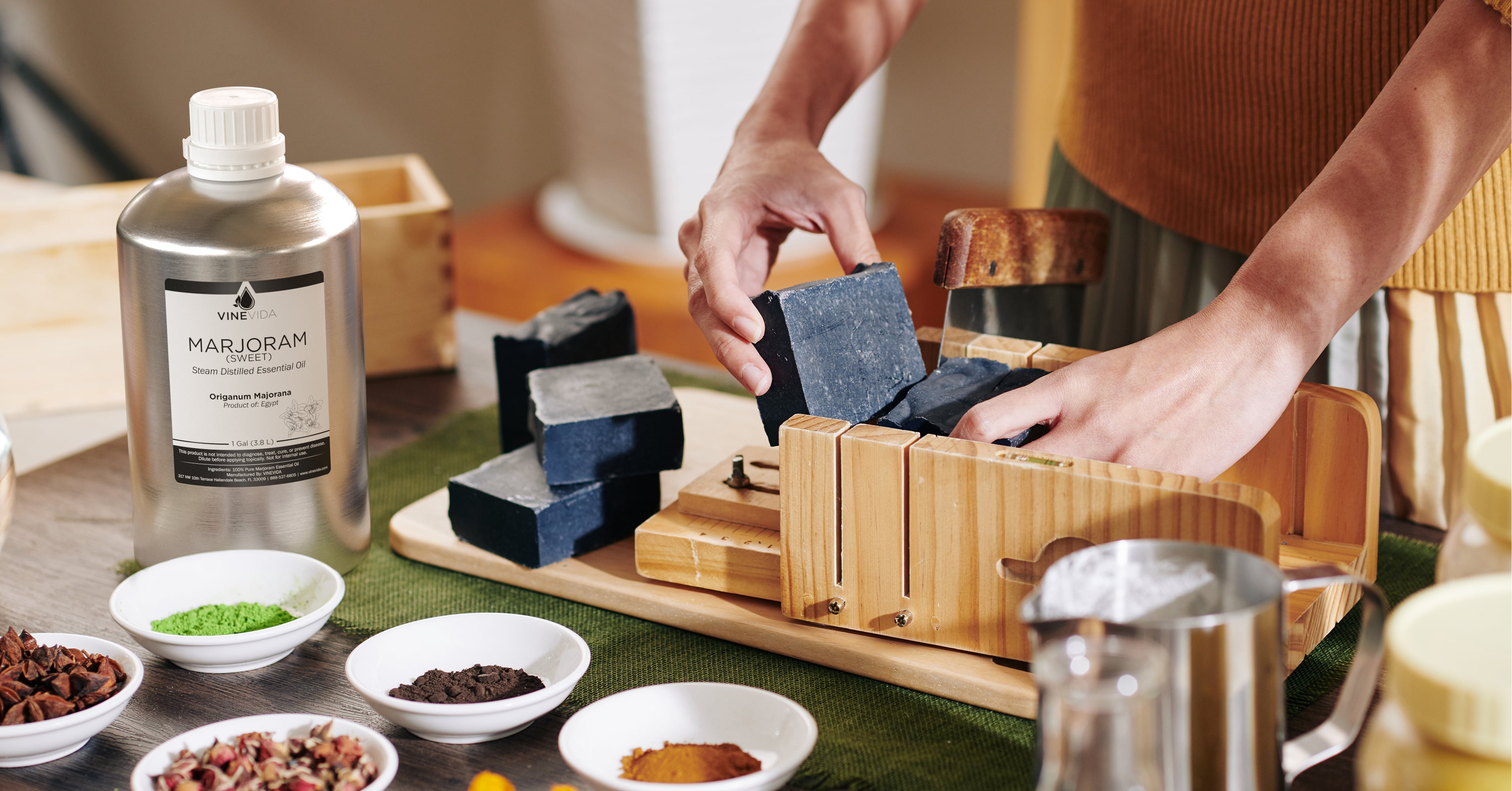
Soap doesn’t require fragrance to clean skin. If you want a pleasant aroma, use essential oils or fragrance oils.
Essential oils are mainly plant-derived and can be blended for unique scents. Fragrance oils are synthetic — choose skin-safe varieties when using them.

(img by VINEVIDA) Creating your own formula
Following established recipes is useful for beginners. Before designing your own formulations, familiarize yourself with soap-making fundamentals.
Experimentation adds enjoyment, but building a foundation of basic experience helps you safely handle ingredients and prevents creative experiments from becoming unsafe.
Tips to remember:
- Using recipes teaches proper lye-to-oil ratios to avoid producing irritating soap. For example, crumbly bars often mean too much lye.
- Different oils yield different results. Trying recipes with various oils helps you learn what each oil contributes, allowing safer experimentation later.
- Tweaking fragrances, oil types, and liquid substitutes in tried-and-true recipes can help you develop your own blends.
Keep in mind: An online lye calculator will help you safely match ingredient proportions to your intended outcome.
ADVERTISEMENTThe bottom line
Making bar soap at home is a creative way to produce natural, gentle bars.
Always use proper safety precautions and take your time. If you want hands-on instruction, consider enrolling in a soap-making class.
Frequently Asked Questions
Do I need lye to make bar soap?
Is soap-making dangerous for beginners?
Which method is better for beginners: hot process or cold process?
What oils should I use for a basic bar soap?
How long does homemade soap need to cure before use?


















Leave a Reply
You must be logged in to post a comment.