
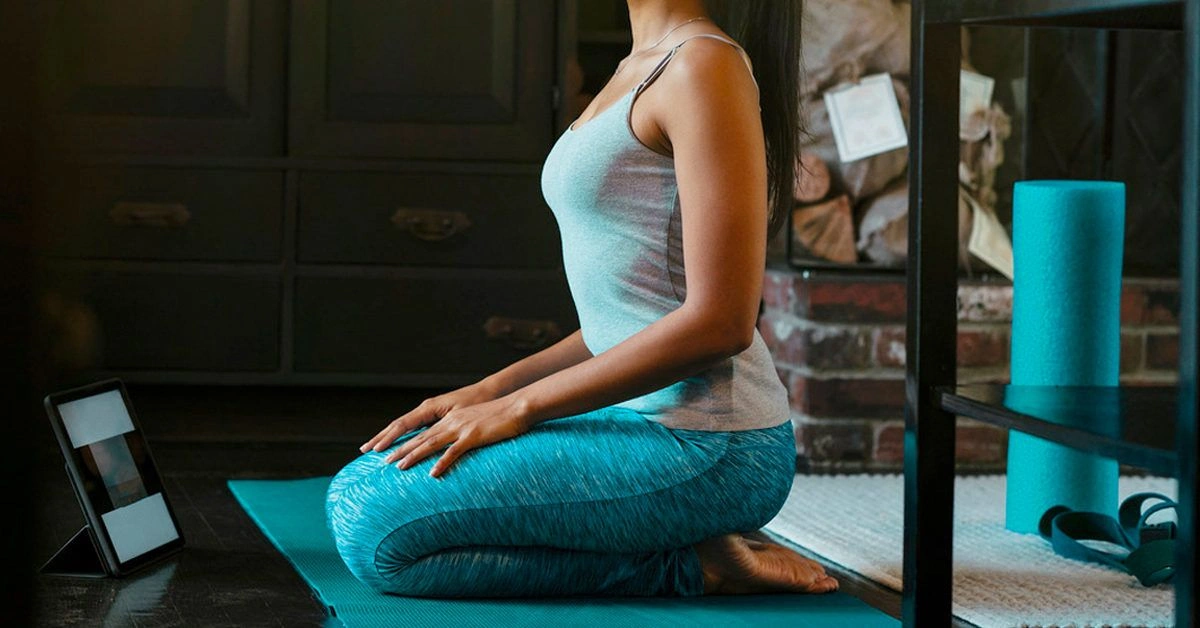
Sitting on the knees is a posture in which the knees are bent and the legs tucked beneath the body. The tops of the feet face the floor while the buttocks rest atop the heels.
This way of sitting is familiar to many people — children often adopt it at school or during play. It’s also part of some cultural practices, such as the Japanese “seiza” position, a formal traditional posture.
Although sitting on the knees is common, doing it frequently may have downsides for your health, particularly if you already have knee issues.
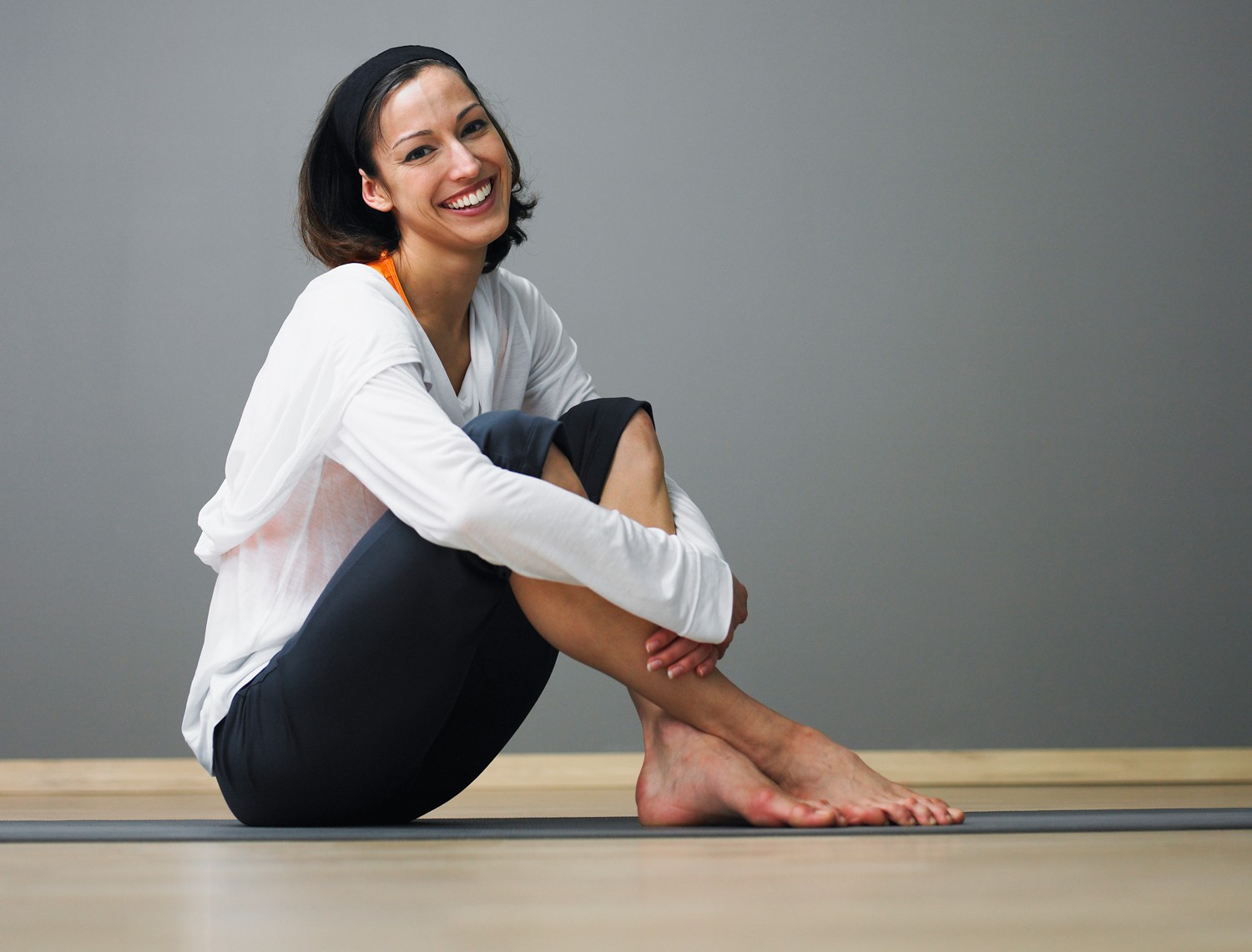
Is sitting on your knees beneficial for your body?
Occasionally sitting on your knees is generally harmless. However, making this your regular sitting habit can contribute to health concerns.
Sitting with your legs folded underneath you can:
- Increase pressure on your knees. Deep knee flexion can irritate the cartilage around the kneecap, especially when sitting on a hard surface.
- Stress the ankles. The weight of your torso also places force on the ankle joints.
- Impair blood flow. The weight of your upper body compresses the lower legs, which can obstruct circulation. The calf muscles may receive less oxygen as a result.
- Aggravate existing joint problems. If you already have knee or ankle conditions, sitting on your knees can exacerbate symptoms.
Why might my knees hurt after sitting with legs folded under me?
If sitting on your knees causes pain, several factors may be involved, such as:
Muscle tightness
Your hip flexors (front of the hip) and quadriceps (front of the thigh) help stabilize and extend the knee joint.
If these muscles are overly tight, the leg can become overextended, reducing the knee’s capacity to flex comfortably. That added pressure when you sit on your legs can produce pain and discomfort.
Patellofemoral syndrome
Patellofemoral syndrome involves pain around the patella (kneecap) and can arise from:
- overuse
- poor leg alignment
- muscular imbalances
- weak quadriceps
These factors irritate the ligaments and tendons attached to the kneecap and the cartilage beneath it. Folding your legs underneath you may further aggravate this irritation.
Osteoarthritis
Osteoarthritis is chronic joint degeneration and inflammation. Repeated kneeling or frequent deep knee flexion increases the likelihood of developing osteoarthritis.
If you have osteoarthritis, joints may feel:
- stiff
- swollen
- painful
While any joint can be involved, the knees are commonly affected. Osteoarthritis in the ankles can also produce knee-related symptoms.
Knee bursitis
A bursa is a fluid-filled sac that cushions tissues. Your body contains over 150 bursae, including several around the knee.
When a knee bursa becomes inflamed, it’s known as knee bursitis. This leads to:
- pain
- swelling
- tenderness
Frequently kneeling on hard surfaces increases friction over the bursa, resulting in inflammation and discomfort.
Patellar tendonitis
Patellar tendonitis refers to inflammation of the tendon linking the kneecap to the shinbone. It causes knee pain during activities such as kneeling or climbing stairs.
This condition often stems from overuse. Tightness in the hamstrings and quadriceps can raise the risk.
Quadriceps tendonitis
Likewise, the tendon that connects the kneecap to the thigh muscles can become inflamed, a condition called quadriceps tendonitis, typically due to overuse.
With quadriceps tendonitis, you may notice knee pain after sitting with your legs under you.
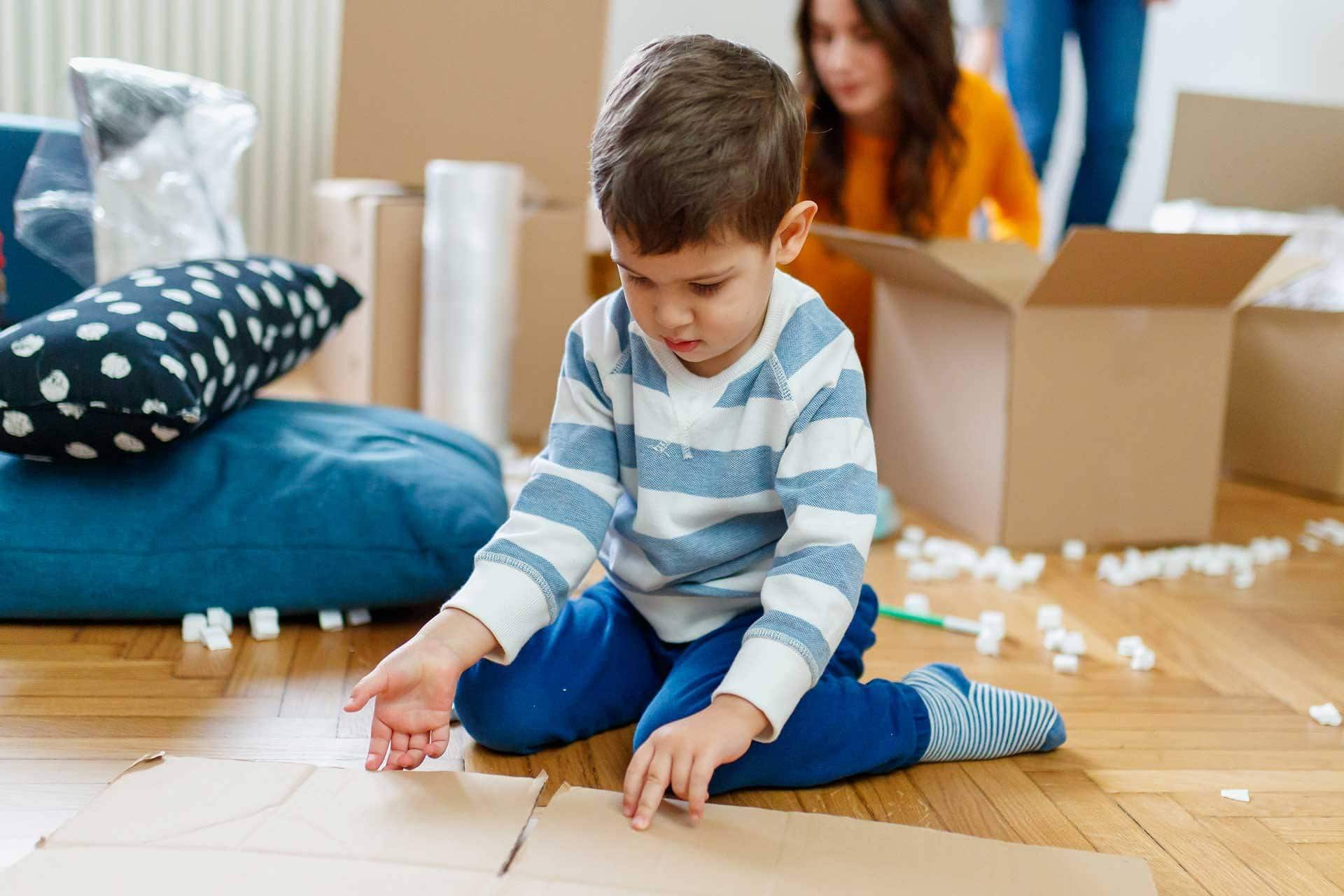
Better ways to sit
Rather than sitting on your knees, try these alternative postures that are gentler on the joints.
Whatever the position, aim to keep a neutral spine and change posture frequently to reduce knee strain and prevent postural issues.
These sitting options are kinder to the knees:
Cross-legged
Sitting cross-legged on the floor lowers pressure on the knees. You can also raise your hips slightly on a folded towel to ease hip and knee stress.
Knees bent with feet on the floor
This stance places less strain on knees and ankles. Keep your legs wider than hip-width to stabilize the pelvis and discourage a rounded back.
Knees bent to the side
From the previous position, rotate your legs to one side so the knees rest on the floor, trying to keep both hips grounded. This helps preserve a neutral spine.
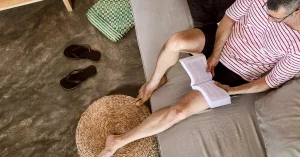
Legs extended straight ahead
Stretching your legs out in front reduces knee pressure. Again, sitting on a folded towel under the hips can alleviate hip and lower-back strain.
The background of seiza
Seiza is a formal sitting posture commonly practiced in Japanese culture. It’s considered proper etiquette in traditional arts such as floral arrangement and in disciplines like judo. Seiza is also used during meals and other everyday activities.
In seiza, the knees are bent and the legs are folded beneath the body with the tops of the feet flat on the floor. Traditionally men keep their knees slightly apart while women place theirs together.
Takeaway
Sitting on your knees is unlikely to cause an immediate medical emergency, but habitual use can strain knees and ankles and reduce lower-limb circulation.
If you need to sit in this position, change your posture often, maintain a neutral spine, and keep your shoulders relaxed to help protect your joints and posture.















Leave a Reply
You must be logged in to post a comment.