
Rosacea and eczema are both frequent skin disorders that can present with overlapping signs like itching, bumps, and changes in skin color. Still, there are important distinctions that can help you differentiate between the two.
Eczema describes a collection of long-standing skin problems marked by dry, itchy, inflamed patches that can occur anywhere on the body.
Rosacea is likewise a chronic skin disorder, most commonly producing facial flushing (blushing) and typically confined to the face. In some cases, rosacea can produce small, fluid-filled lesions that may mimic certain eczema signs.
Although there are distinguishing features to help separate these conditions, it’s wise to consult a healthcare provider if you notice concerning skin symptoms.
Read on to explore the signs, causes, treatments, and main differences between eczema and rosacea.
Pictures

Symptom comparison chart
Below is a concise comparison of facial symptoms commonly seen with eczema and rosacea.
| Eczema | Rosacea | |
|---|---|---|
| Skin discoloration | ✓ | ✓ |
| Itching | ✓ | ✓ |
| Silvery, white scales | ✓ | |
| Visible blood vessels | ✓ | |
| Solid, raised bumps | ✓ | ✓ |
| Pus-filled bumps | ✓ | ✓ |
| Flushing | ✓ | |
| Dry skin | ✓ | ✓ |
Who is most often affected by eczema and rosacea?
Eczema typically emerges in early childhood between 2 months and 5 years. For many, symptoms subside during the teenage years.
Because eczema is chronic, flare-ups can reoccur at any stage of life. It’s also possible, though less frequent, for eczema to begin in adulthood.
Rosacea can occur in people of various ages but is most frequently seen in adults aged 30 years and older, per the National Rosacea Foundation. It’s rare in infants, children, and teenagers.
What are the signs of eczema?
Both eczema and rosacea are chronic conditions that may flare and then calm down over months or years.
Some studies indicate it’s possible to have rosacea alongside a form of eczema called seborrheic dermatitis. Still, there are features that can help distinguish eczema from rosacea.
Eczema encompasses several skin disorders that produce a range of symptoms. Clinicians often describe eczema as an “itch that rashes” because it commonly results in an itchy, dry rash.
The American Academy of Dermatology (AAD) lists eczema signs as including:
- dry, scaly, or cracked skin
- intense itching
- inflammation
- tenderness or warmth of the skin
- small bumps or blisters that may ooze and form crusts
- thickened, leathery skin (lichenification) from repeated scratching
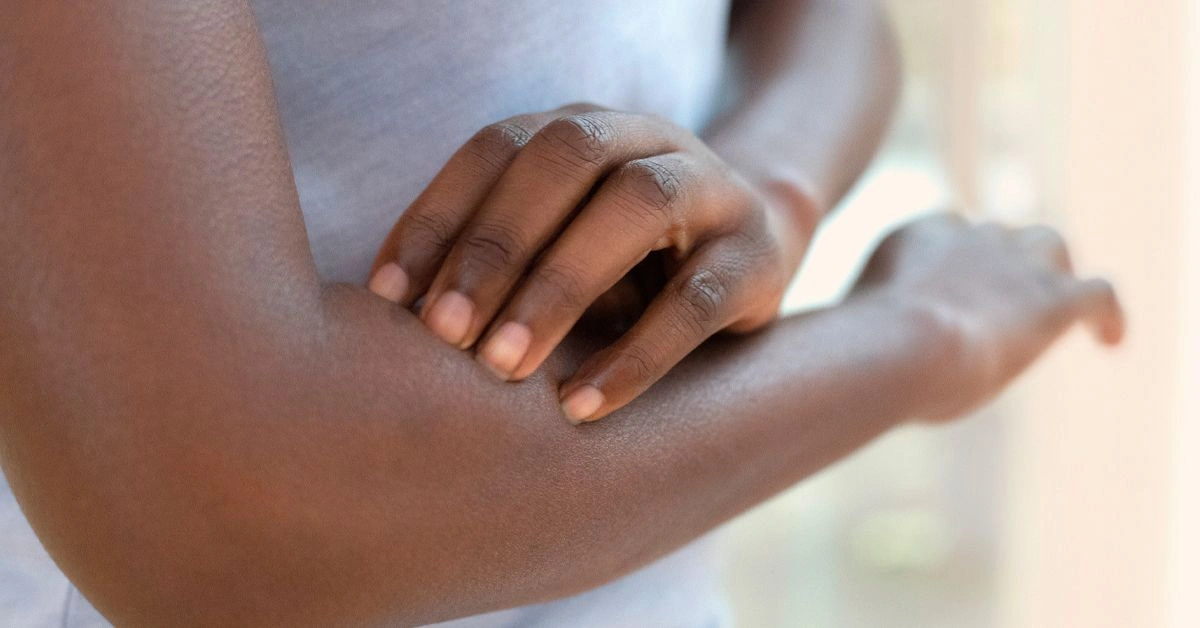
Another hallmark of eczema is erythema, meaning noticeable skin color changes. On lighter skin, eczema often looks red or pink; on darker skin tones, eczema may present as brown, gray, or purple patches.
Where on the body does eczema occur?
Eczema can appear anywhere, though its typical locations vary with age.
Infants most often develop eczema on the cheeks, forehead, and scalp.
Children and teenagers commonly have eczema in:
- the inner elbows
- behind the knees
- the back of the neck
- the abdomen
- the back
- the chest
- eyelids
- around the mouth
What are the signs of rosacea?
The main sign of rosacea is facial flushing, a sudden reddening of the skin. This can affect any area of the face, such as the:
- cheeks
- nose
- forehead
- chin
The United Kingdom’s National Health Service (NHS) notes that flushing from rosacea typically subsides after several minutes. Eczema rashes, conversely, often persist for days or even weeks.

Rosacea can also make the small blood vessels on the central face more noticeable, producing visible capillaries and small acne-like bumps.
Additional rosacea symptoms depend on the subtype and may include:
- papulopustular rosacea: swollen, discolored bumps and pus-filled lesions
- ocular rosacea: watery, irritated, and red eyes
- phymatous rosacea: bumps, color changes, and thickened skin on the nose, sometimes causing a bulbous appearance
It’s possible to have more than one rosacea subtype simultaneously. For more context on lookalike conditions, see lupus rash vs rosacea and information about rosacea on black skin.
Is seborrheic dermatitis the same as rosacea?
Seborrheic dermatitis is a form of eczema that produces dry, flaky, often crusty patches, frequently affecting the scalp and parts of the face like the:
- nose
- cheeks
- forehead
- eyebrows
- around the mouth
Although seborrheic dermatitis may appear in similar areas as rosacea, it tends to be scaly, oily, crusted, and inflamed, which helps distinguish it.
Rosacea is more prone to cause persistent skin discoloration, visible blood vessels, and rough papules.
What triggers eczema and rosacea?
The precise origins of eczema and rosacea aren’t completely understood, but researchers have found several contributing factors.
Eczema is linked to a compromised skin barrier—the outer layer that prevents water loss and shields against environmental irritants. Factors that can damage this barrier and provoke symptoms include:
- genetic variants, such as in filaggrin, ceramide synthase, and ABCA12
- exposure to irritants like soaps, detergents, insect bites, dust mites, and tobacco smoke
- stress and anxiety
- a weakened immune response, for example from infection
Rosacea often clusters in families, but the exact cause remains unclear. Potential contributors include:
- an overgrowth of Demodex mites
- abnormal blood flow regulation (neurovascular dysregulation)
- follicular irritation
- sun damage to connective tissue in the skin
- exposure to specific triggers like temperature extremes, wind, spicy foods, alcohol, and exercise
How are eczema and rosacea managed?
There’s no definitive cure for either eczema or rosacea, but a combination of self-care measures and medical therapies can control symptoms.
Eczema treatment centers on reducing inflammation and soothing itch by frequent moisturizing, using topical corticosteroids when appropriate, and avoiding known irritants and triggers.
Rosacea care also emphasizes regular moisturization and trigger avoidance, such as steering clear of fragranced soaps and excessive sun exposure. However, experts generally advise against corticosteroid use for rosacea because these agents can aggravate symptoms.
Working with a healthcare provider is important to design the most suitable treatment approach for your particular situation.
When to see a doctor
Contact a healthcare professional if you have symptoms of rosacea or eczema that interfere with your daily life.
If untreated, these conditions can lead to complications. For example, eczema that cracks and oozes can become infected, while rosacea may cause lasting redness, scarring, and skin changes.
Typically, a clinician can diagnose either condition through a visual exam of the skin and may refer you to a dermatologist for further evaluation and care if needed.
The bottom line
Eczema and rosacea are chronic skin disorders that cycle between flares and remissions, sharing symptoms like itchiness and altered skin color.
However, eczema more commonly produces dry, itchy, scaly patches that can persist for days, whereas rosacea most often causes transient flushing that lasts minutes and visible facial blood vessels and bumps.
If you notice symptoms, consider consulting a doctor so they can help create an effective treatment plan.








Leave a Reply
You must be logged in to post a comment.