

Fast facts
- You can wear your artificial eye during everyday routines, including showers, and while participating in sports such as skiing and swimming.
- You can still cry with a prosthetic eye because tears are produced by the eyelids.
- Some health insurance plans may cover part or all of the expense for prosthetic eyes.
- After receiving a prosthesis, your artificial eye will often move in harmony with your remaining eye for a natural appearance.
What is a prosthetic eye?
Prosthetic eyes are a widely used solution for people who have lost an eye. Individuals of all ages and genders receive prosthetic eyes after an eye (or in rarer cases, both eyes) has been removed because of severe trauma, disease, or congenital eye or facial abnormalities.
The goal of a prosthetic eye is to restore a balanced facial look and improve comfort in the empty eye socket.
Humans have fashioned and worn artificial eyes for thousands of years. Early versions were crafted from clay, painted, and affixed to cloth. Centuries later, craftsmen began producing spherical glass eyes.
Modern prosthetic eyes are no longer glass spheres. Instead, they typically include a porous spherical implant that is placed into the orbit and covered with the eye’s conjunctival tissue.
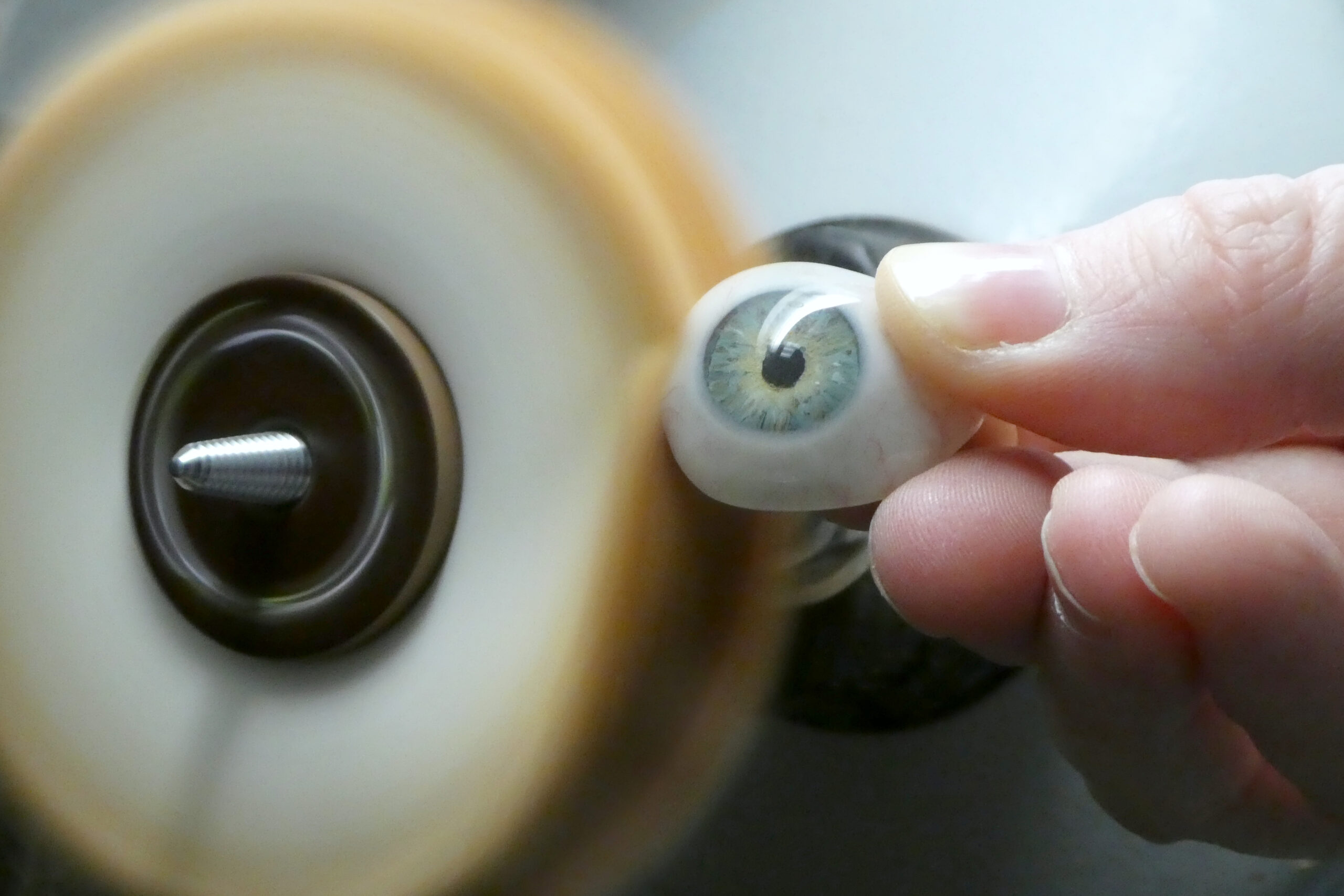
An acrylic, glossy, thin curved disk—painted to resemble a natural eye complete with an iris, pupil, sclera, and even blood vessels—is then fitted over the implant. This disk is removable, can be cleaned, and replaced as needed.
If you require a prosthetic eye, you have the option of a “stock” or off-the-shelf eye, which is mass-produced and lacks a tailored fit and exact color match. Alternatively, you can order a “custom” prosthetic crafted specifically for you by a specialist called an ocularist. A custom-made eye generally offers a superior fit and a more realistic color match to your remaining eye.
How much does prosthetic eye surgery cost?
Some medical insurance policies will cover the cost of a prosthetic eye, at least partially.
Without insurance, ocularists may bill between $2,500 and $8,300 for an acrylic eye and implant. This figure does not include any surgical fees for eye removal, which might be required and can be expensive if not insured.
Even with coverage, most plans require you to pay a copayment for each visit to your ocularist, surgeon, and physician.
Although the surgical procedure itself is not lengthy, you may suffer pain and nausea during the first 72 hours after surgery. Patients typically stay in the hospital for at least two nights and are discharged when they are comfortable.
You can resume school or work after discharge, but you must care for the surgical dressing and return to the doctor two weeks later to have stitches removed.
Full healing from the operation can take three to four months.
What happens during prosthetic eye surgery?
For many people with a diseased, damaged, or malformed eye, surgery to remove the eye is necessary before placing a prosthetic.
The most frequently performed procedure to remove an eyeball is called enucleation. This operation removes the entire globe, including the sclera. The surgeon replaces the eye with a round porous implant made from materials such as hydroxyapatite or other synthetic substances.
Another surgical option, evisceration, leaves the sclera intact. The existing scleral tissue is used to enclose the porous implant within the orbit. For some patients, evisceration is a less complex procedure and often results in a faster recovery.
In either surgery, a temporary clear plastic “shell” is placed behind the eyelids to prevent the socket from shrinking during the early postoperative weeks.
After healing—usually about 6 to 10 weeks—you’ll see your ocularist for a fitting. The ocularist takes an impression of the socket using foam material to create or match a prosthetic eye. The plastic shell is removed, and you are fitted for a daily-wear prosthesis about three to four months after surgery, once healing is complete.
Prosthetic eye movement
During the operation, the surgeon will cover the implant with surrounding eye tissue and attach the remaining eye muscles to that tissue. This allows the prosthesis to move in concert with your healthy eye. However, the movement of a prosthetic eye won’t be as full or fluid as a natural eye.
Possible risks and side effects of prosthetic eye surgery
All surgeries carry risks, and eye operations are no different. A rare inflammatory condition called sympathetic ophthalmia can affect the remaining eye after an evisceration. While usually treatable, this inflammation can, in some cases, cause vision loss in the healthy eye.
There is also a risk of infection at the surgical site. Fortunately, infections are uncommon and typically treatable with antibiotic eye drops or oral antibiotics.
After you start using a prosthetic eye, you might notice temporary soreness or a feeling of tightness. Most people adapt to the prosthesis over time.
What to expect after surgery
Expect pain, swelling, and possible nausea following the operation, especially during the first 72 hours. Your surgeon may provide strong pain medications and antiemetics to ease discomfort.
For about two weeks after surgery, your eyelids will be closed over the implant and plastic shell with stitches. In a few months, you will be measured for and receive your prosthetic eye.
How do you care for a prosthetic eye?
Caring for a prosthetic eye requires simple, regular maintenance. Recommendations include:
- Remove the acrylic prosthetic disk about once a month and clean it thoroughly with soap and water. Dry it completely before reinserting.
- Sleep with the prosthesis in place unless your doctor advises otherwise.
- Use a suction plunger designed for inserting and removing the prosthetic disk.
- Avoid removing the acrylic prosthesis more frequently than necessary.
- Apply lubricating eye drops over the acrylic surface as needed.
- Rinse away any debris from the prosthetic disk when required.
- Have your ocularist professionally polish the prosthesis annually.
- Replace your prosthesis approximately every five years, or sooner if recommended.
What’s the outlook for having a prosthetic eye?
Prosthetic eyes are a common, safe method to replace eyes that are diseased, injured, or malformed. A prosthesis can help restore facial symmetry and improve self-confidence after eye loss. Additionally, prosthetic eyes are relatively straightforward to wear and maintain.
If you are considering a prosthetic eye, consult your physician and seek an ocularist to discuss your options and appropriate care, including information about dental anesthesia.



















Leave a Reply
You must be logged in to post a comment.