

Mounjaro (tirzepatide) is FDA-approved to help adults with type 2 diabetes control blood glucose. Clinicians may also prescribe it off-label for weight management.
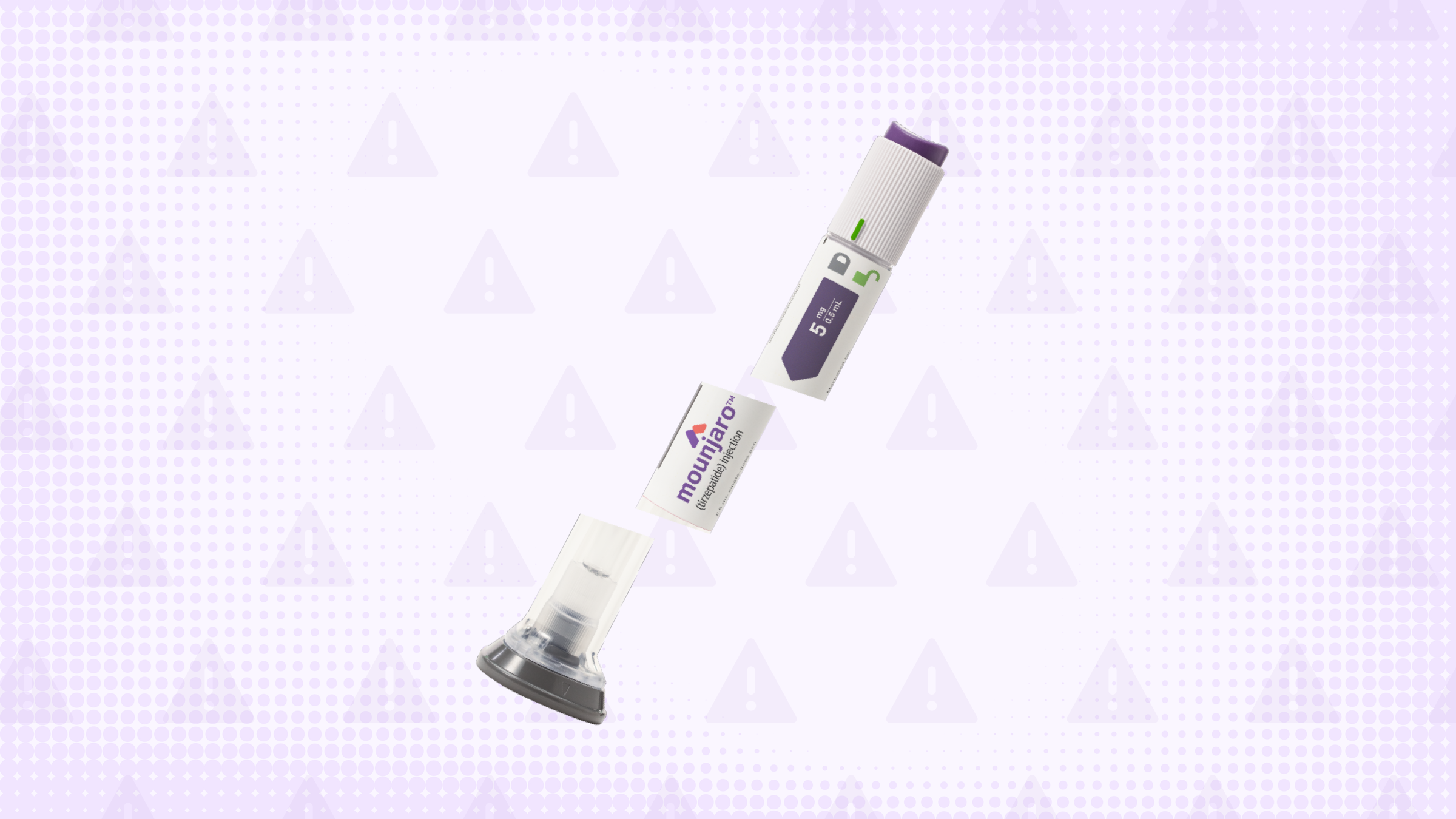
Sulfur burps happen when intestinal microbes create hydrogen sulfide gas. Some hydrogen sulfide in the gut is normal, but elevated amounts can produce burps with a foul, sulfur-like odor.
Mounjaro — similar to other glucagon-like peptide-1 (GLP-1) receptor agonists — can trigger sulfur burps in certain users. This article explains why Mounjaro can produce sulfur burps and offers strategies to lessen this adverse effect.
Why does Mounjaro cause sulfur burps?
Once you inject a dose of Mounjaro, the medication slows gastric emptying. That effect contributes to its therapeutic benefit but may also lead to side effects such as belching.
The foul scent in sulfur burps comes from hydrogen sulfide. Gut bacteria produce this gas when they break down foods or substances that contain sulfur — for instance, components of bile and dietary sulfur compounds.
How common are sulfur burps with Mounjaro?
Gastrointestinal side effects are frequent among people taking Mounjaro. Common digestive adverse events include:
- nausea
- diarrhea
- reduced appetite
- vomiting
- constipation
- indigestion
- abdominal discomfort
In clinical trials of Mounjaro, reports of belching were higher among participants on Mounjaro than among those on placebo. See the table below for the reported rates.
| Group | Percentage of people who reported burping |
|---|---|
| people receiving a placebo | 0.4% |
| people receiving 5 mg of Mounjaro | 3% |
| people receiving 10 mg of Mounjaro | 2.5% |
| people receiving 15 mg of Mounjaro | 3.3% |
Belching has also been documented as a relatively common adverse event with Zepbound, a weight-loss product that contains tirzepatide — the same active molecule found in Mounjaro.
Note: The trials for Mounjaro and Zepbound did not specify whether the reported belching was explicitly sulfur-scented. However, given the drugs’ mechanism, sulfur burps are plausible.
What can I do to help prevent sulfur burps?
Restricting foods that tend to produce digestive issues or contain high levels of sulfur might help reduce sulfur burps during Mounjaro therapy.
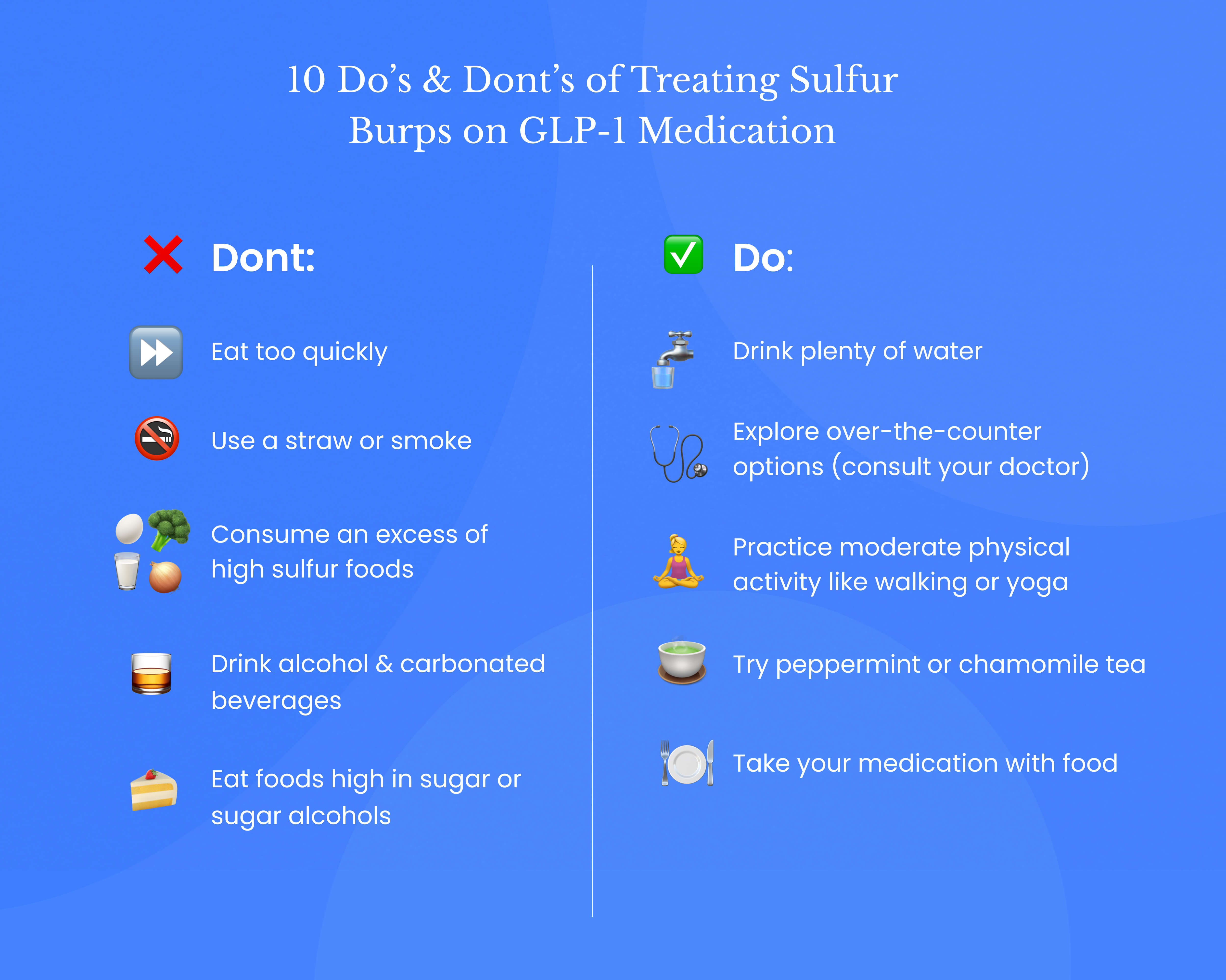
Examples of sulfur-rich foods include:
- meat, fish, and poultry
- eggs
- cow’s milk
- dried fruits
- legumes, such as soybeans and kidney beans
- beer, cider, and wine
- grape or tomato juice
- certain grains, like oats
- some vegetables, such as: asparagus broccoli Brussels sprouts onion radishes watercress
Reducing gas in the digestive tract can also help lessen sulfur burps. Consider trying:
- drinking peppermint or chamomile tea
- adding stress-management practices to your routine
- keeping well hydrated
- avoiding or limiting: sugar and sugar alcohols alcohol carbonated drinks drinking through a straw smoking eating too quickly
Treating underlying conditions that encourage gas accumulation may further decrease burping and other GI side effects. Conditions to evaluate include:
- Helicobacter pylori (H. pylori) infection
- gastroesophageal reflux disease (GERD)
- inflammatory bowel disease (IBD)
- food intolerances
- irritable bowel syndrome (IBS)
Mounjaro-related side effects tend to increase in frequency with higher doses. If uncomfortable symptoms persist despite trying the suggestions above, your clinician may opt to lower your dose.
Do similar drugs, such as Ozempic, also cause sulfur burps?
Mounjaro is a dual glucose-dependent insulinotropic polypeptide (GIP) and GLP-1 receptor agonist. Both Mounjaro and other GLP-1 agents slow gastric emptying, which helps their therapeutic effect but can produce side effects like belching.
Any GLP-1 medication has the potential to cause sulfur burps. For instance, belching has been reported as a side effect of semaglutide-containing drugs, such as Ozempic and Wegovy. If you are comparing options or are curious about alternatives like mounjaro or semaglutide with b12, discuss side effect profiles with your healthcare provider.
Summary
Mounjaro delays stomach emptying, which can cause belching and other digestive side effects. Some people may experience sulfur-scented burps that resemble the smell of rotten eggs.
Most common adverse effects of Mounjaro involve the digestive system and generally become more frequent at higher doses. Speak with your doctor if you have persistent or troubling side effects while taking Mounjaro.






















Leave a Reply
You must be logged in to post a comment.