

Chamomile has long featured in calming skin care formulations. However, solid scientific proof for many of its claimed benefits is limited.
For generations, chamomile has been used as a natural remedy for dry skin, irritation, and wound recovery. Although anecdotal reports continue to endorse chamomile and its extracts for these uses, definitive clinical support is lacking.
Below are some potential advantages chamomile might offer the skin, along with ideas for incorporating it into your regimen.

Potential skin benefits
Research on chamomile is sparse, and a number of studies are performed on animals rather than humans.
Chamomile may be helpful for:
- wound repair
- inflammation
- eczema
- hyperpigmentation
- acne
Wound repair
Essential oils derived from chamomile are reported to have antimicrobial qualities that may defend against certain bacteria, fungi, and viruses.
A 2018 animal study discovered that an ointment containing Roman chamomile extract notably enhanced healing and antibacterial activity in infected wounds compared with tetracycline ointment and a placebo.
Still, additional research is needed to determine chamomile’s effectiveness and safety for these applications.
Inflammation
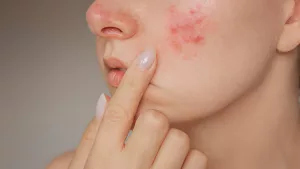
Chamomile is frequently used to ease skin inflammation from sunburns and rashes, yet there is limited research evaluating its anti-inflammatory effects.
One 2010 animal study reported that topical German chamomile oil reduced inflammation symptoms tied to atopic dermatitis (eczema). A related 2021 animal study also indicated that topical chamomile could help manage eczema symptoms.
However, the precise mechanism behind this effect is not well understood, and more investigation is required.
Acne
The same anti-inflammatory, antibacterial, and antioxidant actions that may make chamomile useful for dermatitis-related discoloration and irritation could also be beneficial for acne management.
Soothing sensitive skin
Many beauty products claim chamomile’s anti-inflammatory activity can calm sensitive skin. While a 2010 review did note older studies suggesting chamomile’s skin-soothing potential, strong, high-quality evidence is lacking.
Hyperpigmentation from radiation treatment
Hyperpigmentation occurs when patches of skin become darker than the surrounding area due to excess melanin production. Melanin is the pigment that gives skin its color. Hyperpigmentation is a common sign of radiation dermatitis (radiation burn), which can develop during cancer radiation therapy.
A small 2020 study of people with head and neck cancer found that applying chamomile gel may delay the onset of radiation dermatitis symptoms, such as burning, itching, and hyperpigmentation.
There is no robust evidence to support chamomile for cosmetic pigment-lightening treatments.
Cultural considerations
The global history of discrimination against people with darker skin has led to psychological and physical harms tied to skin color. This has fostered a devaluing of darker skin, and the view that it should be “corrected.” Although skin lightening is common in many regions, it remains a complicated and contentious issue.
Types of chamomile
The two primary varieties of chamomile are:
- German chamomile (Matricaria recutita)
- Roman chamomile (Anthemis nobilis)
German chamomile is more frequently used in topical creams and lotions.
Ways to use chamomile on skin
Here are three methods to include chamomile in your skin care routine:
- chamomile extract
- chamomile oil
- chamomile tea

It’s generally recommended to choose skin care products that contain chamomile extract or oil, which include the antioxidant compound chamazulene.
You can find chamomile in many product forms, such as facial mists, oils, serums, lotions, and chemical peels.
Precautions
Most people tolerate topical chamomile safely, but exercising care with any new skin product is important because of the potential for allergic reactions.
Perform a patch test before using a new product: apply a small amount to your forearm for several days and watch for any adverse response.
Chamomile is also generally well-tolerated when taken as tea or in other forms. Still, there is a small chance of interactions with blood-thinning medications and with cyclosporine, a drug used to prevent transplant rejection.
Bottom line
Chamomile has been used for generations to address dry, irritated, and sensitive skin, but high-quality scientific support for these claims is limited.
Although research is scarce, studies indicate chamomile contains compounds with antioxidant, antimicrobial, and anti-inflammatory properties.
Consult a physician before trying new herbal treatments. The Food and Drug Administration (FDA) does not regulate herbal remedies in the same way it does pharmaceutical medications.





















Leave a Reply
You must be logged in to post a comment.