
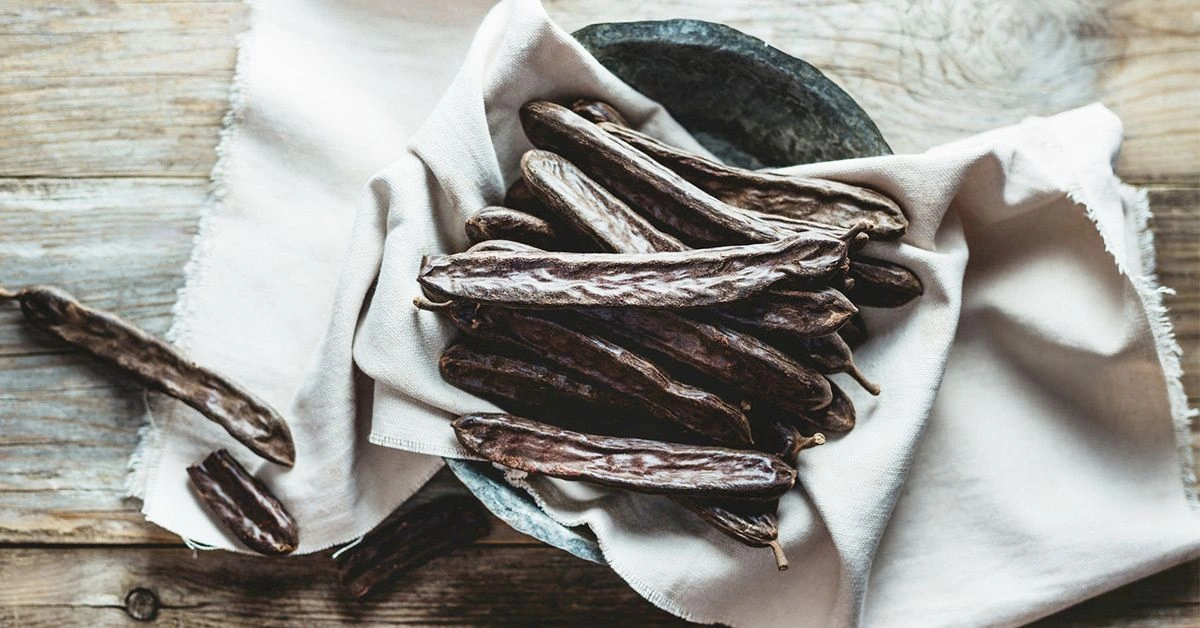
Locust bean gum, also known as carob gum, is a natural thickening agent frequently added to processed foods and widely used in culinary and food manufacturing settings.
Its name (locust refers to a type of grasshopper) might leave you wondering whether it’s suitable for vegans.
This article examines the pros and cons of locust bean gum and answers whether it is vegan-friendly.
Origin and uses
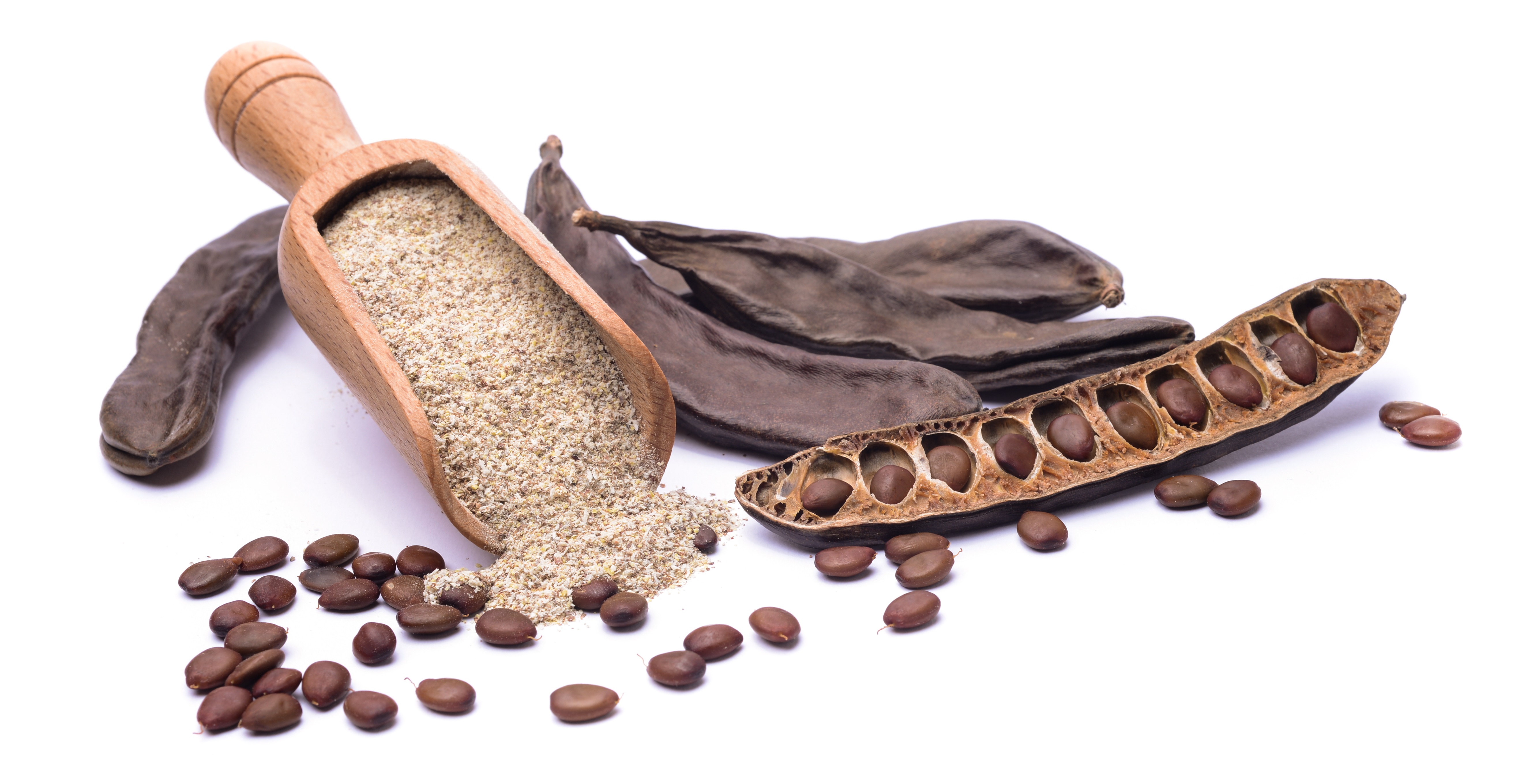
Locust bean gum is obtained from the seeds of the carob tree. In many respects, this subtropical tree resembles the cacao plant, which produces cocoa for chocolate.
The gum appears as a fine off-white powder and serves numerous purposes in food manufacture. It has a faint sweetness and a slight chocolate-like note, though it’s used in such minimal amounts that it doesn’t alter the taste of the foods it’s incorporated into.
Indeed, other parts of the carob tree — particularly the fruit — are often employed as chocolate alternatives.
Locust bean gum consists of an indigestible fiber called galactomannan polysaccharides, which form long chain-like molecules. These polysaccharides give the gum its characteristic capacity to gel in liquids and thicken products (1).
Most of locust bean gum is carbohydrate in the form of fiber, though it also provides modest amounts of protein, calcium, and sodium (2).
It’s primarily used as a thickening agent in food production, especially in natural or organic products that avoid highly refined additives.
Is it vegan?
Despite the confusing name, locust bean gum is plant-based and contains no insect-derived ingredients.
The gum is derived from the seeds of the carob tree, sometimes called the locust tree because its pods resemble the insect that shares the same name.
Locust bean gum is therefore suitable for vegan diets. It’s an effective plant-derived thickener that can provide body and stability to vegan treats like dairy-free ice cream and plant-based yogurt.
Summary: Locust bean gum is sourced from the carob tree and is vegan. It’s mainly fiber and is used as a thickening ingredient in foods.
Potential health benefits
Locust bean gum may offer several health advantages.
However, additional human studies are required to confirm these effects.
High in fiber
All the carbohydrates in locust bean gum are fiber, specifically galactomannan polysaccharides. These long soluble-fiber chains enable the gum to form gels and thicken liquids (1, 2).
Soluble fiber also supports digestive health.
Because this fiber isn’t absorbed and becomes gel-like in the gut, it can soften stools and may help relieve constipation (3).
Soluble fiber is also considered beneficial for cardiovascular health, as it can bind dietary cholesterol and reduce its absorption into the bloodstream (3).
That said, locust bean gum is typically included in very small amounts in many products, so consuming items containing it may not deliver a meaningful fiber dose.
Reduces reflux in infants
Locust bean gum is added to certain infant formulas for babies prone to reflux, which involves frequent spitting up.
It thickens formula so it’s less likely to flow back into the esophagus after reaching the stomach, which can help reduce reflux and discomfort.
The gum also slows gastric emptying — the rate at which stomach contents move into the intestines — which can further reduce reflux symptoms in infants.
Multiple studies have shown benefits of locust bean gum-thickened formulas for infants with reflux (4, 5, 6, 7).
May reduce blood sugar and blood lipid levels
Some research suggests that locust bean gum supplements could lower blood glucose and blood lipid concentrations, likely due to their fiber content (8).
One investigation examined locust bean gum’s effects in 17 adults and 11 children, including participants with familial high cholesterol (9).
Those consuming 8–30 grams of locust bean gum daily for two weeks saw greater cholesterol improvements than a control group that consumed none (9).
Additionally, other carob components, especially the fruit, may lower LDL (bad) cholesterol and triglycerides (10, 11, 12).
Locust bean gum might also blunt post-meal blood sugar spikes by limiting absorption of carbohydrates and sugars (13).
A rat study from the 1980s found that locust bean gum stabilized blood glucose by slowing gastrointestinal transit, but this older animal research hasn’t been replicated in humans (14).
Overall, much data on these effects come from animal studies or older trials. More up-to-date human research is necessary to clarify locust bean gum’s potential metabolic benefits.
Summary: Locust bean gum is rich in soluble fiber and may help lower blood sugar and lipid levels. It’s also used in infant formulas to reduce reflux.
Precautions and side effects
Locust bean gum is generally a safe food additive with limited adverse effects.
Nevertheless, some individuals may be allergic to it. Allergic reactions can manifest as asthma or breathing difficulties, which in some cases can be severe (15).
If you have a known allergy to locust bean gum, avoid it and carob-containing products.
There have also been reports of health problems in some premature infants after receiving formula thickened with locust bean gum that was improperly prepared (1).
Because locust bean gum is not digestible, it poses minimal risk to healthy children and adults. If you have concerns, discuss them with your healthcare professional.
Summary: Locust bean gum is indigestible and generally low-risk. Some people can be allergic, and premature infants may suffer adverse effects if formula containing the gum is mixed incorrectly.
The bottom line
Locust bean gum is a natural, plant-derived, vegan thickener used in many commercial products and is composed largely of fiber.
It can help reduce infant reflux when added to formula and may have favorable effects on blood lipids and glucose, though more research is needed.
If you want to use it as a thickening agent at home, locust bean gum is available for purchase online. It’s effective for thickening soups, sauces, and desserts.





















Leave a Reply
You must be logged in to post a comment.