
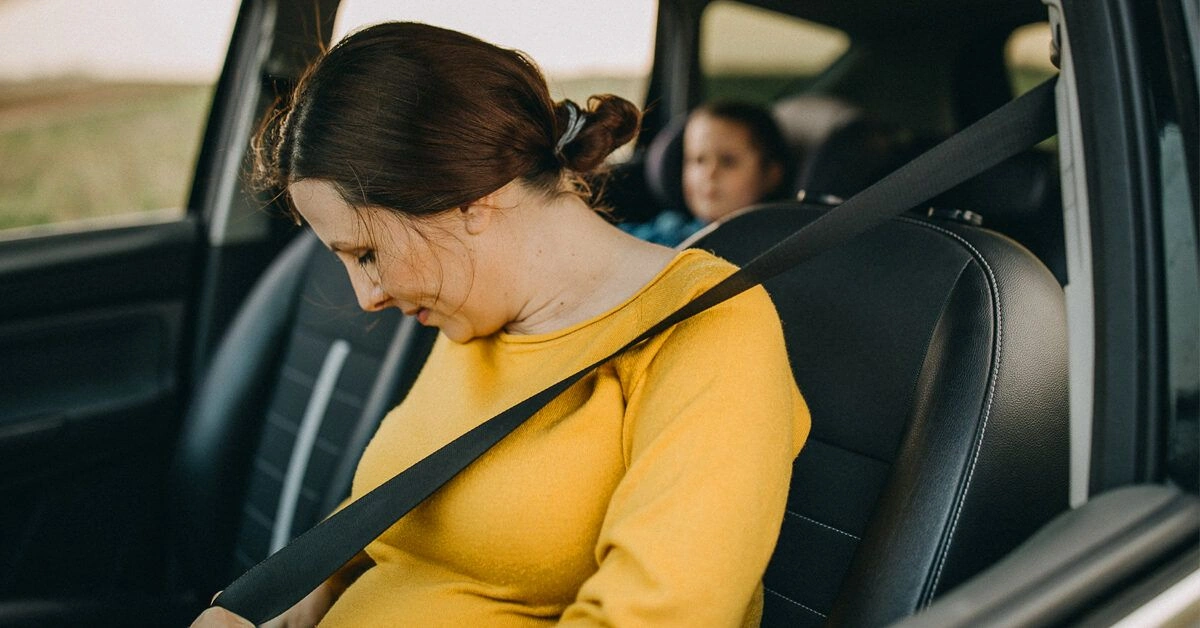
Nausea, trouble concentrating, and limited mobility can all affect your capacity to drive during pregnancy.
When you’re expecting, you put the brakes on a lot of activities to protect you and your baby: skipping roller coasters, avoiding hot tubs, passing on pub crawls… you know the drill.
With so many things off-limits while pregnant, it’s understandable to wonder whether everyday tasks — like showering, strolling along the shore, or getting behind the wheel — are still allowed.
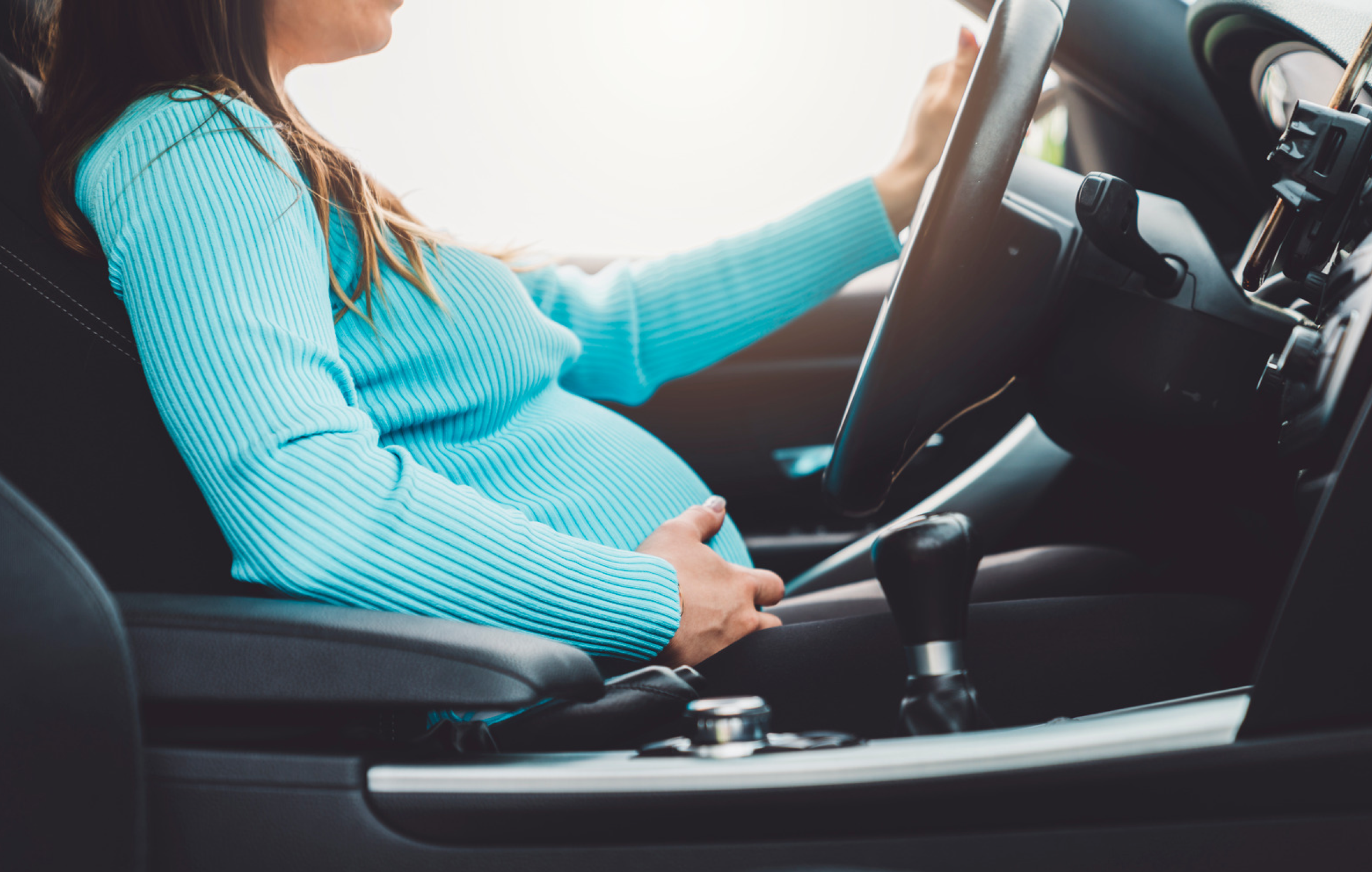
For the most part, the short answer is yes. You can continue living your life while pregnant.
That said, there are a few legitimate safety concerns about driving while pregnant.
Here’s how to decide whether you should tuck your baby bump into the driver’s seat or hand your keys to your partner, mom, best friend, or even a helpful rideshare driver. Also, if you’re curious about winter sports and pregnancy, check out skiing while pregnant for guidance tailored to that activity.
Risks of driving while pregnant
Most of the time, driving during pregnancy is perfectly fine. Seriously — if pregnancy automatically disqualified people from driving, the world would come to a halt.
That said, research shows a somewhat elevated risk associated with driving while pregnant compared with not being pregnant. A 2014 study found women were 42 percent more likely to be involved in serious car crashes during the second trimester than women who weren’t pregnant.
Interestingly, that increased risk was limited to the second trimester. In the first and third trimesters, the chance of being in a crash was similar to non-pregnant people.
The heightened risk also didn’t extend to pregnant people as passengers or to other physical activities usually linked with pregnancy injuries.
So what gives?
The study didn’t explain the reason, but experts suspect pregnancy hormones play a role (because when don’t they?).
During the second trimester many people experience fatigue, disrupted sleep, and other distracting symptoms linked to hormonal changes — all of which could reduce alertness behind the wheel.
Seat belt safety while pregnant
Driving is generally safe during pregnancy. If you plan to drive, though, you must protect yourself: always wear your seat belt, even while pregnant.
When worn properly, seat belts greatly reduce the likelihood of harm to your baby during routine driving and in collisions. The minimal risk that exists with wearing a belt is far less than the dangers of not wearing one at all.
To use a standard three-point seat belt comfortably and safely during pregnancy, try these tips:
- Place the lap belt as low as possible under your belly, not across it.
- Move the driver’s seat back as far as you can while still reaching pedals and controls comfortably.
- Consider angling the steering wheel up slightly so its lower rim isn’t directly level with your abdomen.
- Position the shoulder strap over your shoulder and down the middle of your chest.
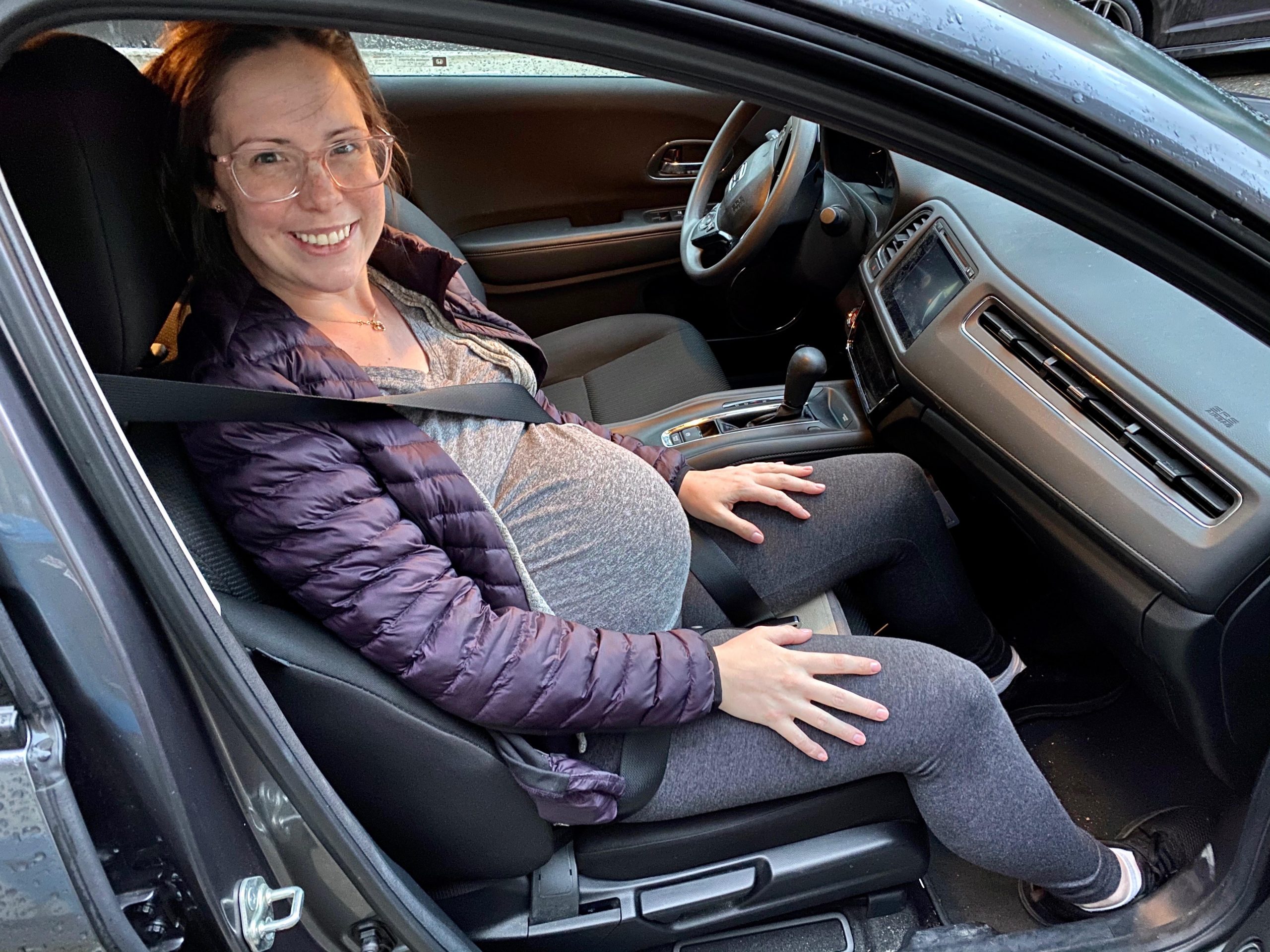
If it helps, you might be able to use a seat belt positioner during pregnancy. This device guides the lap belt between your legs so it lies over your thighs instead of pressing on your bump. Check with your OB-GYN or midwife first to confirm it’s appropriate for you.
Now that you know how to ride more safely while pregnant, when is it better to avoid driving entirely? Below are six situations when you should hand the keys over to someone else.
1. Don’t drive when… you have severe nausea
If your nausea is so intense you can’t leave the couch (or the bathroom floor), you shouldn’t be the one driving.
Think an unexpected sneeze is scary behind the wheel? An unexpected vomit episode is far worse. Nausea often coexists with dizziness and lightheadedness, which are also unsafe for drivers.
2. Don’t drive when… you can’t get in a safe position
If you have to push the seat so far back you can’t reach the brake, tuck the shoulder strap behind you because it rubs across your fuller chest, or twist your torso to relieve pressure on a sore hip, that’s a problem.
If your pregnancy forces you to sit in an unsafe driving position, stop driving — at least until you can sit properly again.
Driving in an awkward position increases your crash risk and can cause injury even during routine stops, especially if you need to brake suddenly.
3. Don’t drive when… you can’t make frequent stops
Don’t start a long trip if you won’t be able to take regular breaks along the way.
Pregnancy increases the risk of deep vein thrombosis (DVT), a blood clot that commonly forms in the leg and can travel to the lungs with dangerous consequences.
The best defense is movement: take regular stretch breaks and stay hydrated to keep blood circulating — and to accommodate frequent restroom needs.
4. Don’t drive when… your pregnancy limits your movement
If your belly is so large or your back pain so intense that you can’t twist to check blind spots or scan mirrors, you shouldn’t drive.
When you can’t rotate your upper body or look over your shoulder safely, you increase the chance of missing another vehicle in your blind spot.
5. Don’t drive when… you can’t pay extra-close attention to the road
Everyone should keep their focus on driving, but this is especially important when you’re pregnant.
Pregnancy can bring distraction in the form of nausea, heartburn, sleeplessness, aches, stress, anxiety, and the classic “pregnancy brain.”
If you feel less capable of concentrating and more prone to distraction, consider asking someone else to drive rather than putting yourself at increased risk.
6. Don’t drive when… you’re in labor
This may sound obvious, but do not drive yourself to the hospital or birthing center if you’re in labor. Contractions can intensify suddenly and leave you unable to safely operate a vehicle.
If you’re alone and labor progresses rapidly or you fear you won’t reach your destination in time, call 911 and request an ambulance.
You may feel a little embarrassed, but it’s far better than risking an accident while contracting.
Additional driving precautions
Whether you’re behind the wheel or riding as a passenger, being in a car while pregnant is usually harmless. Still, taking a few extra precautions will help keep you safer on the road.
Bring snacks and drinks
Pregnancy hanger is real. Don’t get stranded without hydration and snacks.
If morning sickness is still an issue, keep crackers, ginger ale, mints, or your preferred nausea remedies in the car — plus plastic bags, tissues, and disinfecting wipes to deal with any sudden episodes.
Plan for frequent stops
We’ve said it before, but remain mindful that prolonged sitting isn’t ideal during pregnancy. To reduce clot risk, plan stops to stand and stretch at least every hour.
Also know where restrooms are along your route, because you’ll probably need them.
Turn off your cell phone (and other distractions)
Your attention is already taxed by pregnancy symptoms — don’t add phone alerts to the mix. Silence texts and calls while driving.
Make sure your airbags are in working order
According to a 2010 study, airbags don’t increase the risk of harm to your baby.
An airbag won’t directly protect your fetus, but it can reduce the likelihood of significant injury to you — which is important for both of you.
Always see your provider after any traffic accident
No matter how minor the collision or how fine you feel afterward, contact your OB-GYN or midwife and arrange an exam. It’s best to confirm that everything is okay — peace of mind is worth it.

The final word
Is driving safe during pregnancy? In most healthy pregnancies, yes — as long as you wear your seat belt correctly.
There are times when letting someone else drive or skipping the trip is the better choice. But those situations are the exception: if you can sit comfortably and safely without worrying about severe sickness, distraction, or immobility, you’re generally fine to drive.



















Leave a Reply
You must be logged in to post a comment.