
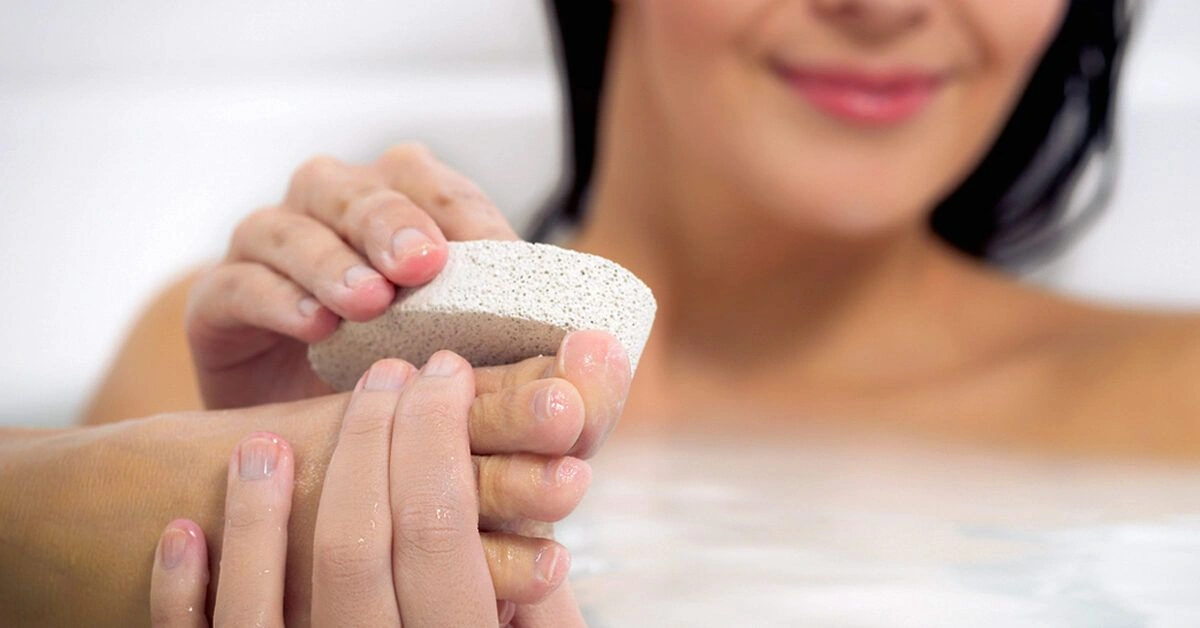
A pumice stone can remove dead skin and soften calluses, but improper use may lead to bleeding or raise the chance of infection.
Pumice forms when lava and water interact, creating a lightweight yet abrasive rock used to slough off dry, dead skin. It also helps soften calluses and corns, reducing discomfort caused by friction.

You may use a pumice stone regularly, but it’s crucial to follow correct techniques. If you’re careless, you could strip away too much skin, cause bleeding, or increase infection risk.
Supplies
Pumice stones are available at beauty supply shops and many supermarkets. Some models are double-sided, featuring a coarse side for tougher areas and a gentler side for sensitive zones or polishing.
To exfoliate safely, have a large basin or bowl of warm, soapy water available. This is especially useful for treating hands or feet. If you plan to use a pumice stone on your face, neck, or elbows, consider doing so in the shower.
Other items you’ll want include:
- soft towel
- moisturizer (cream, lotion, or oil)
- moisturizing socks (optional)
- bristle brush to clean the pumice stone
Step-by-step instructions
Follow these steps to correctly remove rough skin. If you experience pain or unusual symptoms, discontinue use immediately.
Preparation
- Collect your supplies in one spot. Ensure the pumice and water are clean.
- Soak the hardened, callused area in warm water for 5 to 10 minutes to soften it. Add soap or oil to the water for added softening and hydration. For elbows, knees, or facial areas, complete this step during a warm bath or shower.

Using the pumice stone
- While your skin soaks, submerge the pumice stone in warm water. Never use a dry pumice on skin — a wet stone moves more smoothly and lowers injury risk.
- Take the target area out of the water and gently pat it dry with a towel. If it still feels tough, soak a bit longer before drying.
- Take the pumice stone from the water and place it against your skin.
- Move the abrasive surface across the skin in circular motions using light pressure. Massage for two to three minutes. If the skin becomes tender or painful, stop — you’re likely pressing too hard.
- On feet, concentrate on heels, the sides of toes, and other visibly dry spots.
- Continue until the dead skin has been removed and softer skin appears beneath.
- After a few minutes of gentle rubbing, rinse the area. If patches of dead skin remain, repeat the process. Also rinse your pumice stone between sessions to keep it clean.
- You can perform this routine daily or a few times weekly to keep skin soft and smooth.
Finishing up
- When finished, apply a moisturizer or oil to seal in hydration and maintain softness. For extra effect, wear moisturizing socks after applying lotion.
- Clean your pumice stone after each use. Under running water, scrub it with a bristled brush to remove trapped skin. Use a little soap to ensure it’s free of debris, since bacteria can grow on the surface.
- Do not share your pumice stone; each person should have their own.
- Let the stone air dry in a dry spot away from moisture to prevent bacterial buildup.
- For a deeper clean, boil the pumice in hot water for five minutes, then let it air dry away from damp areas.
- Over time the stone will wear down and become too smooth to work effectively. Replace it when it becomes too small, smooth, or worn.
Find a great selection of pumice stones here.
Tips for using a pumice stone
For your face and neck
The face and neck are more delicate. Excessive pressure can produce redness or abrasions. If you plan to use a pumice stone in these areas, pick a double-sided stone and follow gentler steps.
Proceed as above, but use the softer face side rather than the coarse side. Move it in a circular motion for roughly 15 seconds. If you notice redness or a burning sensation, stop immediately.
Rinse the face and neck with warm water after exfoliation and apply a moisturizer. Limit facial pumice use to once a week.
For hair removal
Besides sloughing off dead skin, a pumice stone can help remove unwanted hairs.
To remove hair, follow these steps:
- Soften the skin in warm water for 5 to 10 minutes.
- Wet your pumice stone.
- Apply soap or a lather to the area.
- Rub the stone in circular motions with light pressure to remove hairs.
- Rinse and repeat until hair is gone. Cease use if irritation occurs.
- When finished, rinse well with warm water to remove loose hair and skin debris.
- Apply moisturizer or oil to the treated area.
- Repeat every few days until all unwanted hair is removed.
Pumice stone aftercare
These guidelines will help you use a pumice stone safely and effectively for exfoliation or hair removal. Always moisturize your skin and clean the stone after each session. Keep in mind results vary from person to person.
If you develop irritation or pain, stop using the stone at once. People with very sensitive skin may be unable to use a pumice stone. If you cut the skin, apply an antiseptic and discontinue use. Discuss alternative options with your physician or dermatologist.



















Leave a Reply
You must be logged in to post a comment.