

Vraylar is prescribed for the following mental health conditions:
- mixed or manic episodes in adults with bipolar I disorder
- major depressive disorder (depression) in adults, when given with an antidepressant
- bipolar depression in adults with bipolar I disorder
- schizophrenia in adults
For additional detail on Vraylar’s approved uses, see the “What is Vraylar used for?” section below.
Vraylar basics
Vraylar contains the active molecule cariprazine. (The active ingredient is the component that provides the medication’s therapeutic effects.)
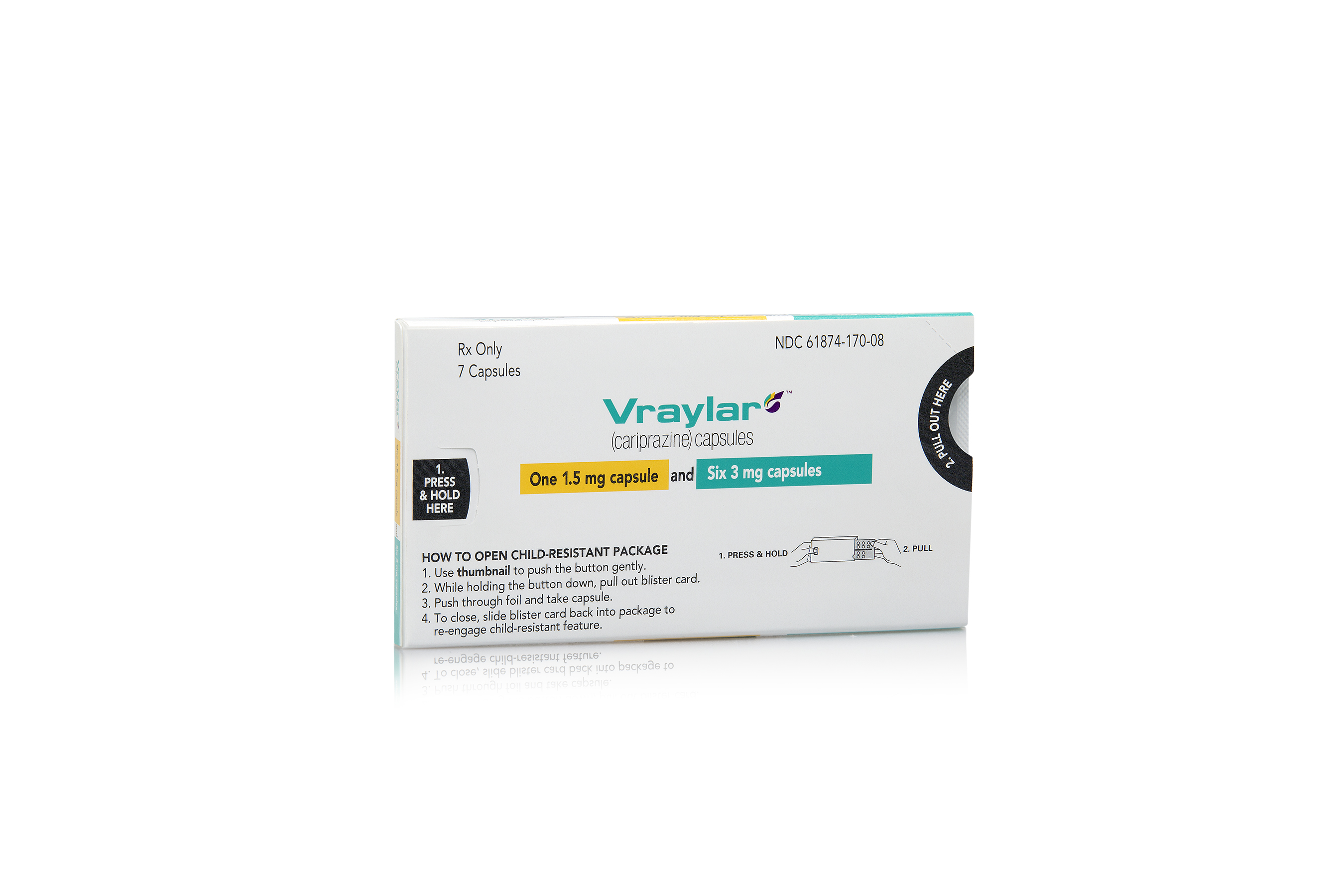
Vraylar is classified as an atypical antipsychotic. It is a branded drug and currently does not have a generic formulation.
What is Vraylar used for?
Vraylar is indicated for the treatment of the following psychiatric conditions:
- mixed or manic episodes in adults with bipolar I disorder
- bipolar depression in adults with bipolar I disorder
- major depressive disorder (depression) in adults
- schizophrenia in adults
What is Vraylar’s mechanism of action?
The precise mechanism by which Vraylar works is not fully understood. It’s believed to modify the activity of the neurotransmitters dopamine and serotonin, which play roles in mood, thinking, and behavior.
By altering dopamine and serotonin signaling, Vraylar may reduce symptoms associated with the disorders it treats.
What are Vraylar’s side effects?
As with most medications, Vraylar can cause both mild and serious side effects. Below are some of the more commonly reported side effects of Vraylar. This list is not exhaustive.
Remember that side effects may vary depending on:
- your age
- other medical conditions you have
- other drugs you’re taking
Your prescriber or pharmacist can provide more information about Vraylar’s potential adverse effects and strategies to minimize them.
Mild side effects
Some of the milder side effects reported with Vraylar include (see the prescribing information for a fuller list):
- akathisia (restlessness with a strong urge to move, often in the legs)
- sleepiness or fatigue
- nausea and vomiting
- slowed or more effortful movements
- muscle stiffness
- tremors (involuntary shaking)
- increased saliva
- stomach upset
- headache
- constipation
- dizziness
- weight gain
Mild adverse effects often improve within days to weeks. If they persist or are troublesome, contact your prescriber or pharmacist.
Serious side effects
Serious adverse reactions to Vraylar can occur but are uncommon. If you experience a major problem, contact your doctor promptly. In a medical emergency, call 911 or your local emergency services.
Reported serious side effects include:
- tardive dyskinesia (involuntary repetitive movements of the tongue, face, neck, limbs)
- increased fall risk due to movement issues or dizziness
- seizures
- difficulty swallowing
- greater risk of overheating or heatstroke because of impaired temperature regulation
- orthostatic hypotension (blood pressure drop when standing up)
- abnormal blood test findings, such as low white blood cell counts, high cholesterol or triglycerides, and elevated blood glucose that can lead to diabetes
- neuroleptic malignant syndrome (a rare but serious reaction to antipsychotics)
- boxed warnings: increased risk of suicidal thoughts and behaviors in young people and higher mortality in older adults with dementia-related psychosis
Allergic reaction
Some individuals may have an allergic reaction to Vraylar, though the frequency of this in clinical studies is unclear.
Allergic responses range from mild to severe.
What might help?
If you develop mild allergic symptoms (for example, a minor rash), contact your doctor. They can advise on symptom management and whether to continue Vraylar.
If you have signs of a severe allergic reaction—such as facial or throat swelling or difficulty breathing—call 911 or your local emergency number immediately. These reactions can be life-threatening and require urgent treatment.
If a clinician confirms a serious allergy to Vraylar, they will likely switch you to a different treatment.
Do Vraylar’s side effects go away?
Some side effects from Vraylar may resolve over time, while others can be persistent.
Because Vraylar accumulates slowly in the body, certain adverse effects might take time to develop and also to subside.
Short-term side effects
Common short-term side effects, such as nausea, upset stomach, headache, and drowsiness, typically last weeks to months and often lessen as your body adjusts. These may reappear temporarily if your dosage is raised.
Long-term side effects
Certain adverse effects can be long-lasting, but they are manageable. Your prescriber will monitor you and provide treatments as needed. Examples include:
- high blood sugar, which may be managed with diabetes medications such as metformin or insulin
- elevated cholesterol or triglycerides, which may be treated with statins (e.g., atorvastatin) or fibrates (e.g., fenofibrate)
Akathisia: A relatively common reaction is akathisia — a distressing restlessness and strong urge to move. Inform your doctor if you experience this; they may lower your dose or stop the medication.
Tardive dyskinesia: Another potential long-term effect is tardive dyskinesia, characterized by involuntary, repetitive movements. This can occur after prolonged use or after stopping Vraylar.
If you’re concerned about long-term risks, discuss them with your prescriber.
Side effect focus
Below are deeper details about some specific risks associated with Vraylar.
Boxed warnings
Vraylar carries boxed warnings, the FDA’s most prominent safety alerts.
Suicidal thoughts and behaviors in young people: Young adults (24 and under) and children taking antidepressant-type medications have an elevated risk of suicidal ideation and behavior. Because Vraylar has antidepressant-like effects and is used for bipolar depression and major depressive disorder, it includes this boxed warning. The risk is greatest soon after starting treatment or when doses change. Vraylar is not approved for pediatric use.
Higher risk of death in older adults with dementia-related psychosis: Use of antipsychotics is associated with an increased mortality risk in older adults (65+) who have psychosis related to dementia. Vraylar is an atypical antipsychotic, and this class effect underlies the warning.
Antipsychotics may also raise stroke risk in people with dementia-related psychosis, which can be fatal. Signs of stroke include:
- weakness on one side of the body (face, arm, or leg)
- severe headache
- slurred speech
- vision or balance problems
What might help
If you are 65 or older with dementia-related psychosis, Vraylar is unlikely to be prescribed. Your clinician can discuss safer alternatives. If you experience stroke symptoms while taking Vraylar, seek emergency care right away.
For patients 24 or younger, close monitoring is required. You, family members, and caregivers should watch for worsening depression or suicidal thoughts and contact the prescriber immediately if they appear.
If you have concerns about Vraylar’s safety for you, discuss them with your clinician.
Help is out there
If you or someone you know is in crisis or contemplating self-harm, get help immediately:
- Call or text the 988 Suicide and Crisis Lifeline at 988 or chat at 988lifeline.org. Confidential assistance is available 24/7.
- Text HOME to the Crisis Text Line at 741741 to reach volunteer crisis counselors 24/7.
- Outside the U.S.? Locate a helpline in your country via Befrienders Worldwide.
- Call 911 or local emergency services if it’s safe to do so.
If you’re calling for someone else, stay with them until help arrives. Remove potential means of harm only if it’s safe. If you’re not nearby, remain on the phone with them until help reaches them.
Weight gain
Weight gain can occur with Vraylar.
As an atypical antipsychotic, Vraylar can alter metabolic processes and may lead to increased weight in some people.
In clinical studies, weight gain was observed more often in people taking Vraylar for schizophrenia compared with those taking it for depression, bipolar depression, or mixed/manic episodes of bipolar I disorder.*
*For the depression indication, Vraylar is used alongside an antidepressant.
What might help
Your doctor will check your weight periodically during treatment with Vraylar.
Regular physical activity can help manage weight, but consult your doctor before beginning a new exercise program. Vraylar can impair temperature regulation, so strenuous activity in hot conditions may increase the risk of overheating or heatstroke.
Eating a balanced diet and reducing processed foods, sugary snacks, and fried items may help limit weight gain. Consider consulting a registered dietitian for personalized advice.
What is Vraylar’s dosage?
Your prescriber will determine the appropriate Vraylar dose for you. The following are commonly used dosing schedules, but always follow the dose your clinician prescribes.
Vraylar form
Vraylar is available as an oral capsule to swallow.
Vraylar strengths
Capsule strengths available include 1.5 mg, 3 mg, 4.5 mg, and 6 mg.
Recommended dosage
Vraylar is taken once daily, with or without food.
Clinicians typically start with a low dose and may gradually increase it until the optimal dose is reached. Do not exceed the maximum daily dose your prescriber sets.
See a dedicated dosing guide for more comprehensive details on dosing strategies.
Dosage for mixed or manic episodes of bipolar I disorder
For mixed or manic episodes, treatment often begins with 1.5 mg on day one and 3 mg on day two. The dose may be raised further if necessary. The maximum recommended daily dose for this indication is 6 mg.
Dosage for major depressive disorder (depression)
When used for major depressive disorder, you typically start at 1.5 mg once daily. After 14 days, your prescriber may increase the dose to 3 mg once daily depending on clinical response. The maximum daily dose for this use is 3 mg.
Dosage for bipolar depression
For bipolar depression in bipolar I disorder, the usual start is 1.5 mg once daily, with a possible increase to 3 mg after 14 days based on effectiveness. The maximum daily dose for bipolar depression is 3 mg.
Dosage for schizophrenia
For schizophrenia, treatment commonly begins at 1.5 mg on day one, with an increase to 3 mg on day two and further adjustments as needed. The maximum daily dose for treating schizophrenia is 6 mg.
Taking Vraylar with other drugs
Vraylar is often prescribed together with other medications depending on the condition. Examples include:
- antidepressants, such as bupropion (Wellbutrin SR and XL)
- other antipsychotics, such as risperidone (Risperdal)
- mood stabilizers, like lithium
- anticonvulsants, such as lamotrigine (Lamictal)
If you have concerns about drug combinations, consult your prescriber or pharmacist.
Questions about taking Vraylar
Common questions about Vraylar dosing are answered below.
- What if I miss a dose? If you miss a dose, take it as soon as you remember unless it’s nearly time for your next scheduled dose. Do not double up to make up for a missed dose. Use reminders or alarms to help keep a regular dosing schedule.
- Is long-term treatment necessary? Vraylar can be prescribed short- or long-term depending on the condition. It’s typically used long-term for schizophrenia and for maintenance in bipolar depression and major depression. For acute mixed or manic episodes, it may be used short-term; studies of acute mania often involved about 6 weeks of treatment.
- Can capsules be opened, chewed, or split? Vraylar capsules are intended to be swallowed whole. Safety of opening the capsule is not established. If you have difficulty swallowing pills, speak with your prescriber about alternatives.
- Should I take Vraylar with food? Food does not affect Vraylar’s absorption, so it may be taken with or without food.
What are some frequently asked questions about Vraylar?
Here are answers to other commonly asked questions.
Does stopping Vraylar cause withdrawal symptoms? Can you stop it ‘cold turkey’?
Stopping Vraylar is not typically associated with withdrawal symptoms. The medication’s effects diminish slowly after discontinuation. However, stopping treatment suddenly can cause the return or worsening of psychiatric symptoms, and some people may require urgent care.
Do not stop Vraylar without consulting your prescriber.
Is there an interaction between Vraylar and caffeine?
Caffeine does not have a known interaction with Vraylar. However, caffeine can interact with lithium (sometimes used alongside Vraylar), reducing lithium’s effectiveness.
Excessive caffeine intake may worsen anxiety, mania, or insomnia, so consider limiting caffeine while being treated for a psychiatric condition and discuss any concerns with your clinician.
Is Vraylar similar to Rexulti or Seroquel?
Yes. Vraylar, brexpiprazole (Rexulti), and quetiapine (Seroquel) are all atypical antipsychotics and have overlapping uses and potential adverse effects.
All are prescribed for various psychiatric disorders and share some safety considerations. Vraylar is approved for adults; Rexulti and Seroquel have approvals that include certain pediatric uses for specific conditions.
Talk with your prescriber or pharmacist to understand similarities and differences among these drugs.
Does Vraylar treat anxiety or borderline personality disorder?
No. Vraylar is not approved to treat anxiety disorders or borderline personality disorder. The FDA has not authorized Vraylar for these conditions. It is approved for mixed or manic episodes of bipolar I disorder, schizophrenia, bipolar depression in bipolar I disorder, and major depressive disorder when used with an antidepressant.
If you’re seeking treatment options for anxiety or borderline personality disorder, discuss alternatives with your clinician.
Is Vraylar an SSRI or a controlled substance?
No, Vraylar is not an SSRI. SSRIs are a class of antidepressants that work by blocking serotonin reuptake. Vraylar is an atypical antipsychotic and works differently, though it can have antidepressant-like effects for certain conditions.
Vraylar is not classified as a controlled substance. Controlled substances are regulated due to high misuse or dependence potential, which does not apply to Vraylar.
What does Vraylar cost?
Vraylar’s price depends on factors such as your insurance coverage and the pharmacy you choose.
If you need help covering the cost, discuss options with your prescriber or pharmacist. You can also visit the manufacturer’s assistance page to see if savings programs are available.
What should I know about Vraylar vs. Caplyta?
Here are some key distinctions between Vraylar and Caplyta.
| Vraylar | Caplyta | |
|---|---|---|
| Uses | • mixed or manic episodes in adults with bipolar I disorder• bipolar depression in adults with bipolar I disorder• major depressive disorder in adults*• schizophrenia in adults | • bipolar depression in adults with bipolar I or II disorder• schizophrenia in adults |
| Active ingredient | cariprazine | lumateperone |
| Form | oral capsules | oral capsules |
* For this use, Vraylar is taken together with an antidepressant.
Because they contain different active molecules, their side effect profiles differ. Both Vraylar and Caplyta carry boxed warnings for increased risk of suicidal thoughts in young people and higher mortality in older adults with dementia-related psychosis.
Dosing recommendations differ, but both are taken once daily. Discuss with your prescriber which medication might be more suitable for you.
What should I know about Vraylar vs. Abilify?
For a comparison of Vraylar and Abilify, see this resource or consult your clinician: Vraylar vs. Abilify.
Briefly, here are some features of each.
| Vraylar | Abilify | |
|---|---|---|
| Uses | • mixed or manic episodes in adults with bipolar I disorder• bipolar depression in adults with bipolar I disorder• major depressive disorder in adults*• schizophrenia in adults | • manic and mixed episodes of bipolar I disorder in adults and some pediatric patients• depression in adults*• irritability associated with autism in some children• schizophrenia in adults and some children• Tourette syndrome in some children |
| Active ingredient | cariprazine | aripiprazole |
| Form | capsules | tablets |
* For depression treatment, both are used along with an antidepressant.
What should I know about Vraylar vs. Latuda?
See the “Vraylar vs. Latuda” portion of the linked article for a full comparison: Vraylar vs. Latuda. Speak with your clinician to determine which medication is best for your situation.
Here’s a short comparison summary.
| Vraylar | Latuda | |
|---|---|---|
| Uses | • mixed or manic episodes in adults with bipolar I disorder• bipolar depression in adults with bipolar I disorder• major depressive disorder in adults*• schizophrenia in adults | • bipolar depression in adults and some children with bipolar I disorder†• schizophrenia in adults and some children |
| Active ingredient | cariprazine | lurasidone |
| Form | capsules | tablets |
* For this use, Vraylar is taken together with an antidepressant. † For bipolar depression, Latuda may be used alone in adults or with lithium or valproate in some cases.
What should be considered before taking Vraylar?
Discuss the following with your prescriber before starting Vraylar: your overall health, all medications and supplements you take, and any medical conditions you have.
Interactions
Interactions occur when other drugs, foods, or vaccines alter a medication’s effects.
Tell your clinician about all prescription and over-the-counter medicines, vitamins, and herbal products you use. Your prescriber or pharmacist can advise about potential interactions with Vraylar.
For more details, see this in-depth review of Vraylar interactions.
Interactions with drugs or supplements
Vraylar can interact with several drugs, such as:
- CYP3A4 inhibitors like ketoconazole
- Certain anticonvulsants that induce enzymes, e.g., carbamazepine (Tegretol) or phenytoin (Dilantin)
- Certain antibiotics such as rifampin (Rifadin) or clarithromycin
This list is not exhaustive; consult your clinician for a complete review.
Boxed warnings
Vraylar includes boxed warnings from the FDA regarding:
Suicidal thoughts and behaviors in young people: People 24 and younger have an elevated risk of suicidal ideation when using medications with antidepressant effects. Vraylar carries this warning, and close monitoring is required when treating younger adults. Vraylar is not approved for children.
Increased mortality in older adults with dementia-related psychosis: Antipsychotic medications have been associated with higher death rates in older adults with psychosis due to dementia. If you are an older adult with this condition, Vraylar is generally avoided.
Help is out there
If you or someone you know is in crisis or considering self-harm, seek immediate help via the resources below:
- Call or text the 988 Suicide and Crisis Lifeline at 988 or chat at 988lifeline.org.
- Text HOME to 741741 to reach the Crisis Text Line.
- Find international helplines through Befrienders Worldwide.
- Call 911 or local emergency services if appropriate.
If you are assisting someone else, stay with them until help arrives and remove dangerous items if it’s safe to do so. If you are remote, stay on the phone until help gets there.
Other warnings
Vraylar may be unsuitable if you have certain conditions or risk factors. Discuss your medical history with your prescriber, including:
- diabetes
- cholesterol issues
- seizure disorders
- age considerations
- severe liver or kidney impairment
- low white blood cell counts
- stroke or heart disease risk factors
- high or low blood pressure
- alcohol use
- past allergic reactions to Vraylar or its components
Pregnancy and breastfeeding
If you are pregnant, planning pregnancy, breastfeeding, or using contraception, consider whether Vraylar is appropriate for you. Discuss reproductive health implications with your clinician and review resources on Vraylar and pregnancy.
What should be done in case of overdose?
Do not take more Vraylar than prescribed. Overdosing may produce significant adverse effects.
Symptoms of overdose
Overdose symptoms may include:
- marked drowsiness
- orthostatic hypotension (drop in blood pressure on standing)
What to do if you take too much
If you suspect an overdose, contact your doctor. In the U.S. you can call 800-222-1222 to reach Poison Control or use the online resource. If severe symptoms are present, call 911 or go to the nearest emergency department immediately.
Ask a pharmacist
Q:
Do clinicians prescribe Vraylar together with Adderall? If so, is it safe to take them concurrently?
A:
Typically, clinicians avoid combining Vraylar with stimulant drugs like amphetamine/dextroamphetamine (Adderall).
Stimulants can exacerbate symptoms of schizophrenia or bipolar I disorder, potentially triggering mania, disorganized thinking, or other worsening symptoms. Co-administration may also increase the risk of Vraylar-related side effects such as akathisia and tremors.
Although a formal interaction between Vraylar and Adderall hasn’t been reported by the manufacturer, discuss use of both drugs with your prescriber. They can assess safety and recommend alternatives if necessary.
Disclaimer: This article aims to provide accurate, current information but is not a substitute for professional medical advice. Always consult a licensed healthcare professional before starting, stopping, or changing any medication. Drug information can change, and this summary may not include all possible uses, directions, precautions, interactions, allergic reactions, or adverse effects.






















Leave a Reply
You must be logged in to post a comment.