
When most people picture cooked grains, oatmeal, rice, or quinoa likely come to mind.
Corn is frequently ignored, yet it can also be enjoyed as a cooked grain side or cereal when transformed into cornmeal.
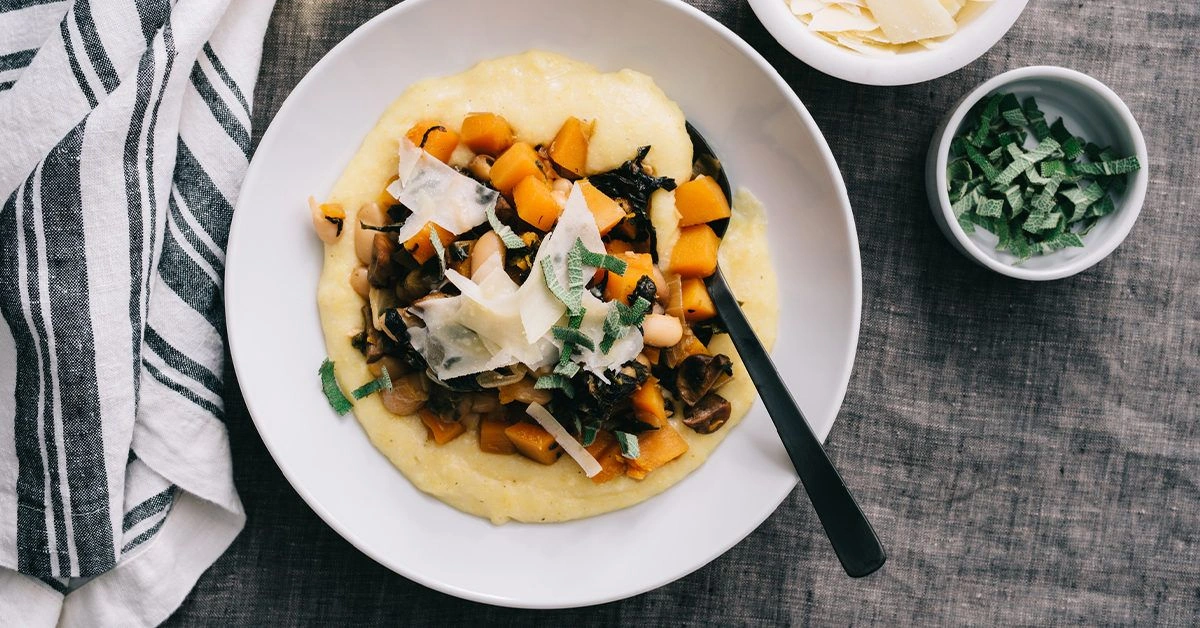
Polenta is a flavorful dish made by simmering ground cornmeal in salted water. As the granules absorb liquid, they soften into a smooth, porridge-like consistency.
You can enhance it with herbs, spices, or grated cheese for added taste.
Hailing from Northern Italy, polenta is budget-friendly, simple to make, and highly adaptable, so it’s worth becoming familiar with.
This article examines polenta’s nutrition, health advantages, and culinary uses.
Polenta nutrition facts
Plain polenta prepared without cream or cheese is relatively low in calories and provides only small amounts of various vitamins and minerals. Like other grains, it’s chiefly a source of carbohydrates.
A 3/4-cup (125-gram) portion of polenta cooked in water supplies (1, 2):
- Calories: 80
- Carbs: 17 grams
- Protein: 2 grams
- Fat: less than 1 gram
- Fiber: 1 gram
Pre-cooked polenta is also sold in tubes. If the ingredient list contains only water, cornmeal, and perhaps salt, the nutritional profile should be comparable.
Most store-bought and precooked polenta is made from degerminated corn, which means the germ — the kernel’s inner part — has been removed. As a result, it isn’t classified as a whole grain.
The germ stores much of the fat, B vitamins, and vitamin E. Removing it reduces these nutrients, but it also lengthens the shelf life of packaged polenta or degerminated cornmeal because there’s less fat to become rancid (3).
If you prefer more fiber and micronutrients, choose whole grain cornmeal — look for “whole corn” on the ingredient list.
Cooking polenta with milk instead of water adds nutrients but will raise the calorie content.
Like rice, polenta is commonly served as a side or base for other ingredients. It’s low in protein and fat, so pairing it with meats, fish, or cheese makes for a more balanced meal.
Summary: Polenta is an Italian porridge-like dish made by cooking cornmeal in water and salt. It’s carbohydrate-rich but moderate in calories. To boost fiber and nutrients, use whole grain rather than degerminated cornmeal.
Is polenta healthy?
Corn ranks among the world’s most important cereal crops. In fact, it serves as a staple grain for around 200 million people (2, 4).
By itself, cornmeal does not supply a complete nutrient profile. However, when consumed alongside other nutritious foods, it can be part of a wholesome diet.
High in complex carbs
The corn used for cornmeal and polenta differs from the sweet summer corn on the cob. It’s a starchier field corn that’s rich in complex carbohydrates.
Complex carbs digest more slowly than simple sugars, helping you feel fuller longer and providing sustained energy.
Starch in cornmeal contains two types of carbohydrate: amylose and amylopectin (2).
Amylose — sometimes called resistant starch because it resists digestion — makes up about 25% of cornmeal starch and is associated with improved blood sugar and insulin responses. The rest is amylopectin, which is more readily digested (2, 4).
Fairly blood-sugar-friendly
The glycemic index (GI) measures how much a food may raise blood glucose on a 1–100 scale. Glycemic load (GL) adjusts for portion size to estimate how a serving affects blood sugar (5).
Although polenta is rich in starchy carbs, it has a medium GI of 68, suggesting it won’t spike blood sugar too rapidly. Its glycemic load is low, so a typical serving shouldn’t cause a large post-meal blood sugar surge (6).
Keep in mind GI and GL values are influenced by what else you eat at the same time.
If you have diabetes, the American Diabetes Association advises concentrating on total carbohydrate content in meals rather than individual components’ glycemic metrics (7).
That means enjoying modest portions of polenta (for example, 3/4 cup or 125 grams) and pairing it with vegetables, proteins, or fish to balance the meal.
Rich in antioxidants
Yellow cornmeal used for polenta provides several antioxidants, compounds that help shield cells from oxidative damage and may lower the risk of some age-related diseases (8, 9).
The main antioxidants in yellow cornmeal are carotenoids and phenolic substances (9).
Carotenoids such as carotenes, lutein, and zeaxanthin give cornmeal its yellow hue and are connected with a reduced risk of eye conditions like age-related macular degeneration, as well as heart disease, diabetes, cancer, and dementia (1).
Phenolic compounds — including flavonoids and phenolic acids — contribute some of the sour, bitter, and astringent notes in yellow cornmeal (9, 10).
These molecules may reduce the risk of age-related conditions through antioxidant effects and by dampening inflammation in the body and brain (9, 10).
Gluten-free
Corn and cornmeal are naturally free of gluten, so polenta can be a suitable grain for those following a gluten-free regimen.
However, it’s wise to read labels carefully. Some brands may add gluten-containing ingredients or produce their product in facilities that handle gluten, creating a risk of cross-contact.
Many polenta packages explicitly state they are gluten-free.
Summary: Polenta is a nutritious gluten-free grain and a good source of antioxidants that support eye health and may lower the risk of certain chronic diseases. It generally won’t adversely affect blood sugar if consumed in sensible portions.
How to make polenta
Polenta is straightforward to make.

One cup (125 grams) of dry cornmeal plus 4 cups (950 mL) of water will yield 4–5 cups (950–1188 mL) of finished polenta. In short, polenta uses a four-to-one water-to-cornmeal ratio, which you can adjust to suit your needs.
Try this recipe for creamy polenta:
- Bring 4 cups (950 mL) of lightly salted water or stock to a boil in a saucepan.
- Add 1 cup (125 grams) of packaged polenta or yellow cornmeal.
- Stir thoroughly, reduce heat to low, and let the polenta simmer and thicken.
- Cover and cook for 30–40 minutes, stirring every 5–10 minutes to prevent sticking and scorching.
- Instant or quick-cooking polenta will be ready in 3–5 minutes.
- Season as desired with extra salt, olive oil, grated Parmesan, or fresh/dried herbs.
For baked polenta, spread the cooked polenta into a baking dish and bake at 350°F (177°C) for about 20 minutes, until firm and lightly golden. Cool and slice into squares to serve.
Keep dry cornmeal in an airtight container in a cool, dry place and follow the package’s best-by date. Degerminated polenta typically stores well for around a year.
Whole grain cornmeal generally keeps for about 3 months; storing it in the refrigerator or freezer extends its shelf life.
Cooked polenta should be refrigerated and eaten within 3–5 days.
Summary: Polenta is simple to cook and needs only water and salt. Instant varieties take minutes, while regular polenta requires 30–40 minutes. Store dry cornmeal properly and use it by the best-by date.
The bottom line
Originating in Northern Italy, polenta is simple to prepare and makes a versatile side that pairs nicely with proteins or vegetables.
It’s rich in complex carbohydrates that promote satiety without being overly caloric, and it’s naturally gluten-free, making it suitable for gluten-free diets.
Polenta also offers potential health perks, as it contains carotenoids and other antioxidants that protect eye health and may lower the risk of certain diseases.
To maximize nutritional value, make polenta using whole grain cornmeal rather than degerminated cornmeal.
















Leave a Reply
You must be logged in to post a comment.